
October 2025 saw no new cases related to public assembly or political expression compared to September 2025. However, four youths and one individual in Roi Et have been charged for violating the Emergency Decree for participating in the Kabuan Saded Car Mob which took place in 2021. Summons have been issued since the incident occurred. However, after the suspects requested a postponement, the police were unable to proceed with pressing charges. It later emerged that the inquiry officials had decided not to prosecute the case. When this decision was forwarded to the public prosecutor, the prosecutor nonetheless chose to indict them. The suspects were subsequently summoned to answer the charges..
In the past month, verdicts have been delivered in at least nine cases, including two Section 112 cases and seven other cases. Three of these were dismissed: the case against ‘Daeng Shinjang’ related to the 2014 explosion near the PDRC rally site; the #Mob20March21 case against Win Muenmanee and four other defendants; and the Section 112 case against three Southern Ratsadon members accused of posting photos of locations in Phatthalung with politically related captions.
The courts issued guilty verdicts in four cases which included the Section 112 case against “Bai Por” for conducting a poll asking “Do you agree or not that the government allows the King to exercise his power at his discretion?,” in which the Criminal Court sentenced her to two years in prison without suspension; the case against Tawee and Thanadol for participating in #Mob3Sept21 assembly, in which Court of Appeal upheld the previous verdict to fine them 13,333.33 baht for violating the Emergency Decree; the case against Phatthakan for participating in “Car Mob Korat” in 2564, in which the Supreme Court upheld the previous verdict to fine her 10,000 baht for violating the Emergency Decree; and lastly the case against Thanadet and seven other defendants for participating in the #Mob18July21, in which the Court of Appeal upheld the previous verdict to fine them 34,000 baht each for violating the Emergency Decree.
In addition, last month, the public prosecutor also prosecuted at least two cases, including the case against “two reporters and Sainam” for bearing witness to and reporting on an incident where activist Bung-urn spray-painted Wat Phra Kaew’s wall. All three defendants were indicted for violating the Act on Ancient Monuments. In another case, Phungboon was indicted for destroying public property after he wrote the word “Prathet Thuai”—a play on “Prathet Thai” (Thailand)—on traffic signs and an electrical enclosure in Chiang Mai in 2020.
Nonetheless, it has been reported that the public prosecutor decided not to indict Benja Apan in the Section 112 case following her speech at the #MobRatsadonDontTrustYou rally, deeming it a criticism of the government’s performance without any intent to defame, insult, or threaten the King.
.
.
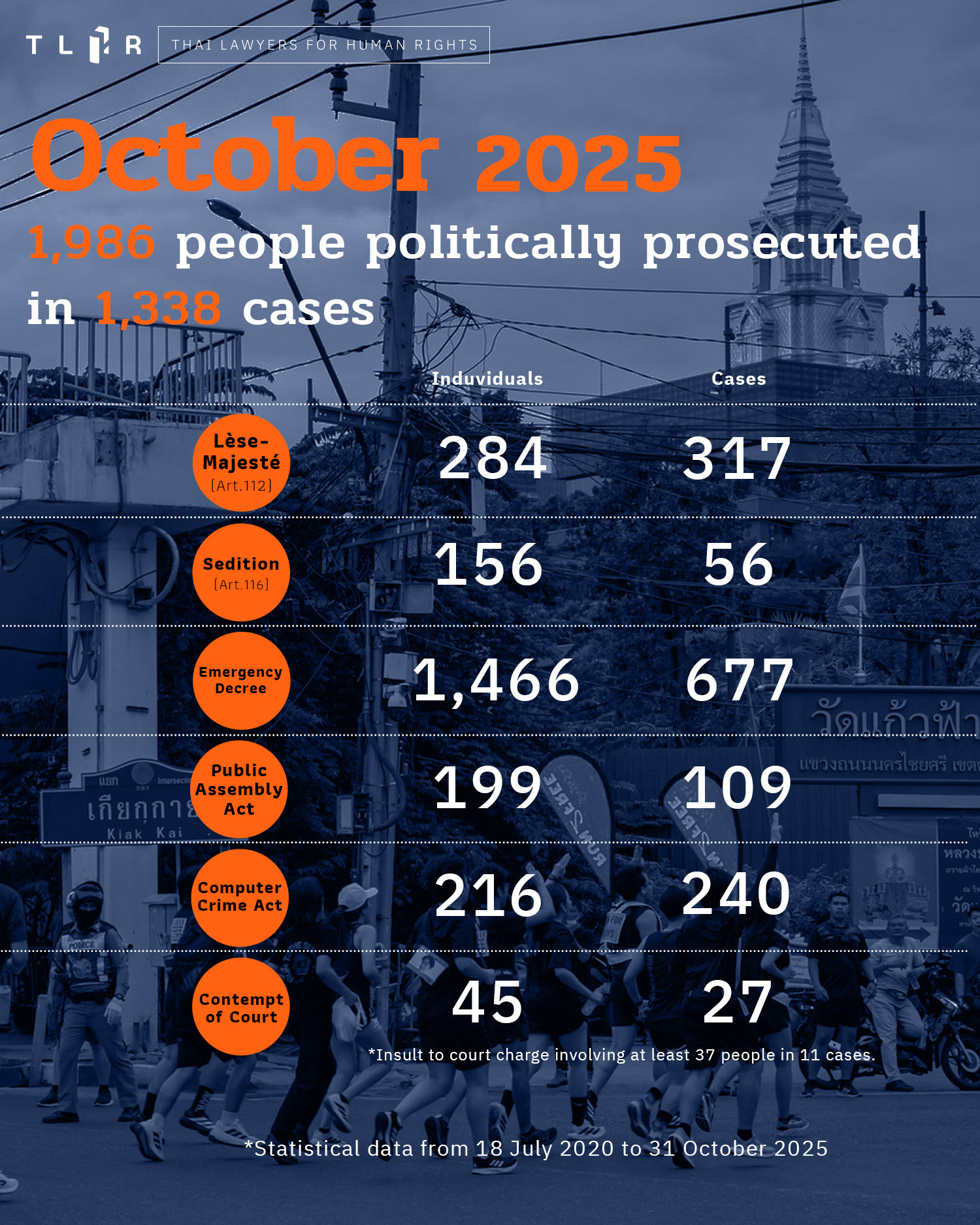
According to documentation from Thai Lawyers for Human Rights, since the “Free Youth” assembly on 18 July 2020 until 31 October 2025, at least 1,986 individuals have been charged for participating in public assemblies or expressing their political opinions in 1,338 cases. In comparison to September 2025, there were no new cases.
Altogether, there have been at least 4,064 legal actions against individuals; some of them are charged for multiple offences.
Prosecution statistics in key offences;
1. Section 112 (lèse-majesté) of the Criminal Code, at least 284 individuals in 317 cases (Of this, at least 168 cases have stemmed from reports to the police made by members of the public.)
2. Section 116 (sedition) of the Criminal Code, at least 156 individuals in 56 cases
3. Violation of the Emergency Decree, at least 1,466 individuals in 677 cases
4. Violation of the Public Assembly Act, at least 199 individuals in 109 cases
5. Violation of the Computer Crimes Act, at least 216 individuals in 240 cases
6. Contempt of court, at least 45 individuals in 27 cases, and insult of the court, at least 37 individuals in 11 cases
Of 1,338 cases, 761 cases have reached their final verdicts (although some cases remain outstanding, since certain defendants decided to appeal the verdicts, while others have not).
Prosecution trend in October 2025 and key events are as follows:
Three youths in Roi-Et charged for violating Emergency Decree for participation in the Kabuan Saderd Car Mob as prosecutor reverses police’s decision to not prosecute the case, albeit the incident happened four years ago
Three youths including Kotchakorn, Thananthon, Thanyabun and another individual, Chirayu (last name withheld) have gone to answer to charges for violating the Emergency Decree and Roi-Et Provincial Order no. 37/2564 at the Muang Roi-Et Police Station following their participation in the Kabuan Saded Car Mob in Roi-Et on 30 July 2021.
According to our documentation, following the protest, the four had already received police summons, although they asked to postpone the case. Since then, they have received no other summons. They only learned later that the inquiry official decided to not prosecute them. But after the police’s opinion was made known to the public prosecutor of Roi-Et, the latter decided to indict them. They were then summoned again to answer to the charges even though the incident took place more than four years and three months ago.
At the time of the incident, the three youths were around 16-17 years old. After being pressed with charges, they have to report to the Juvenile Observation and Probation Center for further inquiry and are obliged to do so periodically.
Two Section 112 case rulings, Court of Appeal acquitting three Southern Ratsadon members, while “Bai Por” sentenced to two years in prison without suspension, albeit allowed to post bail pending appeal
Throughout October 2025, rulings have been made in at least nine cases concerning public assembly and political expression including two Section 112 cases and seven other cases. Only in the case against three Southern Ratsadon members, three cases against ‘Daeng Shinjang’ and the #Mob20March21 case did the Courts decide to acquit the defendants. In the other seven cases, the Courts convicted all defendants and imposed fines for violations of the Emergency Decree.
As for the rulings in Section 112 cases, at least two cases were decided, including one case in the Lower Court and another in the Court of Appeal as follows;
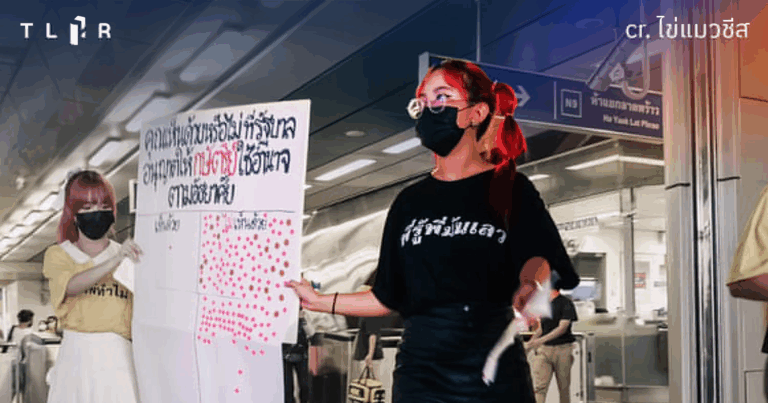
In the case against “Bai Por” for conducting a poll asking “Do you agree or not that the government allows the King to exercise his power at his pleasure?” from the BTS Mor Chit Station to Sanam Pao Station on 18 April 2022, the Criminal Court sentenced her to three years in prison and then reduced the sentence by one third to two years without suspension. She was allowed to post bail pending appeal.
The Court found that the statement inviting people to join the Thalu Wang group’s page was defamatory toward the King, suggesting that the highly revered monarch did not act in accordance with the Ten Royal Virtues. This constituted a distortion of the truth, exposing the monarchy to disrepute and discredit, as well as insulting the King. Although the plaintiff failed to provide evidence that the defendant was an admin of the page, and the defendant herself did not directly participate in the activity, the Court concluded that she intended to be involved in Thalu Wang’s activities
.
.
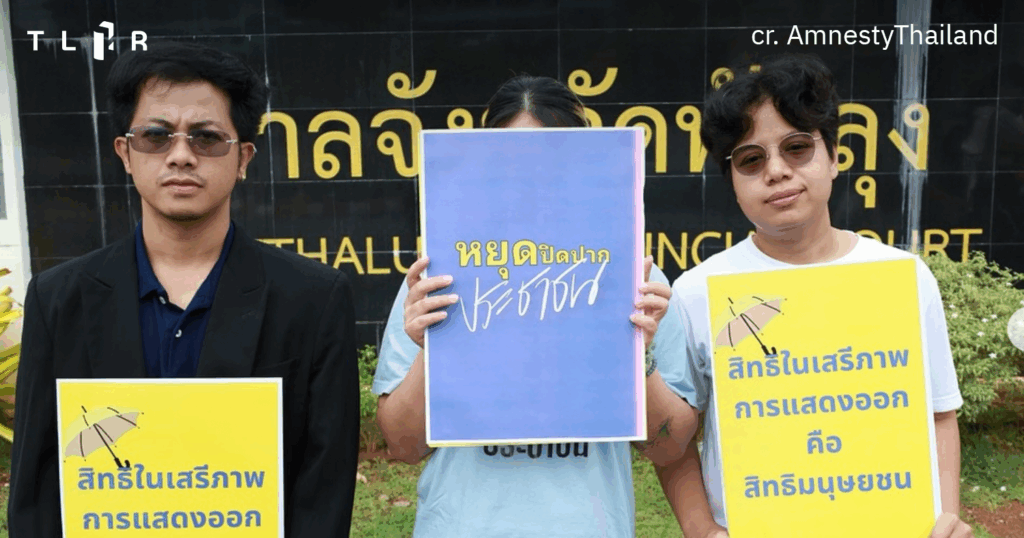
In the case against three Southern Ratsadon members—‘Toey’ (last name withheld), Alisa Bindusah, and Suphakorn Khunchit—who were accused of driving around Phatthalung in 2020 to take and post a total of 20 photos with politically related captions on the ‘Free Phatthalung’ and ‘Democracy in the Axe Handle’ Facebook pages, the Court of Appeal Region 9 upheld the previous verdict acquitting them.
The Court of Appeal noted that, because the defendants denied the charges, it was the plaintiff’s responsibility to provide sufficient evidence proving their complicity. The Lower Court had already found the prosecution’s evidence questionable and unable to confirm that the defendants had committed the alleged offenses. Giving the defendants the benefit of the doubt, both courts acquitted them.”**
.
.
‘Daeng Shinjang’ acquitted in all five cases, immediately released from prison; courts continue to either acquit or fine defendants in Emergency Decree cases
Rulings were issued in at least seven cases concerning political assemblies, with details as follows:
In the case against “Daeng Shinjang,” or Yongyut, who was accused of throwing an explosive device near the PDRC rally site, the Criminal Court delivered verdicts this past October in his final three remaining cases involving incidents on 10 March, 11 May, and 8 February 2014. He was acquitted in all three. The Court again found that the prosecution’s evidence lacked credibility and sufficient weight, noting that the defendant’s confession had not been obtained voluntarily.
As a result, he had been held in custody for five cases, all of which have now been dismissed. Yongyut was released from Bangkok Remand Prison on the evening of 28 October 2025, after spending 415 days—or more than one year and one month—in detention without ever being granted bail.
“In the case against Thawee Thiangwiset and Thanadol ‘Athit’ Chantharach, who were arrested while driving a truck carrying a sound system in front of Phyathai 2 Hospital following the #Mob3Sept21 protest at Ratchaprasong intersection, the Court of Appeal upheld the previous verdict, fining them 13,333.33 baht for participating in the assembly. Their actions were deemed an offense under the notification issued pursuant to the Emergency Decree, regardless of whether the organizers or participants had taken measures to prevent the spread of Covid-19, or whether any transmission occurred as a result of the assembly.
Similarly, in the case against Phatthakan Thongdaeng for participating in the 2021 ‘Car Mob Korat’ rally criticizing the performance of General Prayut Chan-ocha’s government, the Supreme Court upheld the previous verdict, fining her 10,000 baht for violating the Emergency Decree. The ruling concluded the case after more than four years in court.
In the case against ‘Mon Archiwa’ (Thanadet Srisongkhram) and seven other defendants for participating in the #ReclaimingThailandTopplingParasite assembly (#Mob18July21) at Democracy Monument, the Court of Appeal upheld the previous verdict, fining each defendant 34,000 baht—totaling 272,000 baht—for violating the Emergency Decree. All defendants had already paid the fines following the Lower Court’s ruling.
.
Meanwhile, in the case against Win Muenmanee and four other defendants, who faced charges including obstruction of officials, physical abuse, illegal assembly and use of violence, failure to disband when ordered, and violations of the Emergency Decree following the #Mob20March21 protest and arrests at Kok Wua Intersection, the Criminal Court acquitted them on all charges. The Court found the prosecution’s evidence dubious and insufficient to prove the defendants’ participation in the assembly. For those who did participate, the Court recognized that they were exercising their constitutional rights. Additionally, it ruled that a scuffle between some participants and the police did not render the entire assembly unpeaceful, and the prosecution failed to demonstrate how the assembly could have contributed to the spread of Covid-19.”
The ruling set a precedent for cases involving alleged violations of the Emergency Decree and Covid-19 regulations. Previously, some courts had deemed mere participation in a public assembly as a violation, without considering other factors. In contrast, judges in certain cases have begun examining the actual risk of disease transmission in each specific assembly.
“Two reporters and Sainam” indicted for reporting on an incident where artist spray-painted Wat Phra Kaew’s wall, meanwhile “Phungboon” indicted for scribing the word ‘Prathet Thuai on traffic signs
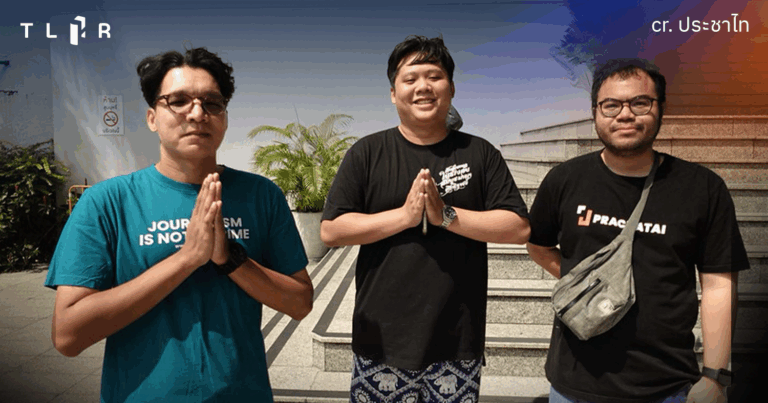
Last month, the public prosecutor indicted at least two politically motivated cases. The first involved two journalists—Natthaphon ‘Pae’ Meksophon of Prachatai and Natthaphon ‘Ya’ Phanphongsanon, a freelance photographer—as well as pro-democracy activist ‘Sainam,’ who were charged under the Ancient Monuments Act for ‘being complicit in the destruction of, causing depreciation in value to, or rendering useless any ancient monument.’ The charges stemmed from the three defendants witnessing and reporting an incident on 28 March 2023, when ‘Bang-urn’ spray-painted the symbols ‘112’ (crossed out) and the anarchist symbol on the wall of Wat Phra Kaew.
On the day of the incident, Pae and Ya submitted a petition requesting that they not be prosecuted, arguing that they were performing journalistic duties. Their actions were thus an exercise of their constitutional and internationally recognized rights to disseminate news and opinions. Nevertheless, the public prosecutor proceeded to indict them, and on 21 October 2025, the Criminal Court found that the defendants’ actions had exposed the palace wall—an ancient monument—to destruction, depreciation in value, or rendering it useless. A pretrial hearing is scheduled for 8 December 2025 at 13:30
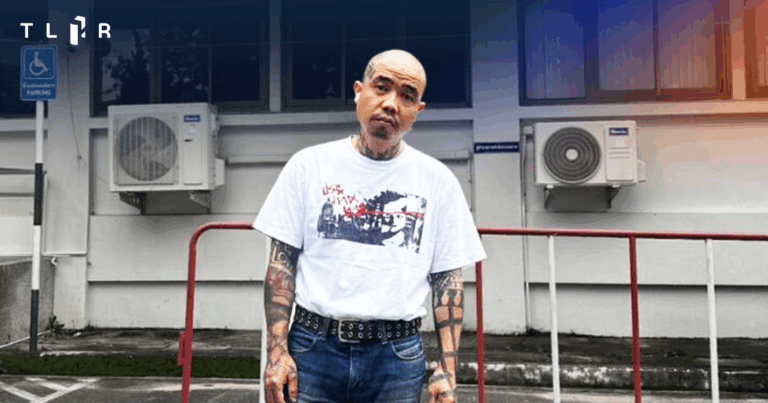
In another case against Phungboon Jaiyen, a tattoo artist from Chiang Mai, he was indicted on charges of destroying public property under Section 360 of the Penal Code’s. The charge arose from him scribing the word “Pra Thet Thuai” on traffic signs and an electrical enclosure on Huay Kaew Road in 2020. After his indictment, the public prosecutor asked him to immediately report himself to the first meeting, even though Phungboon requested a postponement and submitted a letter of petition to demand justice. The public prosecutor rejected the demand.
Phungboon was arrested on 29 September 2025 at the Chiang Mai International Airport while he was bound to participate in an artist-in-residence program in Taiwan. The arrest warrant had been issued per the request of Bhubing Rajanives Police Station since March 2021, but had never been executed, even though Phungboon had gone to meet the police in various other cases at the time. This was the second case against him on a similar offence, although this case was subject to the jurisdiction of another police station.
.
.
Prosecutor decided not to indict Benja Apan in Section 112 case, ruling her speech at #MobRatsadonDontTrustYou was government criticism
Last month, it was reported that the Attorney General decided not to indict Benja Apan in a case under Sections 112 and 116, following her speech at the Ratchaprasong intersection on 3 September 2021 during the #MobRatsadonDontTrustYou protest.
According to the prosecutor’s letter dated August 2025, the speech was ‘an expression of dissatisfaction with the country’s situation and criticism of the government’s performance. It raised questions and voiced grievances about how the government came to power and governed, with no intent to defame, insult, or threaten the King.’
.
Suchat Sawatsi appeals Administrative Court verdict on revocation of his National Artist status, reiterating unlawfulness of the Committee’s decision
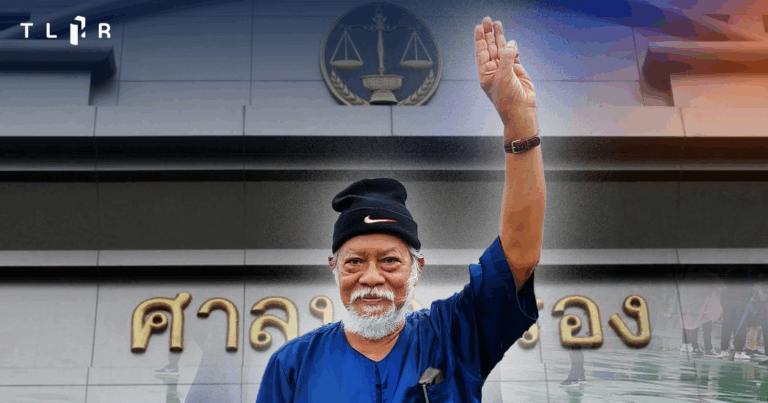
Suchat Sawatsi, also known by his pen name “Sing Sanam Luang,” an editor whose National Artist status was revoked, filed an appeal against the Central Administrative Court’s ruling on 18 October 2025. Previously, he had brought a case against the National Culture Commission and the Ministry of Culture, challenging their secret meeting and decision to strip him of his National Artist status, which he claimed was unlawful and unfair. The Central Administrative Court had dismissed his case.
The appeal against the verdict of the Administrative Court will coalesce around six key issues including:
- The social media posts cited by the National Culture Commission to revoke his status were not contrary to the Constitution, and the Court failed to consider evidence presented by the plaintiff and expert witnesses.
- The Administrative Court’s interpretation treated the freedom of expression of a National Artist as inferior to that of the general public.
- The Committee held a secret meeting without legal authority, making the revocation of his status unlawful.
- Before issuing the administrative order, the Committee failed to allow concerned parties to be informed of the facts, present arguments, and submit evidence.
- The Committee’s letter notifying the plaintiff of its decision did not fully explain the reasons supporting its order.
- The plaintiff suffered harm, including violation of his freedom of expression and damage to his reputation.
ข่าวหรือบทความที่เกี่ยวข้อง
Joint Statement: Asserting the right to freedom of assembly “We Walk…Solidarity Walk”
20 January 2018 The People GO Network is to launch the “We Walk…Solidarity Walk” from 20 January – 17 February 2018 to raise public awareness about issues concerning natural resources, alternative agriculture, health assurance, and the exercise of rights and freedoms. We plan to walk from Bangkok to Khon Kaen. And since 17 January […]

admin99
20/01/2561
You Can “Run Against Dictatorship”: Basic Legal Recommendations before Staging a “Run Against Dictatorship” Event
On 12 January 2020, people in several Thai provinces and abroad will unite to “Run Against Dictatorship”. Thai Lawyers for Human Rights has found that event organizers in Bangkok and other provinces have faced difficulty in obtaining permission to use some locations for the event, being threatened by officials when requesting permission to stage the […]

admin010
10/01/2563
Hurdles on the track: an overview of the restrictions of rights and freedoms during #RunAgainstDictatorship throughout Thailand
On 12 January 2020, Thailand witnessed the first nationwide assemblies expressing public opinion since the NCPO era, namely the “Run to Oust the Uncle or Run Against Dictatorship (RAD)” running events held concurrently in 39 provinces. In addition to raising awareness about the benefits of exercise for individuals’ wellbeing, participants saw the run as a […]
admin010
24/02/2563
Two weeks after youth groups began to free themselves: Their call to end harassments backfired
On 18 July 2020, a group of secondary school and university students, together with other ordinary citizens, held the #FreeYouth demonstration at the Democracy Monument. The protestors’ three collective demands call for the government to dissolve the Parliament, rewrite the Constitution, and end all forms of state harassment of critics. During the following two weeks, […]
