
Story by Noppon Archamas
.
Note: This interview series is part of the book “Feathers on the Scales”, which features ten interviews that explore the lives and experiences of human rights lawyers advocating for civil and political rights in Thailand. The book was published by Thai Lawyers for Human Rights (TLHR) in February 2025 and was later translated into English.
——————————
.
“Human rights cases don’t have a fixed work pattern like general cases. Lawyers have to stay closely involved with the situation. Lawyers don’t just handle the case; they have to live alongside the people and community.”
.
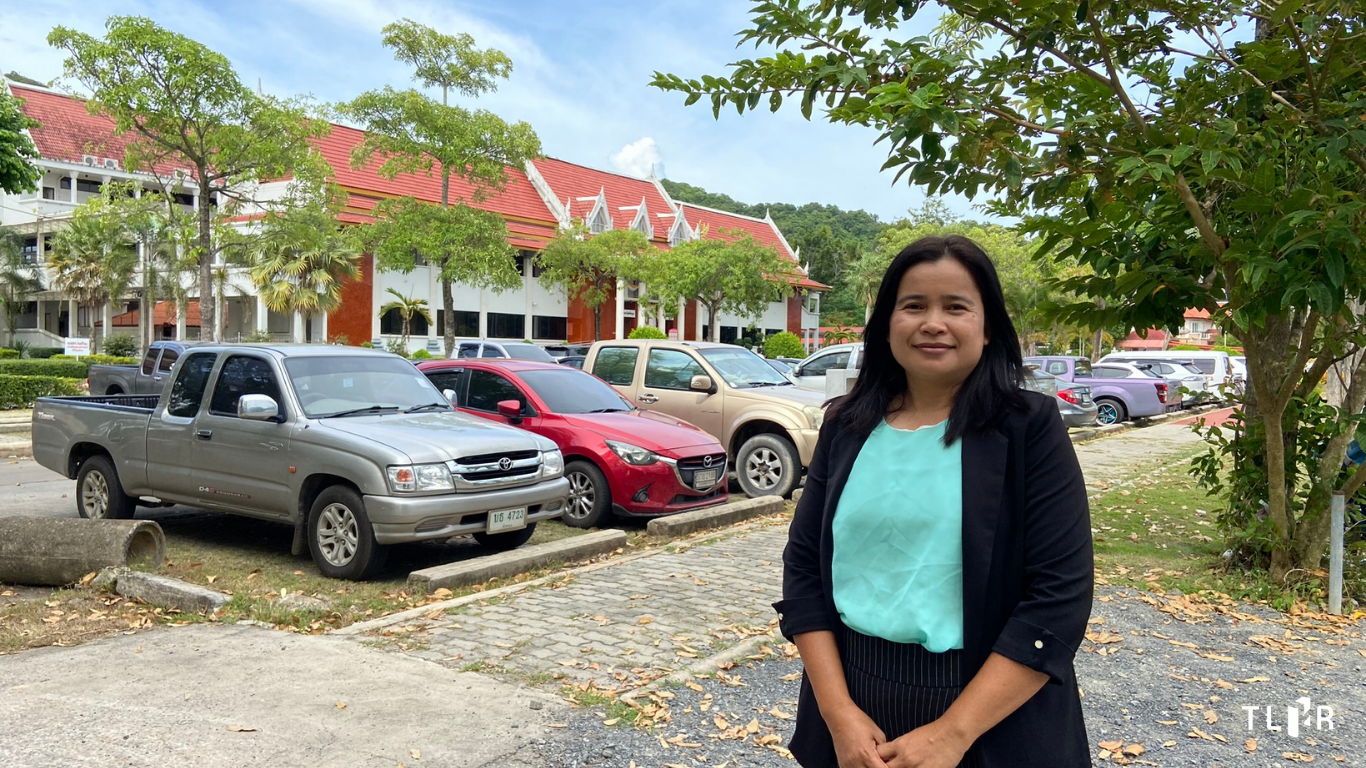
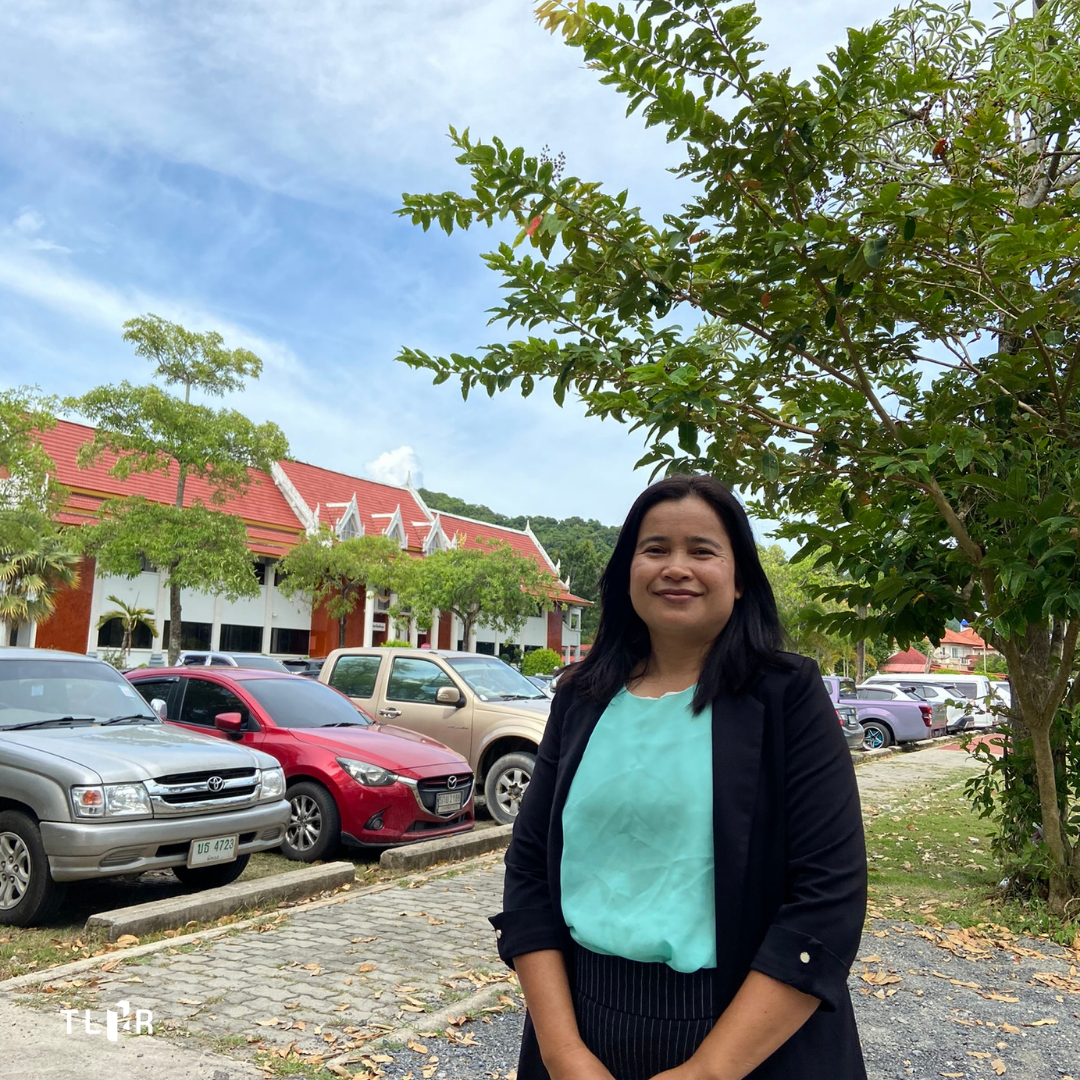
That afternoon after lunch, we sat and talked at a restaurant near the Phatthalung Provincial Court, while waiting for the court’s order in a political case. The defendant was from Chanthaburi Province but was sued as far away as Phatthalung Province, and had just been sentenced by the Court of First Instance to two years in prison without suspension.
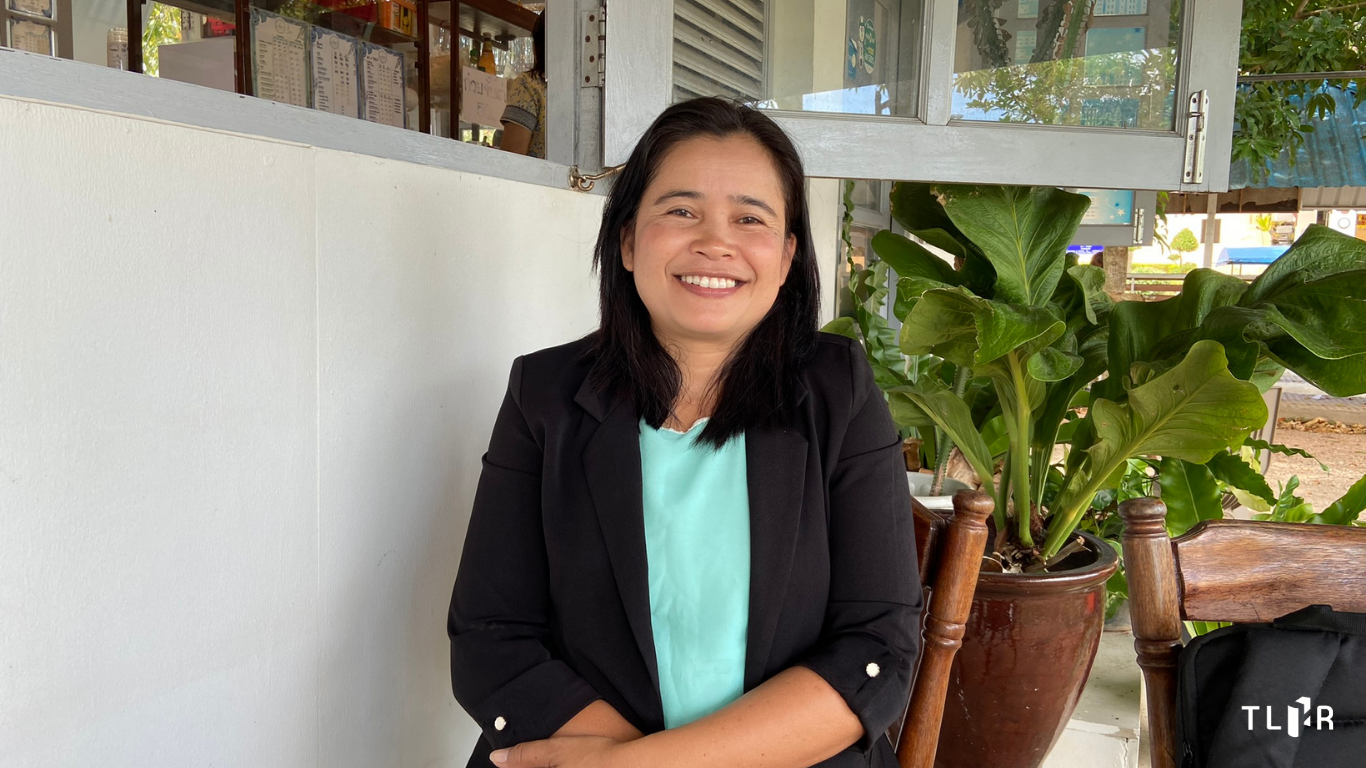
Supunsa Marem, or ‘Lawyer Chee,’ had traveled from Trang Province. Today, she was acting as the bail guarantor, having just filed a request to bail the defendant out to argue the case in the Court of Appeals. Kritsada Khunnarong, or ‘Lawyer Boy,’ who resides in Phatthalung Province, traveled to join the court hearing that day and sat down to talk and share his views with us as well.
Both lawyers have been working on human rights cases in the southern region for over 20 years and co-founded the ‘Southern Human Rights Lawyers Network,’ a group of lawyers interested in providing assistance in human rights work.
Though the Network has handled a wide variety of issues from land disputes of communities along the Andaman coast to protests against large-scale development projects, cases related to political gatherings and online expression of opinion are becoming more prevalent.
We invited Lawyer Chee to reflect on her past work, from being a descendant of local fisherfolk and graduating in law, to starting her career as a lawyer’s assistant gathering community information, and becoming a human rights lawyer in the southern region. She is part of the long history of people working to improve human rights in Thai society.
.
The Tsunami and the Beginning of Work in Law and Community Rights
Lawyer Supunsa, 41 years old, has a commoner background. She was born into a family of local fisherfolk in Laem Sai, Sikao District, Trang Province. Her family had previously fought over land for a living and had played a role in forming a saving group, creating a community organization of fisherfolk. This background enabled her to adapt to working with communities in the southern region in the following period of her life.
She graduated from the Faculty of Law at Rattana Bundit University or RBAC in early 2005. It was the period after the tsunami hit the Andaman coast. After graduating, Supunsa chose to return home and had the opportunity to work on recovery efforts from the tsunami damage with the ‘Andaman Coast Recovery Cooperation Network.’
The tsunami in late 2004 not only destroyed people’s lives, homes, and buildings but also exposed the underlying problem of contested land ownership along the Andaman coast. Those problems had been quietly simmering like a hidden tide. The tsunami caused these problems to surface, becoming a point of dispute in many communities.
“The tsunami not only caused damage to lives and nature but also created human rights problems, namely regarding the issue of housing. Villagers in many areas were sued and evicted. There were people whose homes were destroyed and couldn’t return to their land because others claimed ownership. Many coastal communities faced land problems, with both state land, such as national park areas, and private land.”
This was the starting point that led Supunsa to work closely on community rights issues. Residents in many communities were sued for allegedly encroaching on land on which they had previously lived or used for their livelihood. Many communities were unable to resume their lives as before because private investors claimed rights to the land, leading to court cases.
During that time, the Lawyers Council of Thailand monitored the situation and formed a working group of lawyers to specifically assist with the cases that arose. Supunsa began working as a lawyer’s clerk for lawyers who traveled from Bangkok to help the villagers argue their cases.
“Initially, my legal work was as a lawyer’s clerk. I was part of the Lawyers Council of Thailand’s legal team. After the tsunami, there were issues related to land rights, and villagers were being sued. We were like field officers, not yet licensed attorneys. I was a legal assistant, helping to coordinate in the area and gather factual information.”
“I have a background as a commoner, and I was already involved in conservation work. Even though I didn’t plan to work in this field, the situation in the area led me to this type of work.”
.
.
The Establishment of the ‘Andaman Coastal Legal and Community Rights Center’
In the early stages, there were three main disputed areas where she worked in the community: Thap Tawan Village, Laem Pom Village, and Nai Rai Village, all in Phang Nga Province. In Nai Rai Village in particular, residents faced over 140 lawsuits, while Laem Pom Village had approximately 28 cases and Thap Tawan Village about 37 cases. Combined, the three areas had more than 200 cases.
The large number of cases led to the establishment of the ‘Andaman Coastal Legal and Community Rights Center’ to coordinate, gather basic information, and provide direct legal assistance in response to the situation along the Andaman coast at that time. Supunsa was the center’s staff member.
Prior to the establishment of this legal center, there was almost no permanent organization providing legal assistance to address the problems of residents in the southern region. If there were cases, lawyers from Bangkok were mainly in charge. The land dispute problems following the tsunami became a turning point for human rights work in the southern region.
In 2006, the Thai Volunteer Service Foundation began the ‘Human Rights Legal Volunteers Project,’ a project that trained law graduates in human rights issues and placed them with legal organizations or NGOs for about one year to provide practical experience. This led to volunteers from this project assisting at the Andaman Coastal Legal and Community Rights Center.
“We learned about human rights issues from practical, hands-on work. We didn’t start with general cases but began with this type of case directly.”
Lawyer Kritsada was one of the volunteers from the Thai Volunteer Service in the third cohort who came to work at the Andaman Coastal Legal and Community Rights Center. This is how he met Supunsa, and they have been working together on human rights cases ever since.
“Initially, I was alone. Later, after the Thai Volunteer Service project, there were 3 volunteers assigned to the Legal Center. Among the volunteers, there were lawyers, legal officers, and people who went on to become administrative court judges. After that, the Thai Volunteer Service continued to send volunteers from subsequent cohorts,” Supunsa recounted.
.
Human Rights Work Is Not Just About Legal Cases
The challenge for new lawyers in the early stages was that much of the practical legal knowledge was not taught in the classroom. They had to learn and adapt their legal knowledge to the different facts of each area. They also had to do more than just handle legal cases; they had to work with the community, working closely with the residents facing problems.
“Human rights cases don’t have a fixed work pattern like general cases. Lawyers have to stay closely involved with the situation. Lawyers don’t just handle the case; we have to stay closely involved with the people. There were clashes; residents tried to reclaim the land because the tsunami had destroyed their homes, leaving them without proof that they had ever lived there.
“Villagers had to occupy the land and build homes, which led to police reports and lawsuits. There was intimidation from investors. The issues were intense, and our team was newly graduated, so we had to try to stay calm.
“This was the challenge: we weren’t just handling cases. were also working closely with the community. If the community didn’t understand or trust us, it made the work difficult.”
Starting out as lawyers provided important experiences that accelerated their learning and growth in human rights work.
“This type of work doesn’t start with carrying a briefcase; you get to go straight into the field and learn from your mistakes. When we first started working in the area, we didn’t have mentors there because the senior lawyers were all in Bangkok. So, we had to learn by ourselves.”
“We learned from the experiences of senior lawyers. Some handled business cases, while others handled both business cases and cases assisting the public. We exchanged knowledge with senior lawyers.”
The overall situation from the late 1990s to the 2000s involved land ownership issues, illegal issuance of land titles, and the resulting disputes between residents in many areas and investors or influential individuals who came to seize land.
.
The Emergence of the ‘Southern Human Rights Lawyers Network’
Towards the end of the 2000s, as the land dispute issues along the coast began to decrease, the 3-4 people working on them at that time had to go their separate ways. Lawyer Supunsa and Lawyer Kritsada returned to their hometowns.
“At that time, I had gained some work experience, so I set up our own offices to take on general cases to earn a living. Lawyer Boy also returned to his hometown in Phatthalung because if there’s no financial support for assisting people, you can’t survive. But even though we went our separate ways, we agreed that if there were human rights cases in various areas, we would still help each other,” Supunsa recounted.
Even without a permanent organization or agency, cases that could be considered human rights cases continued to arise periodically. This led the two lawyers to discuss establishing a ‘Southern Human Rights Lawyers Network’ to create a network of lawyers in the southern region interested in assisting with human rights cases. The network is without any budget or permanent staff.
Lawyer Boy-Kritsada explained the origin of the network: “It stemmed from having case work but no lawyers. Everyone had gone back to their hometowns, but there was still activism in different issues and NGO work. When cases arose, such as the case of the palm oil plantation occupation in Surat Thani, the Pak Bara case, the Thepa case, or the Chana case, we thought we should maintain a network of lawyers. When these cases requiring assistance came up, we would call each other and mobilize to help. There might be some funding from NGOs to help.”
“In the network, there were 3-4 lawyers from our generation and some seniors who had previously worked on human rights issues. But later, they might not have been involved anymore because they had returned to their hometowns. We contacted them, and we managed to gather about 10 people. Then we had a meeting once, probably around 2015, and the network was formed. Some had worked on these types of cases before, or some had been with the Union for Civil Liberty (UCL). We discussed how we could help.”
Following the land dispute cases, the trend of human rights situations in the southern region in the late 2000s became centered on disputes between communities and large-scale development projects by the state or private sector. This led to movements by residents who formed community conservation groups in various areas, resulting in lawsuits against them for their activities or protests.
Furthermore, the work area expanded to cover the entire southern region, not just the Andaman coast as before. However, it should be noted that this excluded the three southern border provinces, which have their own unique situation where the Muslim Lawyers Center already provides legal assistance.
.
Tejai to Thepa Cases
.
The Pak Bara and Tejai to Thepa Cases: Two Important Cases and the Recognition of Community Rights in Judgments
Two important cases in the late 2000s that were widely discussed were the ‘Pak Bara’ case, stemming from the People’s Network Monitoring the Satun-Songkhla Development Plan’s protest against the construction of the Pak Bara deep-sea port in Satun Province. Protests against the project’s public hearings in March 2017 led to charges being filed against 9 leaders for trespassing on government property. After over 3 years of litigation, the Satun Provincial Court acquitted the defendants in late 2020, and the case was concluded.
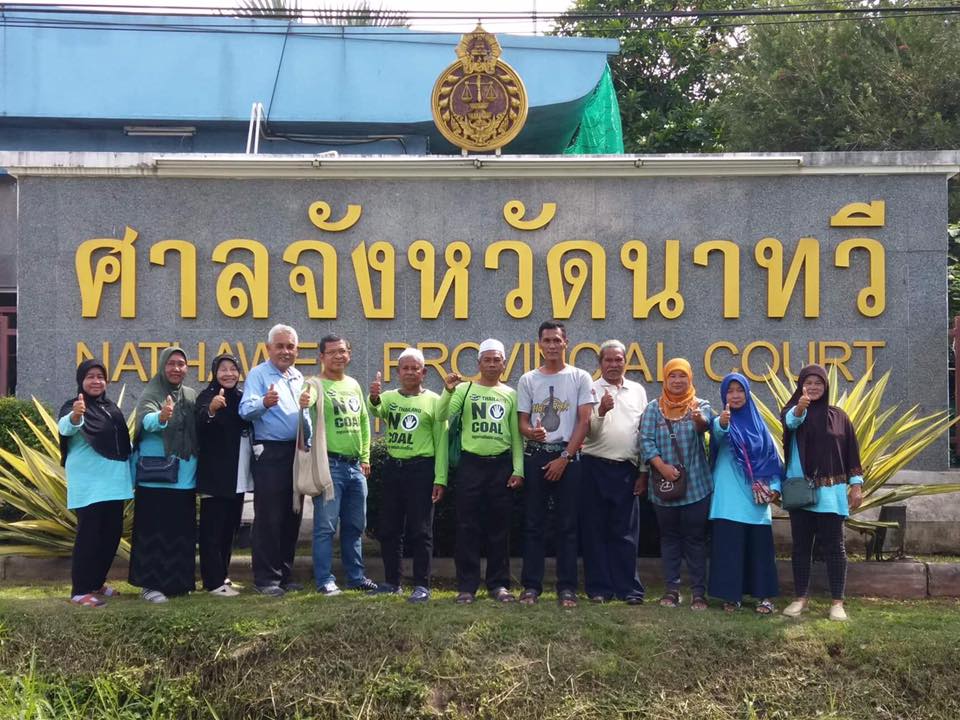
The other case was the ‘Tejai to Thepa’ case, stemming from the Songkhla-Pattani Network Against the Thepa Coal-Fired Power Plant’s campaign for the cessation of the Thepa coal-fired power plant construction. They organized a march from Thepa District to submit a letter to Prime Minister Prayut Chan-o-cha, who was visiting for a mobile cabinet meeting in November 2017. However, the authorities dispersed the demonstration and arrested residents, leading to charges against 17 people under the Public Assembly Act and for resisting officials. This case was litigated for over 6 years, reaching the Supreme Court in 2023, where the Supreme Court acquitted the defendants.
The Southern Human Rights Lawyers Network provided legal assistance in both cases. For the lawyers involved, these were considered two important and successful cases both in terms of the legal outcome and the fact that the judgments discussed the community’s movement to protect natural resources and affirmed the right to peaceful assembly quite favorably.
“The court acquitted because it recognized that the residents had a genuine intention to protect resources, not to trespass. The court elaborated on this. This case concluded in the Court of First Instance with a full acquittal. I think this case set a precedent, establishing a judicial approach that addresses the issue of resource protection. Why do residents have to occupy places? It highlights the community’s intention, the importance of resources, and their protection,” Kritsada said about the Pak Bara case.
In the Thepa case, the Supreme Court ruled on the charges under the Public Assembly Act that when the residents’ assembly was proven to be unarmed and not endangering national security, public safety, public order, or the rights and freedoms of others, the assembly was protected under the Constitution. Therefore, the police’s orders prohibiting the assembly and ordering its dispersal were unlawful. If the protesters believed that the coal-fired power plant would harm the community, they had the freedom to march to submit a letter to the Prime Minister. The right to assembly is a fundamental freedom necessary for governance in a democratic system.
The content of both judgments in the 2010s reflects a situation where, as Kritsada assessed, the issues of natural resource protection and community rights were well-recieved in Thai society. The court’s judicial approach increasingly valued these issues. This may be seen as a success in the advocacy efforts of various sectors over the past 20-30 years.
“Thai society accepts the idea of residents protecting resources or community rights. Society understands this more easily than freedom of expression, where there’s a view that ‘if you insult them, you deserve it!’ The issue of political freedom still needs to be fought for,” Lawyer Kritsada commented.
“We have created awareness among residents about their rights, expanded the scope of community rights issues, and many large-scale projects that would have impacted communities have been delayed or canceled. This can be considered a success,” Lawyer Supunsa added.
.
.
Towards the Fight for Political Cases
2020 marked another turning point for the human rights situation in the southern region. ro-democracy protests were led by students and the public, and simultaneously, the Thai government used legal mechanisms to prosecute protesters intensively, resulting in a large number of cases spread across almost every province.
The two lawyers recounted that after the 2014 coup, there were no cases of political expression in the southern region like in other areas. This changed in 2020 when protests to oust Prime Minister Prayut Chan-o-cha began, primarily led by students. This leads to an increase in protest-related cases. Some of those prosecuted were children. The Southern Human Rights Lawyers Network began providing assistance in these types of cases in collaboration with Thai Lawyers for Human Rights.
The first case in the region was the “Run Against the Dictator” event in Phang Nga, where students were charged under the Public Assembly Act. This was followed by a series of car mob cases in 2021, with 16 cases spread across 9 provinces in the south, as well as an increasing number of cases under Articles 112 (lèse-majesté) and 116 (sedition). These cases arose from situations where pro-establishment groups filed complaints in various areas. These cases also included charges under the Computer Crime Act.
When asked about the differences in handling protest cases in different periods, Kritsada commented that cases of residents protesting against large-scale projects were different from cases arising from the 2020 protests because residents had a sense of community with strong group cohesion, which “government agencies or courts might view more favorably than political protests,” Kritsada said.
In contrast, the youth-led protests involved a diverse range of groups, not necessarily from the same community, which made the lawyers’ work more challenging. However, regardless of the difficulty, the lawyers’ duty was to argue the case to make the court understand the protesters’ intent in assembling.
“We might lose the legal case, but in the fight we have affirmed the demands, affirmed the intent of the people who came out. Why did they have to fight? Why did they have to occupy places? Why did they have to protest? Disrupting a stage is seen as illegal, but how do we fight to assert the rights and intent of the fight? In general cases, if the legal elements are met, you have to plead guilty. But in these protest cases, it’s not always like that because there’s also the aspect of fighting to educate society or to make the court or the justice system understand the social issues,” Kritsada said.
In addition to protest-related cases, there has been an increase in cases related to online expression. These include not only cases of direct political expression but also cases arising from criticism of government agencies or influential individuals.
Supunsa said that computer-related cases pose a new challenge for lawyers handling community rights cases because they require knowledge of technology and electronic evidence. Cases under Section 112 in recent times have also become more difficult due to their close connection to the political situation.
“We call them policy-driven cases. It’s not just about the law but also related to government policy, social changes, and the political situation. The political ideology of various sectors influences the application of the law,” Supunsa stated.
While the recent wave of cases has coincided with increased activism among the younger generation, several youth groups have also emerged in the southern region, such as the Law Long Beach group, consisting of law students from Prince of Songkla University, who have assisted as paralegals and trial observers. The cases have therefore become a learning ground in the legal field for the new generation.
“For young lawyers or young people interested in human rights work, they may need to ask themselves first if they truly like or are interested in this type of work. If they do, they should go all the way, study and learn, and find their focus. Even though there will be obstacles, I think various types of human rights cases will provide us with a lot of experience, broaden our perspectives, and deepen our understanding. Then we can handle both general cases and human rights cases,” Supunsa said.
After handling cases and working on human rights issues for nearly 20 years, Supunsa wants to see more changes in the legal profession and the justice system. She wants to see lawyers who don’t just focus on the four main codes (Criminal Code, Civil Code, Criminal Procedure Code, and Civil Procedure Code) but have a broader perspective on applying the law, keeping up with the situation in society and the world.
“It’s not just about Section 112; freedom of expression is important for everything, including resources and communities. In cases of forest and national park encroachment, how does the justice system handle them? Many residents are prosecuted and have to find money for bail. Some plead guilty even though they don’t think they are guilty simply because they can’t afford bail.”
“We still have problems with bail. The law states that defendants can bail themselves out, but it’s not practical in some cases. Defendants don’t have the money for bail. It becomes that to fight in court, you have to be wealthy. This happens in many types of cases.”
…………………
.
After the conversation, we returned to the court to wait for the bail order. There was concern about whether the client facing charges under Section 112, who had been taken to the court’s detention room, would be able to return to Chanthaburi Province.
Fortunately, after waiting, the court granted bail during the appeal, but required an additional bail payment of 50,000 baht on top of the initial 150,000 baht. The lawyers then coordinated assistance from the Ratsadonprasong Fund, which collects donations from the public, making access to the right to bail possible. Without this assistance, the young man from Chanthaburi, who did not have a high income, might not have been able to return home.
The defendant was released, but the legal battle was not over, and the work of human rights lawyers continues.
.
ข่าวหรือบทความที่เกี่ยวข้อง
Yaowalak Anuphan: Human rights work is a never-ending task
Story and Photos Veerapong Soontornchattrawat . Note: This interview series is part of the book “Feathers on the Scales”, which features ten interviews that explore the lives and experiences of human rights lawyers advocating for civil and political rights in Thailand. The book was published by Thai Lawyers for Human Rights (TLHR) in February 2025 […]

admin010
25/09/2568
Thaworn Piyawongrungruang: “Political Cases: at the very least the work of lawyers lessens the hardship of the activists.”
Story by Noppon Archamas . Note: This interview series is part of the book “Feathers on the Scales”, which features ten interviews that explore the lives and experiences of human rights lawyers advocating for civil and political rights in Thailand. The book was published by Thai Lawyers for Human Rights (TLHR) in February 2025 and was later […]
admin010
03/10/2568
Krisadang Nutcharus: Life of a Human Rights Lawyer ‘Standing Firm, Never Surrendering’
Story by Weerawat Somnuek . Note: This interview series is part of the book “Feathers on the Scales”, which features ten interviews that explore the lives and experiences of human rights lawyers advocating for civil and political rights in Thailand. The book was published by Thai Lawyers for Human Rights (TLHR) in February 2025 and was later […]
admin010
09/10/2568
Muay Junjira – The Fighting Lawyer: When the Court Lacks Justice, We Have the Right to Challenge It.
Story By Wanna Tamthong . Note: This interview series is part of the book “Feathers on the Scales”, which features ten interviews that explore the lives and experiences of human rights lawyers advocating for civil and political rights in Thailand. The book was published by Thai Lawyers for Human Rights (TLHR) in February 2025 and was later […]