
Story by Noppon Archamas
.
Note: This interview series is part of the book “Feathers on the Scales”, which features ten interviews that explore the lives and experiences of human rights lawyers advocating for civil and political rights in Thailand. The book was published by Thai Lawyers for Human Rights (TLHR) in February 2025 and was later translated into English.
——————————
.
“The work of a lawyer is part of supporting the people’s fight, helping to solve legal problems. It also helps those who come out to fight and take action to suffer less. At the very least, there are lawyers who help with cases and support the fight.”
.
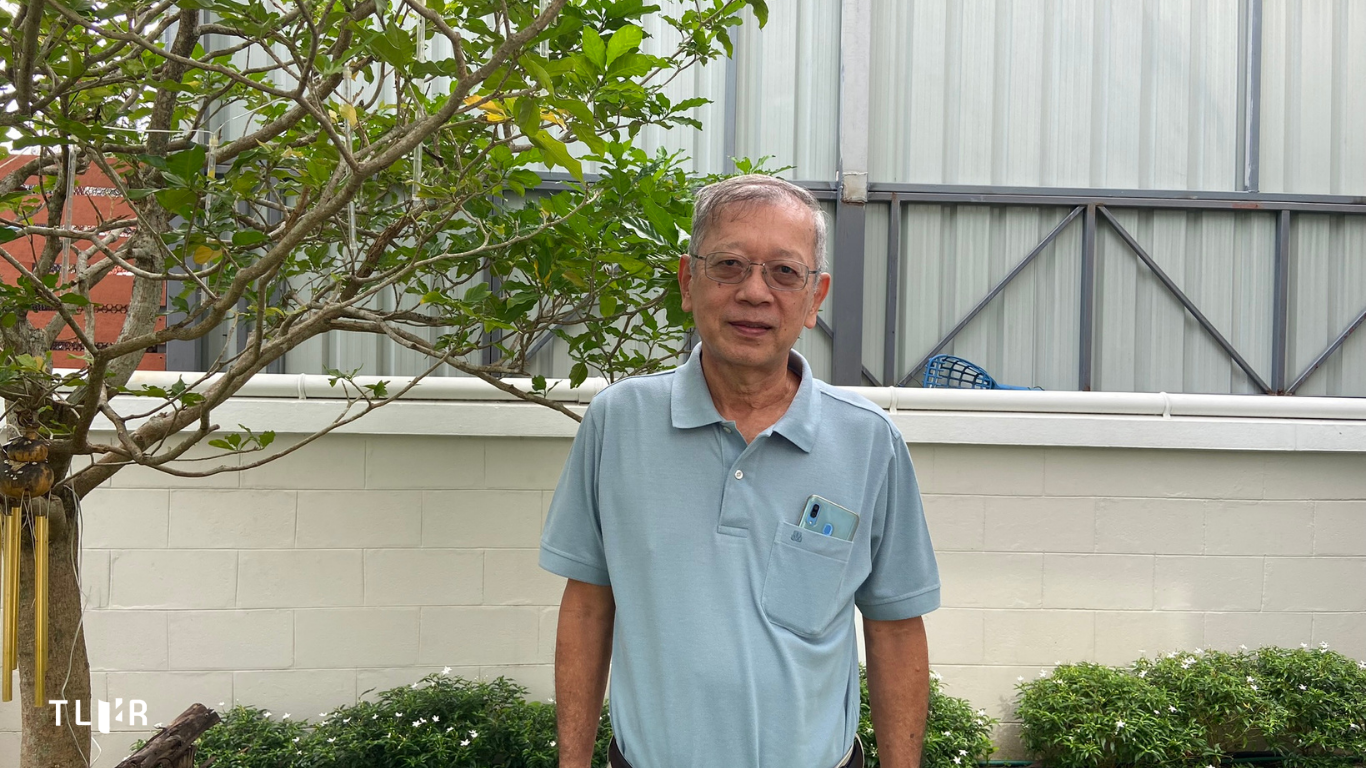
This year, Thaworn Piyawongrungruang turns 69 years old. He has been in the legal profession for more than half his life.
Thaworn dreamed of becoming a lawyer since secondary school. The young man grew up during the movement calling for social justice in the late 1960s and was a part of the October 6, 1976 protest.
He began his legal career in his early twenties, after graduating from the Faculty of Law, Ramkhamhaeng University, at a time when becoming a lawyer didn’t require one to pass an exam. He trained at a law office that was instrumental in assisting people in distress before gaining experience at various companies, eventually becoming an independent lawyer who assisted with human rights cases and cases arising from political activism after the 2014 coup.
After more than 40 years of serving as a lawyer, today, lawyer Thaworn has retired from the demanding work. But looking back, he is proud to have practiced this profession and to have been a small part of creating change for democracy.
.
.
Growing Up During The Flow Of October Events
Lawyer Thaworn was born in 1955 in Bangkok to a family of Chinese descent. His family’s economic status was not very good. His parents were merchants. He went to school in a temple from a young age.
“Growing up, I saw injustice in society and the problems of poor children. The idea of becoming a lawyer took hold of me since high school. I was determined to be a lawyer, convinced that knowing the law would allow me to help others significantly.”
Lawyer Thaworn took an interest in and learned about politics during high school. An important catalyst for this was the political awakening among students, which had been present since before the incident of October 14, 1973. The incident led to a large-scale protest to oust the military government at that time, along with the political atmosphere after the incident where the rights and freedoms of the people flourished.
“I became interested in politics because there were frequent protests and gatherings in Thai society after the October 14th incident. Between 1973 and 1976, I often joined the protests and was influenced by the movement, lead by the idea that we must fight against injustice in society.”
Thaworn studied at the Faculty of Law at Ramkhamhaeng University in 1975. His initial intention was to study at Thammasat University, a prominent university in political activism. However, he did not pass the entrance examination, leading him to study at an open university instead.
In his first two years at university, he hardly studied. He would read just enough to pass exams, at best. Instead, he devoted his time to following political developments, joining rallies, or advocating for many issues that blossomed like mushrooms in the rainy season.
“I mostly attended protests at Thammasat, Sanam Luang—for instance, labor protests, and farmers’ protests demanding the issue concerning farmland rent. I went to listen to debates, listened to the Socialist United Front, Khaisaeng Suksai, Thongpak Piangkaet, and Somkid Srisangkhom, and read newspapers, such as Athipat. Students at Ramkhamhaeng also created and distributed newspapers and leaflets.”
In Thaworn’s memory, “Mob” is participating in the rallies against the increase of bus fare at Sanam Luang and protesting tuition fees at Ramkhamhaeng University.
“At that time, the tuition fees at Ramkhamhaeng [University] for the entire course were probably no more than 5,000 baht for four years of study. I paid 18 baht for one university credit at that time. It once went up to 25 baht, and the students protested, and they agreed to lower the price. It was part of the fight in the tuition fee protests. In those days, anything we thought we could fight for – we fought. Nowadays, regarding things like the expensive BTS fares, if it were that time, there might have been a protest already.”
“Back then, a lot of students protested, along with some adults, but there were mostly young people. There were various clubs and student organizations. At Ramkhamhaeng, the student union would hire buses and gather people to go to rallies at Sanam Luang. I went frequently. I witnessed the fight from that time.”
Thaworn recalled that various progressive media at that time were influenced by leftist ideas. He read books like ‘Prachaya Chaobaan’ (Philosophy of the Common People), ‘Selected Works of Mao,’ or books by Jit Phumisak. Student groups organized seminars to exchange social issues or discussion from reading books together.
In addition, he also received news information via the radio. He had a Japanese shortwave radio, which his older brother had given him. It was a fairly high-quality radio that could receive short waves clearly. Therefore, he listened to the broadcasts of the Voice of the People of Thailand (VOPT), Radio Beijing in Thai, or news from the BBC. It became a way to access important news that was not limited to just Thailand.
That was until the state and the right wing crushed the flourishing movement with suppression and a massacre in the city center during the October 6, 1976 event. Thaworn was there until the evening of the 5th. A few hours later, the horrific tragedy unfolded the following morning.
“We left by the evening of the 5th. Some of us went to look for friends, telling them to go home. Some didn’t. A friend of mine was arrested at the October 6th event. I didn’t return to the gathering on the morning of the 6th. I just followed the news from outside.
“There was an attempt to suppress and control the dissemination of ideas. Even today, there are efforts to control, to suppress, to prevent them [ideas] from spreading. Is it the same as 2020? – Yes. However, during my time protesting, water cannon trucks weren’t used. In the past, there weren’t many arrests for prosecution. They might instead kill or assassinate. But now, there are more tools, like using legal proceedings as the main approach.”
Following the October 6th event, some friends encouraged Thaworn to join the fight in the jungle, but he chose not to because he still needed to support his family and hadn’t been a key figure in the activism, so he wasn’t a target of the authorities, although he had to be cautious in his expressions.
“I almost didn’t want to attend classes. It felt hopeless. I stayed home, just helping my family. I had bought books to read, many of which were leftist, and I had to bury them,” Thaworn recalled about the period of hopelessness following the state crackdown of that time.
.
.
Professional Training Experience At The “Pradap And Associates Attorney Office”
When political activism and rallies were suppressed, Thaworn began to focus on his studies again. In his first two years, he had earned only around 57 credits out of the 144 needed to complete his studies. Seeing that many of his friends were close to graduating within 3 years of study, he returned to the classroom, studied, and accelerated his progress to graduate within 4 years during 1978-79. He recalled taking as many as 29 credits in his final semester.
Upon completing his Bachelor of Law, Thaworn’s dream of becoming a lawyer continued. He gained practical experience at “Pradap and Associates Attorney’s Office.” The firm belongs to Pradap Manuratsada. Pradap was a lawyer who played a key role in assisting with legal cases related to farmer demands and protests and progressive activism.
If it were today, Lawyer Pradap would probably be called another important human rights lawyer.
Thaworn interned at that office because a friend knew that Thaworn wanted to be a lawyer, so they introduced him to the ‘Pradap and Associates Attorney Office’. This place became the first office that imparted legal skills to Thaworn.
“I trained there for about a year and then started practicing law. At that time, lawyers didn’t have to take an exam; they only had to apply to be a member of the Lawyers Council of Thailand. Graduating with a bachelor’s degree already granted associate membership. If you didn’t graduate with a bachelor’s degree, you were like an affiliate member, able to practice law in 10 provinces. If you graduated with a bachelor’s degree, you could practice law throughout the kingdom. If you graduated from the Thai Bar, you would be a full member, with a few more rights, such as the right to vote for the committee.”
His work at that law firm allowed Thaworn to represent impoverished people in distress, as Pradab Manuratsada was on the committee of the Lawyers Association, which served as an oasis for the poor seeking access to the justice system. This was because the Lawyers Council had not yet been established. The council was then founded in 1985 after amendments to the Lawyers Act.
“Pradab’s office handled both cases helping poor people and cases where wealthy people hired them. If they were poor, he didn’t charge any money. There’s one story I remember. There was a person who raised shellfish in cages, and all the shellfish died. He had a contract with an entrepreneur. The entrepreneur sued him. He didn’t have any money. He came to us for help. Pradab had me help on this case. At that time, it was called legal aid work for the people. The term ‘human rights’ wasn’t used yet.
“When representing the poor, we had to pay for our own transportation. Sometimes, when the poor appreciated our assistance, they would clutch a few coins to give us. Those few coins evoked immense feeling within us. People who were struggling but possessed a generous spirit didn’t want to cause us hardship. It was as if they were trying to save those coins for the lawyer. Pradab primarily took on cases assisting farmers in the north, and he traveled there frequently, but I didn’t accompany him. I didn’t participate in cases outside of Bangkok; my practice was mainly in the city.”
Pradab’s office had about 3-4 full-time lawyers. New lawyers often rotated in and out. Once they had learned the skills, young people would pursue their career by taking the Judiciary Exam to become a judge or to do other jobs. But before that day came, new lawyers had to undergo rigorous training at Pradab’s office. Lawyers there were not allowed to litigate if they hadn’t worked there for at least 1 year.
“He would have you examine documents, complaints, and statements. Initially, you had to study these materials. I didn’t receive instructions for the examination. I began by handling unopposed cases, or what they call default cases, which weren’t challenging. I simply pleaded according to the complaint, asking questions. Later, with an opposing party and a defense, you’d start to fear losing the case. But I argued based on the evidence. I submitted anything available to the court. It took a long time to learn,” Thaworn recounted his professional training.”
.
.
Transitioning To Become A Lawyer For Private Organizations And An Independent Legal Practitioner.
As Thaworn progressed in his legal profession, he also pursued and passed the Thai Bar examination in the 1982 academic year. He obtained his Thai Bar certification the following year. Thaworn contributed to the work at Pradab’s office for around 4-5 years before transitioning to become a lawyer for a private company.
“As a new lawyer, life was challenging because my income wasn’t sufficient. After graduating from the Thai Bar, I also took the prosecutor and assistant judge exams. I took each exam once, but I didn’t pass. When I found a job at a private company and my income improved, I stopped considering taking those exams.”
In the 1970s, the earnings of professionals in various positions of the justice system, including lawyers, prosecutors, and judges, were largely similar. Prosecutors and judges salaries were not as high as they are now. The significant increase in salaries for those two professions happened in the 1980s, which started to create a more pronounced income disparity among various roles in the judicial system.
“Later on, the salaries of judges and prosecutors were significantly increased. My peers earn salaries in the hundreds of thousands. After the coup, the retirement age was also extended to 70 years. If you’re in good health, it’s extended to 65. Beyond that, if you’re still able to work, you can extend it annually. At 70, the salary is substantial, along with other benefits. Injustice isn’t limited to the public; it also occurs among legal professionals,” Thaworn noted as he reflected on the issues within the professional circle.
Thaworn worked with several private companies. He changed jobs many times, including a stint working for a famous hotel. He said that at that time, it was like being a regular salaried employee. He had to work full-time, doing the duties of caring for the legal department and various lawsuits for the company he worked for; he could hardly take on his own cases.
“When I was with a hotel, my work involved contracts and labor court cases, as they had many employees. There were instances of employee misconduct, but if I felt they shouldn’t be prosecuted, I would argue against it. For example, there was an employee who took the hotel’s pork home to make pork floss. However, this pork was going to be discarded anyway. He secretly took it to make pork floss. He was caught. The employee explained that the pork was going to be thrown away anyway, so he thought he’d take it for his mother and children. He tried to fight and plead his case. So I told the hotel manager that they should not sue him; it was not worth it. A warning would suffice, no need for a court case,” Thaworn recounted some incidents from his regular job.
Thaworn didn’t stay working at any one place for very long. Once he knew how things worked at a place, he would often change jobs. So, Thaworn started a law office with friends. Eventually, he spent the rest of his career as an independent lawyer and took on various cases by himself.
“Once I left corporate employment, I was no longer affiliated with any company. I worked as a freelancer, handling cases on my own. I relied on referrals from people I knew. I used my home as an office. My girlfriend at that time was able to assist me, helping with typing and paperwork. I was tired of being an employee. As a freelancer,I could work independently. I could do things however I wanted. Later on, when there were political and pro bono cases, I had significantly more time to dedicate to them.”
.
.
Toward Becoming A Volunteer Lawyer In Human Rights And Political Cases
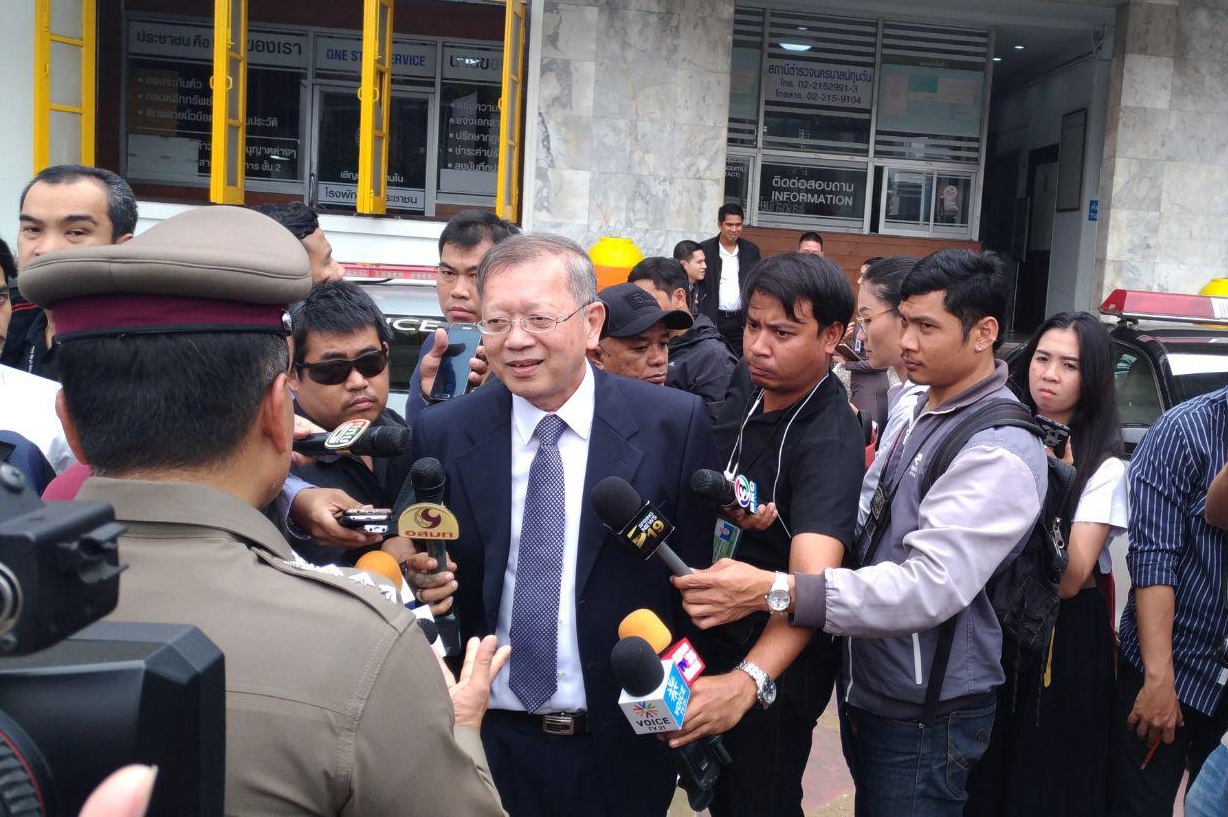
Being an independent lawyer allowed Thaworn more time to take on cases he was interested in, as he didn’t have to depend on an employer or law firm owner like before. He started working with the Cross Cultural Foundation in the early 2000s. He served as a legal advisor, participating in meetings related to human rights cases and helping prepare complaints or appeals. However, he still had limited time to fully engage in courtroom advocacy.
“I worked as a legal advisor on cases, sometimes helping them draft complaints or appeals. The cases at that time were primarily related to the three southern border provinces. For example, the case of Imam Yapa (Kaseng), who was tortured to death in a military camp. I assisted in writing the complaint, but I couldn’t dedicate much time to courtroom representation due to my primary work that I couldn’t abandon.’’
This was the case until the 2014 coup, amidst the situation of lawsuits against a large number of people who came out for political protest.. There were arrests of protesters and people who didn’t report to the junta. There were civilian trials in military tribunals and the vigorous enforcement of Sections 112 and 116. Thaworn dedicated himself to assisting people’s cases fully, joiningThai Lawyers for Human Rights as a volunteer lawyer. The foundation was established after the 2014 coup.
“After 2014, I became fully involved in assisting with political cases. There was a shortage of lawyers then, with mostly younger lawyers still learning. I wanted to contribute. I focused on cases in Bangkok handling about ten of them. These included protest cases involving the pro-democracy movement and cases related to explosions. There was one case involving Section 112 concerning a psychiatric patient. A psychiatrist even testified before the court, stating that the patient was ill. But the court still found this person guilty. It’s the only Section 112 case I’ve taken on.”
When asked about the difference between handling political cases and handling general cases, Thaworn explained that political cases are related to the policies of those in power and the political situation. The law is only one aspect of the case. The fact that defendants are brought to military court is entirely a political tool to suppress dissidents. The justice process is weaponized as a tool by the authorities. Moreover, it seems those who make the judgments already have a ‘goal’ in mind, whether this case will be ‘lost’ or ‘won.’ Especially in important cases, when they want the people to lose the case, the verdict will find reasons to justify why they lost the case. They may not even consider people’s arguments at all.
Thaworn sees that, from the defendants’ point of view, they are mostly ordinary people or activists who come out to fight for political causes. These people are driven by political intent and a desire for a better society, unlike the criminals or wrongdoers in typical criminal cases. Many are aware that their activism will lead to prosecution. But they are willing to make that sacrifice and take that risk to effectuate change in society.
“Political cases differ from general cases. General cases involve lawsuits seeking the return of assets. If the defendant possesses any assets, they can be recovered through settlement. If they don’t, it might not be returned. However, political cases are different; they represent the struggle of all people. Individuals are prepared to risk sacrificing their liberty. Consequently, we must stand together, not abandon them to fight on their own. Many defendants are poor. Therefore, collective assistance in their legal defense is helpful.”
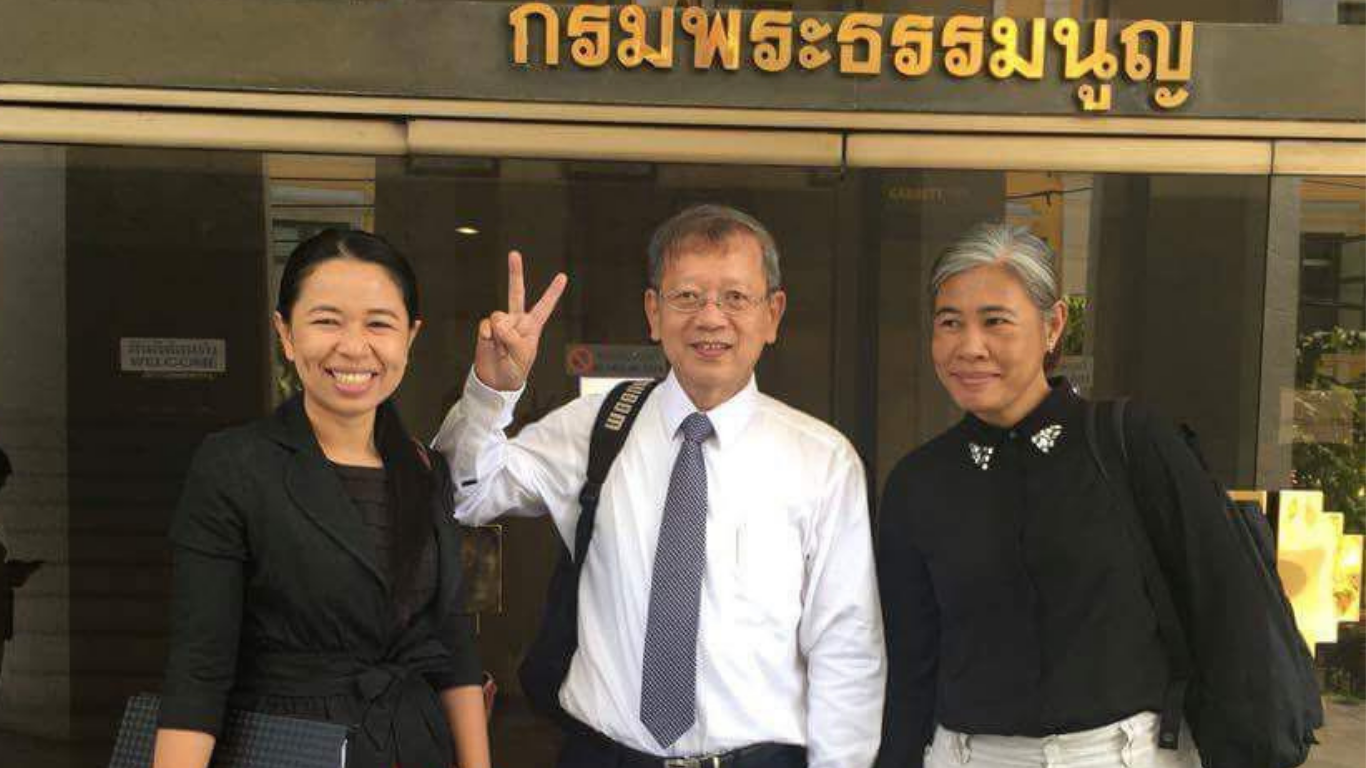
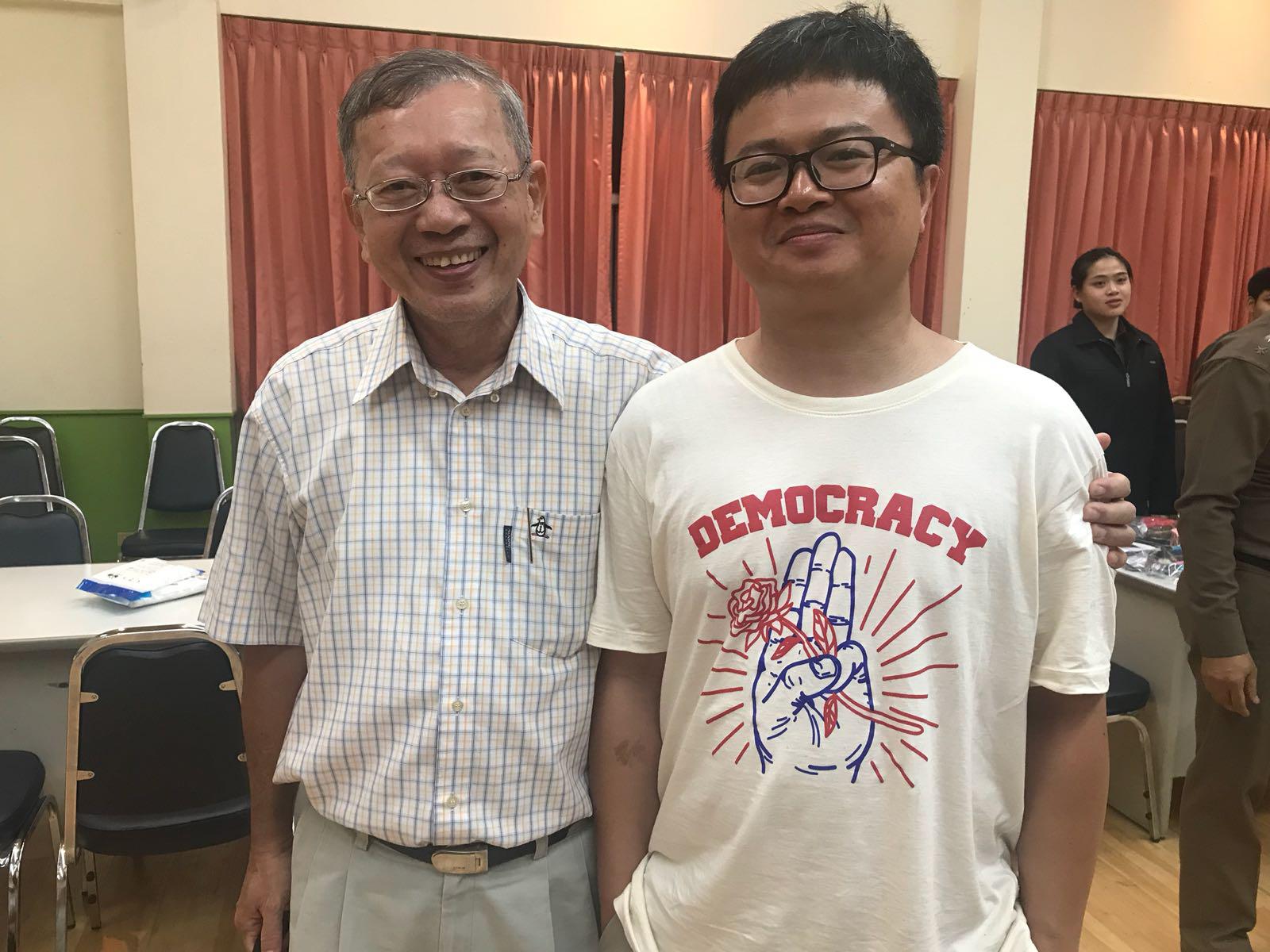
Thaworn mentioned several clients who impressed him, such as Sombat Boonngamanong and Arnon Nampa. These people came out to fight, willing to risk their freedom, as did ordinary citizens who were part of the movement, like the protesters in the pro-democracy cases, many of whom were older women and men. When they had to attend court frequently, these people were industrious and caring for one another. Some would help prepare food and water in the court cafeteria. During lunch breaks, the lawyers and all the defendants would gather to eat together, creating a very touching experience of working as a lawyer in political cases.
“I also want to contribute to mobilizing society towards democracy, even if it’s just to establish a basis for progress. Every time there’s a coup, they write a new constitution, then impose it on the people. This process creates unjust rules and causes democracy to regress. Many people are compelled to come out and fight. My involvement in these cases is a way of supporting that push. We want to see positive change leading to the development of a better society.”
“Regarding political cases, I don’t focus on individual cases but rather on the broader context. I consider how the struggles of different groups of people drive societal change. When we examine the overall picture, the positive outcomes of these struggles become clearer. While individual cases might offer limited solutions, the overall picture reveals the sheer number of people committed to fighting. These individuals provide me with valuable insights, despite the challenges involved in litigating these cases.” Thaworn explained his perspective as a lawyer who assists in political cases.
.
.
In Retirement And Reflection On Work That Drives A Positive Change In The Society
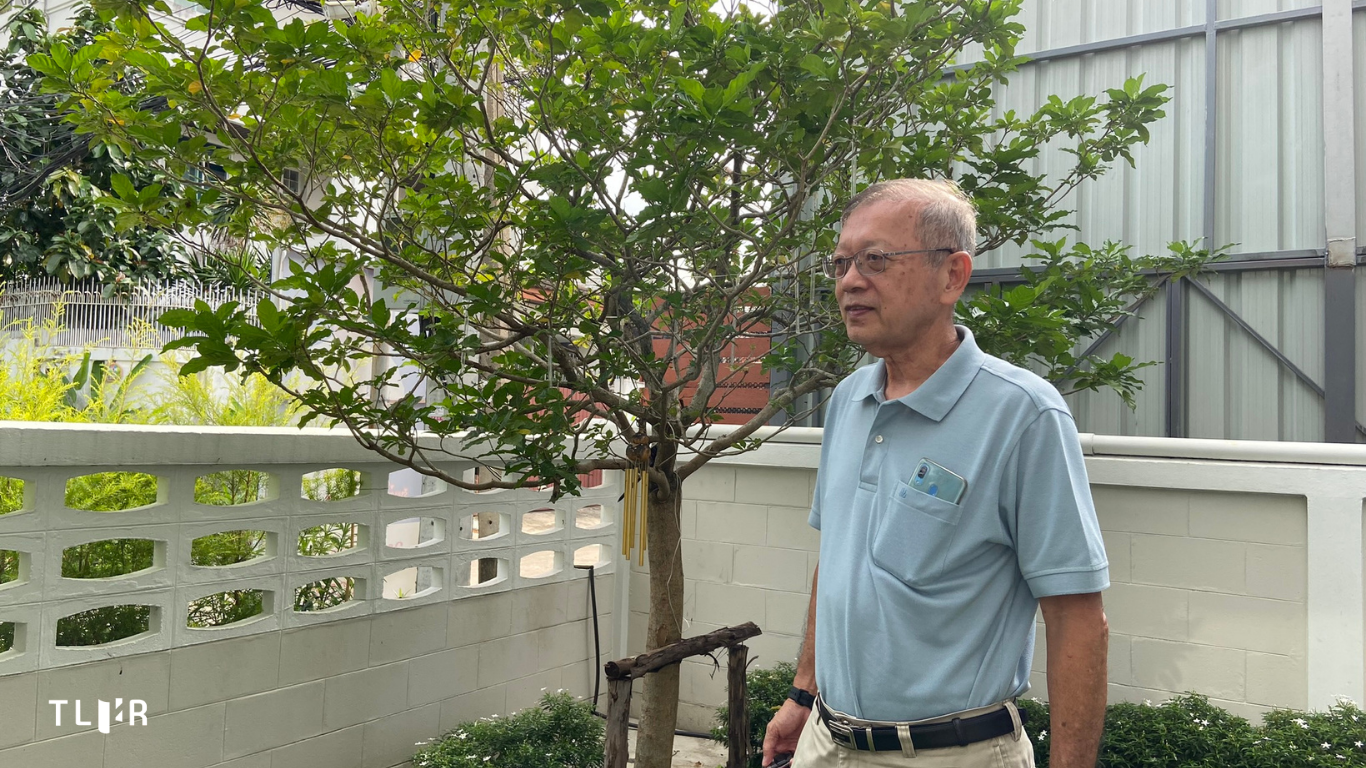
Currently, Thaworn has retired from his work as a lawyer. Since the major protests of students and the public in 2020-2021, he has experienced physical illness. Although he has recovered somewhat, his body has begun to give warning signs, leading him to decide not to take on any new cases. While he observes the increasing number of political cases in recent times, he has to be careful not to overextend himself. He may offer legal advice or assist friends with minor case documentation occasionally, about two or three times a year. The rest of his time is spent primarily resting and taking care of his health.
“Sometimes, I still have the thought of wanting to go back to help litigate, but when I really sit down and think about it, I think it’s better not to. My body is warning me. The work of a lawyer is demanding,” Thaworn said.
As he gets older, he confesses that he is starting to lose track of many changes. Such changes include legal changes when laws are amended or new laws are promulgated periodically. Technological changes also play a role in legal work, such as digital evidence, which is becoming increasingly complex. Thaworn will probably have to rely on the new generation who will grow up to continue this work.
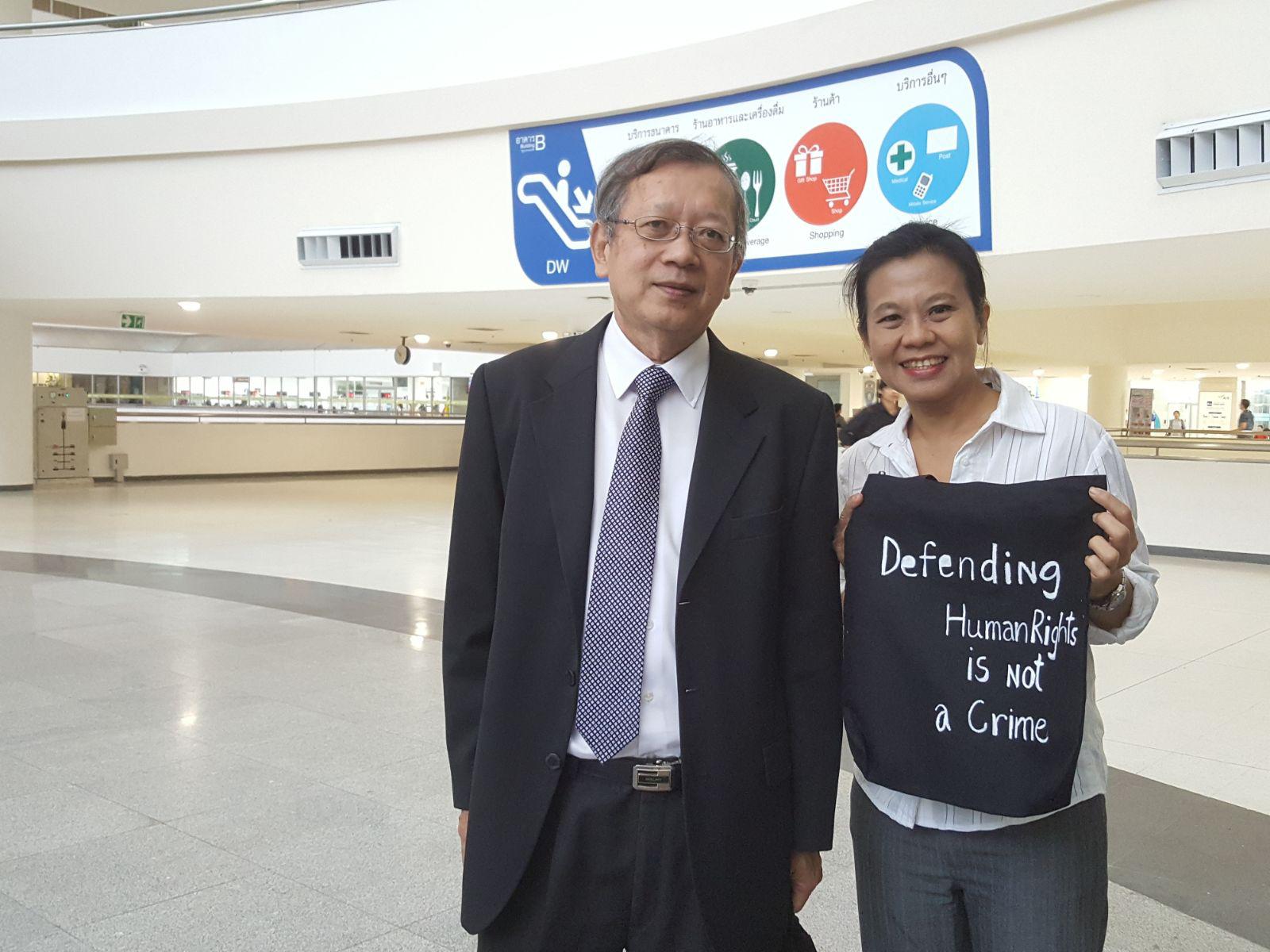
In his free time, Thaworn still closely follows the news and the political situation. He also drops by the court to give moral support to Arnon Nampa, a fellow lawyer who has been actively involved in political movements and has been detained for an extended period.
When reflecting on his career as a lawyer from his youth to retirement, Thaworn does not want to define himself as a human rights lawyer because he spent a significant amount of time working for private companies. He views this type of job as ‘serving the employer’ and hardly takes on other types of cases.
But his stance as a lawyer is still the same as his starting point of being a lawyer. He wants to see changes in society.
“The role of a lawyer is to aid the people’s struggle, help resolve legal issues, and alleviate the hardship of those who come out to fight and take action. It provides the assurance that you have a lawyer to guide the case and stand by your cause.”
However, social change is a long-term process, and the task must be passed on to successive generations, just as the preceding generation passed it on to his.
“Uncle Samphat Phuengpradit (a lawyer who provided assistance to the people and was involved in political activism, a generation before Thaworn), died at nearly 100 years old. Uncle Samphat used to teach that the fight doesn’t occur within a short period but takes 10, 20, or 30 years. In some foreign countries, certain issues were fought for over a century. In Thailand, if we count from 1932, it’s been more than 90 years. Our ideas and the ideas of a generation that sought equality, fairness, and keeping pace with global developments still align.”
.
.
Thaworn also sees that the group of people trying to oppose change have committed actions that are self-destructive or destructive to their political institutions. He gives examples of the Constitutional Court’s rulings in several cases. Even though it seems like an attempt to block the people’s fight, it results in destroying the credibility and trust from society in the work of the organization. These things accumulate continuously, and it is not yet known what they will lead to.
“People’s ideas change quickly. Only the Thai ruling class remains unchanged. The next generation will have to fight again. But I think there will have to be changes. But you don’t know when it’s going to happen, just like death. Today, you have a conversation with someone. In a few days or less than a year, your conversation partner might not be there anymore.”
“Don’t think ‘why should we fight if there’s no future?’. Don’t think that way. If you want to have equality and fairness, you have to keep fighting. It’s the same as the former generations who passed it down. Even if our time runs out naturally,” Thaworn left as a final remark.
.
ข่าวหรือบทความที่เกี่ยวข้อง

Yaowalak Anuphan: Human rights work is a never-ending task
Story and Photos Veerapong Soontornchattrawat . Note: This interview series is part of the book “Feathers on the Scales”, which features ten interviews that explore the lives and experiences of human rights lawyers advocating for civil and political rights in Thailand. The book was published by Thai Lawyers for Human Rights (TLHR) in February 2025 […]

admin010
25/09/2568
Public Statement Condemning Bomb Attacks in Southern Thailand, Demanding Fair Trial Rights and Transparent Investigation
Public Statement Condemning Bomb Attacks in Southern Thailand, Demanding Fair Trial Rights and Transparent Investigation During 11-14 August 2016, 17 explosions took place in seven provinces in Southern Thailand causing a number of lives and damages. Since 13 August 2016, the Thai authorities have responded by invoking Section 44 of the Constitution of the […]

TLHR
15/08/2559
TLHR report four years on from coup: Thai society “wrecked” by NCPO
22 June 2018 — Thai society has been “wrecked” by the National Council for Peace and Order, Thai Lawyers for Human Rights (TLHR) has said in its newly released report on four years of military rule in Thailand. The report, which was launched on Friday at the Foreign Correspondents’ Club of Thailand, warns of the […]
TLHR
22/06/2561
You Can “Run Against Dictatorship”: Basic Legal Recommendations before Staging a “Run Against Dictatorship” Event
On 12 January 2020, people in several Thai provinces and abroad will unite to “Run Against Dictatorship”. Thai Lawyers for Human Rights has found that event organizers in Bangkok and other provinces have faced difficulty in obtaining permission to use some locations for the event, being threatened by officials when requesting permission to stage the […]