
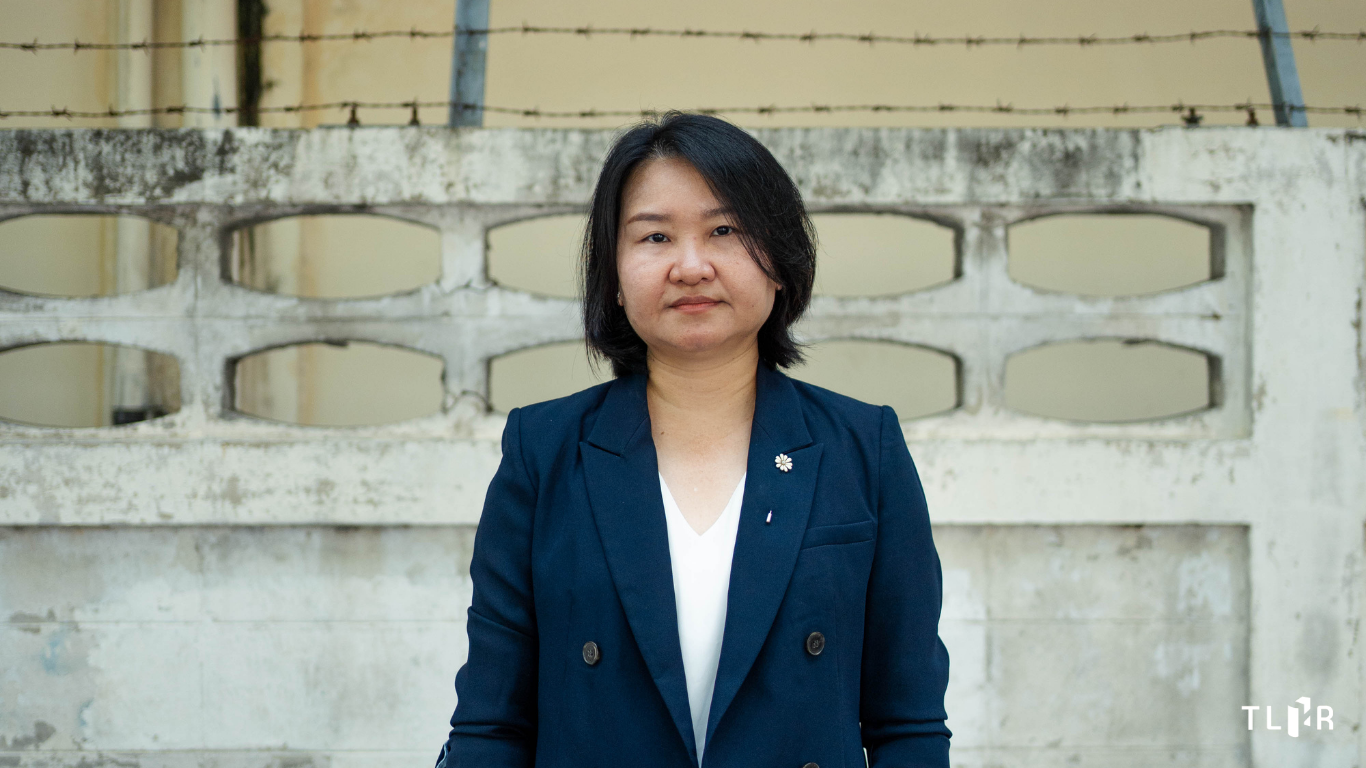
Story By Wanna Tamthong
.
Note: This interview series is part of the book “Feathers on the Scales”, which features ten interviews that explore the lives and experiences of human rights lawyers advocating for civil and political rights in Thailand. The book was published by Thai Lawyers for Human Rights (TLHR) in February 2025 and was later translated into English.
——————————
.
“Everyone is equal in the justice system. The court doesn’t have the right to wield power as it pleases just because it sits in a higher position. Everyone has a duty to make justice happen.”
.
A Lawyer from a Farming Family — A Thammasat Student Who Thinks Outside the Box
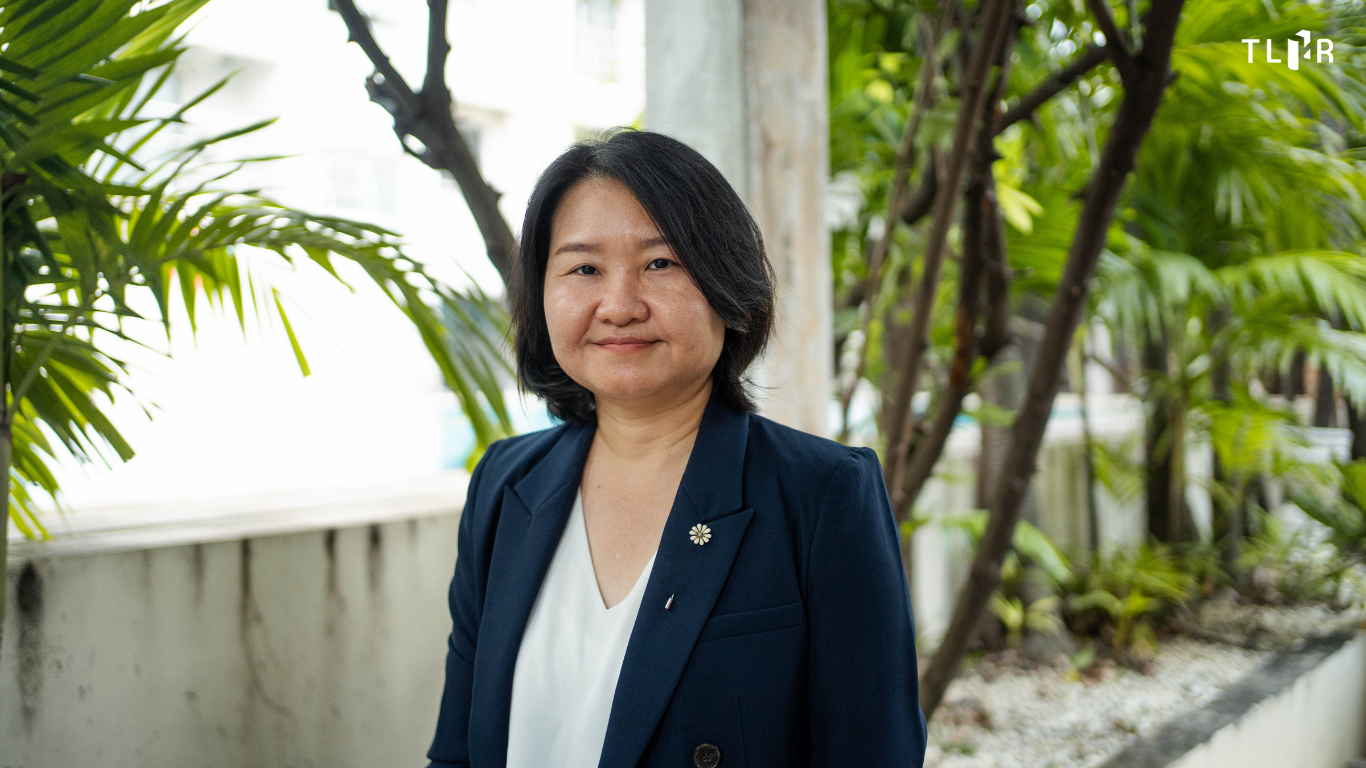
Junjira Junpaew, or “Lawyer Muay,” didn’t grow up in a family of legal professionals. She is the daughter of farmers; her parents worked in the fields, far removed from the legal sphere. Her family wasn’t middle class but working class, struggling financially during her childhood. However, her uncle, a police officer, hoped she would become a judge and he supported her by gathering entrance exam materials when she was in high school. Eventually, Lawyer Muay secured a place at Thammasat University’s Faculty of Law through a quota program.
Coming from a modest background, Lawyer Muay, a freshman of the class of 2001, couldn’t fully participate in the costly freshman activities at Thammasat. Simply attending university already incurred significant expenses for her. Instead of joining expensive freshman events, she became involved with the “Weeds Group” — a turning point in her life during her time in University.
“The Weeds Group was an independent group at Thammasat. Several seniors gathered from different faculties, it was not restricted to law students. The group questioned many social norms, cultures, and traditions. During camps, I found things that resonated with me: questions like “why farmers are poor?” – and it is not because they’re lazy. We also visited communities affected by the Thai-Malaysian gas pipeline and the Pak Mun Dam protests, seeing firsthand how people’s lives were impacted,” said Lawyer Muay.
The Weeds Group served as a crucial foundation for Lawyer Muay to feel that debate, exchange, and listening to opinions are all processes that should be undertaken. The participation of the public should also be heard by the state. Lawyer Muay was involved in activities with the Weeds Group continuously until the end of her fourth year. During this time she realized that becoming a judge, as her uncle had hoped for her, was not a path she would follow.
“I had already rejected the bureaucratic system. Judges are part of that system. When I followed villagers’ legal cases, I saw judges working without independence. That wasn’t the path for me.
“I didn’t want to become a government official. Even the idea of becoming a judge, which I once wanted, didn’t feel right anymore. I also didn’t want to work in a private company because it’s part of capitalism. So I looked around to see what other options were available and found a program run by the Puey Ungphakorn Institute at Thammasat University. They were accepting students for internships — like a short-term volunteer program during the school break — so I applied. There were many interesting organizations involved, and I ended up at the Women’s Foundation.
“It was exciting and fun. After the internship, I continued working there. It was my first real job, and it gave me work experience and a foundation that I still rely on today. I still remember that my first time flying on a plane was because of my work at the foundation,” Lawyer Muay shared.
Lawyer Muay’s work at the Women’s Foundation coincided with the period after the tsunami. At that time, Lawyer Muay went into the field to work with groups focused on the rehabilitation of children and women. She also collected interviews from those affected by the disaster and helped turn them into a book. It was the first book where her name appeared alongside the team. She also worked on telephone counseling cases and followed the foundation team to work on cases involving women facing domestic violence. It was work that demanded a lot of energy and emotional strength.
Eventually, she reached a point where she felt stuck with the emotional toll of counseling and casework. At the same time, her experience handling cases sparked a desire to move forward into becoming a lawyer. So, Lawyer Muay decided to shift her career path toward legal practice by applying to become part of the first cohort of Human Rights Lawyer Volunteers (Thai Volunteer Service).
.
.
The First Generation of Human Rights Volunteers
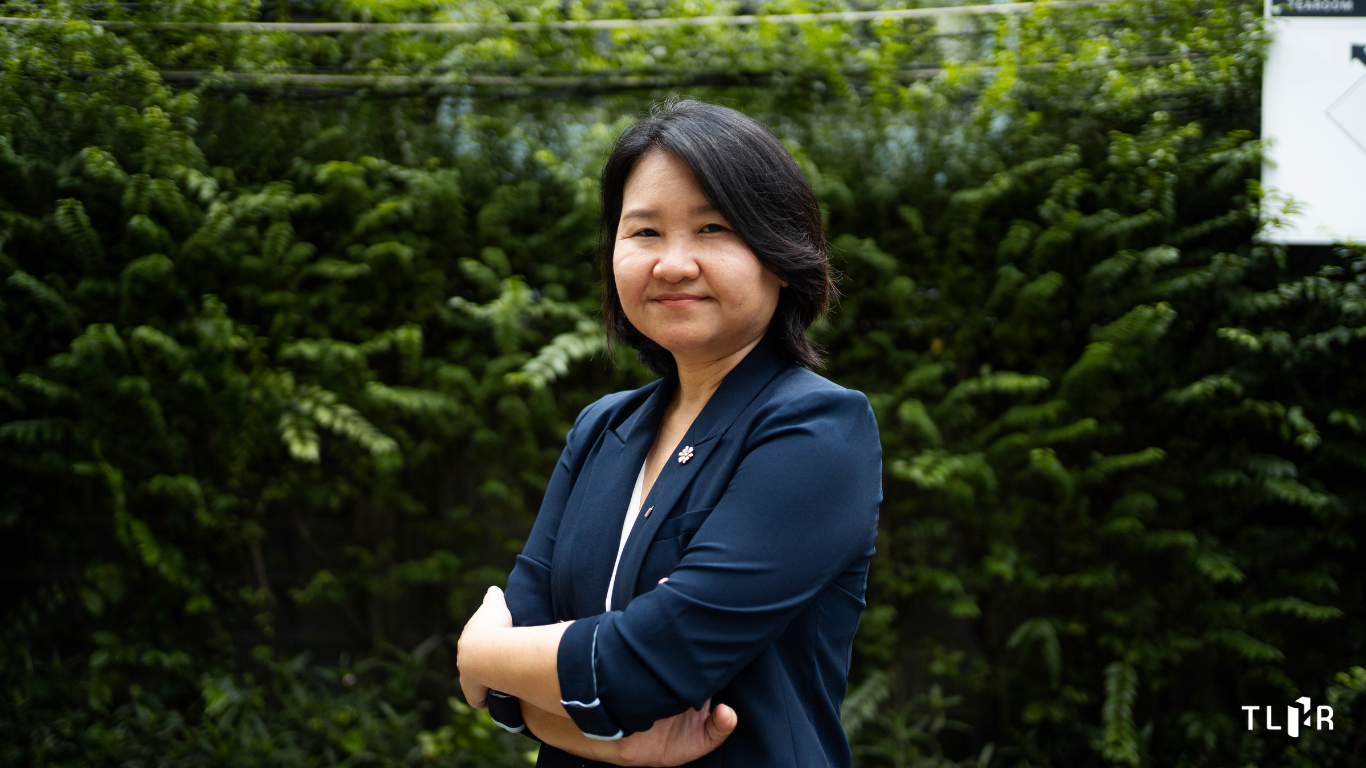
After resigning from her job, Lawyer Muay chose to intern with the Cross Cultural Foundation, which works on various human rights issues and provides legal assistance in the three southern border provinces. During her internship, she went to work on-site, learning about issues in the southern border provinces. She gained additional knowledge from the legal professionals on the team and experts from abroad, who shared new legal experiences and cases from other countries. One example was how a lawyer can prove a person had been tortured, even in the absence of visible signs of injury, by proving symptoms of PTSD (Post-traumatic Stress Disorder), an emotional disorder that occurs after experiencing violent events. This method was later used successfully to win a case where soldiers tortured a student in Yala Province.
During this period, Lawyer Muay also had another side of her life where she tried helping the private sector with legal cases. This waspart of her training to obtain a lawyer’s license. She trained under Nakhon Chomphuchat and Ratsada Manuratsada, two lawyers with very different working styles.
“With Nakorn, I worked my first all-nighter at the office due to case preparation. It was a cosmetic surgery case. The victim had suffered damage from a facial surgery. But eventually, it turned into a murder case. The victim was about to win the lawsuit against a military doctor, but before the scheduled hearing for the verdict, he was assassinated by a gunman. It was something that made me realize that the justice system is… well, you know…” Lawyer Muay said.
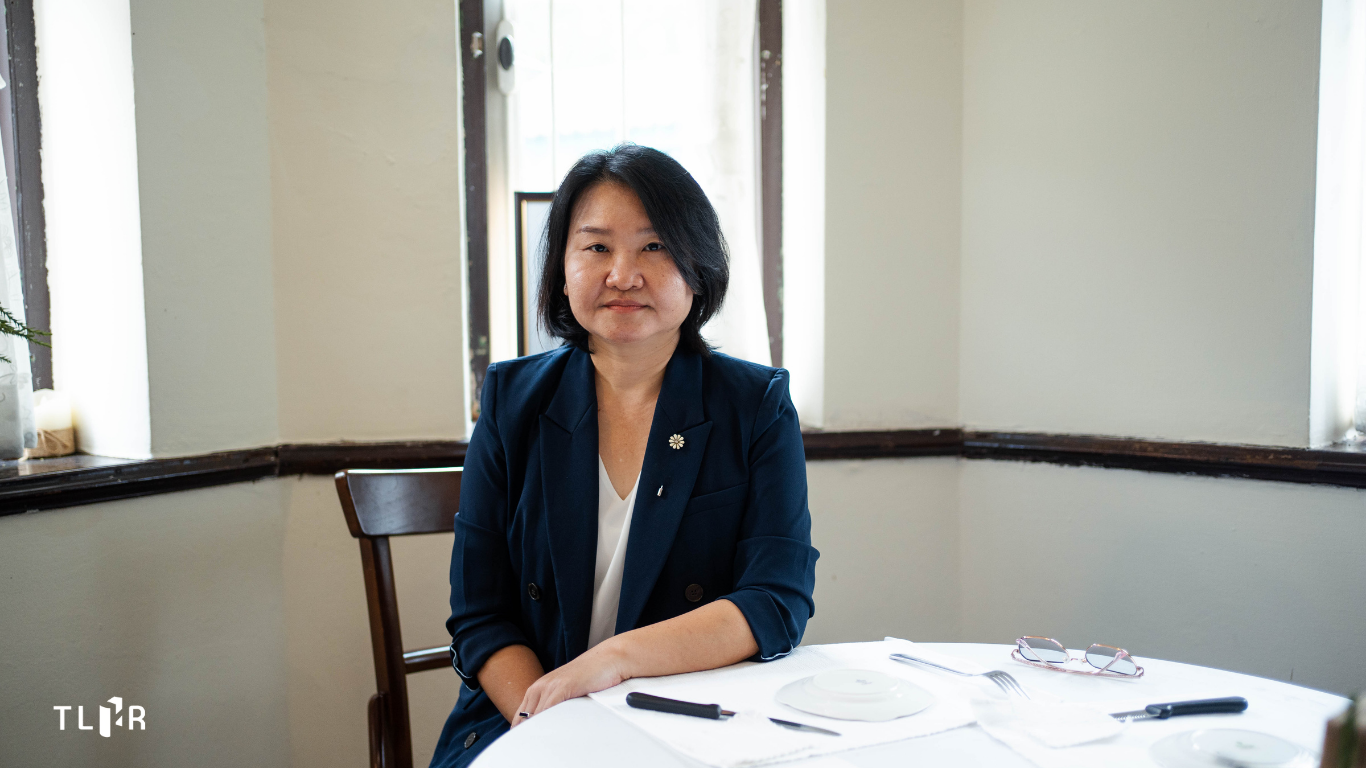
Lawyer Muay views her training with Lawyer Nakorn and Lawyer Ratsada as the foundations that shaped her approach to legal work. She noted that the working culture within human rights organizations is very different from that of private companies. Even though she was a female lawyer, she was never assigned to make coffee, forced to only do administrative tasks without the opportunity to work on substantive cases, or made to carry a senior lawyer’s bag against her will. “Lawyer Ratsada, who was the head of the office, often helped carry my bag instead. He is a lawyer who treats everyone with great respect and equality, even if they are younger or less senior,” she said, speaking about the kindness of the senior lawyers.
After finishing her volunteer program in 2007, she joined the Human Rights Lawyers Association (HRLA). There, she organized advocacy trainings to build the capacity of new-generation lawyers while also working on legal cases. She remained with the organization, mainly working on political cases, community cases, and environmental cases. This allowed her to start seeing some of the differences between the types of legal work.
Most environmental cases she worked on involved villagers who protested or campaigned and were then sued for defamation or under the Computer Crime Act. In these cases, if the statements weren’t extremely severe, they could usually be defended successfully. The courts generally had a positive attitude, recognizing that the villagers were exercising their rights to protect the environment. “But if someone really did insult another person, if they’re wrong, then we must say they’re wrong. This is my principle,” Lawyer Muay stated.
Lawyer Muay began working on political cases after the 2014 coup. She sees them as a different kind of challenge. Some political cases stem from the defendant speaking on sensitive issues, making the chance of winning almost non-existent.
“These cases demand even more fighting spirit than ordinary ones, despite knowing that the chance of losing is very high. Political cases are about recording history –recording that there was a time when the justice system forbade citizens from speaking the truth.
“Criticizing laws that expanded the King’s royal powers became impossible. It’s absurd that the law itself isn’t illegal, but people who discuss or criticize the consequences of that law are criminalized and imprisoned. It means we are not allowed to speak the truth. The verdicts in these cases, especially those involving Section 112, tend to follow the same pattern. There’s often very little reasoning or detailed explanation. Sometimes, even in the same ruling, the court’s reasoning for convicting someone of violating the Emergency Decree has more detail than convictions under Section 112. That’s because they can’t actually refute the evidence we present in court. Thanks to the truth that we present,” said Lawyer Muay.
She spoke about handling political cases involving Arnon Nampa: “This is not the first time that someone who spoke out has been prosecuted in this way. The state has always used these tactics. We see these kinds of things happening in countries that are not truly democratic. In fully developed democracies, the state respects differing opinions. Arnon spoke the truth, but it was a truth that the traditional establishment forbids people from mentioning. Even though everyone knows it’s true, it’s absolutely prohibited to talk about it. And the justice system is now actively serving the role of forbidding people from speaking the truth. But we still believe that one day, truth will prevail. And when we look back, we will see the truth behind the justice system.”
.
.
The Experience of a “Fighting” Lawyer
Lawyer Muay shared the enjoyment she finds in working as a human rights lawyer:
“The fun lies in the substance of each case. Every case brings up new issues that require designing new litigation strategies. For example, there was a case where a member of the press was injured by rubber bullets fired by the Protection and Crowds Control Division (PCCD) officers during a protest. The media sued the Royal Thai Police for damages due to wrongful acts. In this case, the defendant, the Royal Thai Police, tried to argue that the journalist was standing at a distance beyond the range of the rubber bullets. They even submitted calculations of firing distances as evidence.
“As a lawyer, I had to do research in this field. Since I was not good at calculations, I had to seek expertise to counter the police’s math. It turned out that the recalculated results differed from what the police claimed. The police admitted our evidence in court. I didn’t even use a formal expert witness in this case. My partner helped with the calculations, although he didn’t testify. I simply submitted the recalculations to the court and used them to cross-examine the police, and the court accepted this evidence and ruled in favor of the journalist. It was a really fun and challenging case. Another part of the fun comes from working with lawyers from different generations,especially when we have cases in the upcountry provinces.We spend time together, go to court together. Afterward, we’d stop by the local markets, buy food, and share meals.”
Lawyer Muay also talked about the case concerning the installation of the Khana Ratsadon (People’s Party) plaque at Sanam Luang, or the #19SeptReturnPowerToThePeople protest in 2020. It was one of the cases in which she particularly enjoyed the working process. This case was filed in court in 2021 and involved 22 defendants. Even now, the witness hearings have not been completed. It has been a case requiring a large team of lawyers, both junior and senior.
The case has faced constant delays, partly because the court refused to issue subpoenas for the defendants’ documentary evidence. Judges on the panel kept being replaced. The defense lawyers filed motions requesting the subpoenas at least seven times. They also filed motions to recuse the judges due to the refusal to issue subpoenas and certain remarks from the court that made the defendants feel they were not being treated fairly. Moreover, it was a case where Arnon Nampa was both a defendant and a lawyer at the same time. The courtroom was filled with supporters, making the case preparation and the courtroom battles even more lively and exciting.
Lawyer Muay has, in some cases, filed motions to recuse judges when she believed they had overstepped their authority. “I clearly remember the first case in which I filed such a motion was the case of Apichat Phongsawat (a law student) after the 2014 coup. He held up an A4 paper with the message ‘Do not accept illegitimate power,’ as a symbolic protest against the coup. But he was charged and prosecuted. We fought the case at Pathumwan District Court, and the court’s behavior and attitude were quite poor. Lawyer May, who worked on the case with me, discovered that the judge had liked the Facebook page ‘Soldiers Reform Thailand,’ which promoted content praising the Prime Minister and military officials while repeatedly spreading false information about the pro-democracy side.
“Moreover, the judge spoke to the defendant and the defense lawyers in a way that pressured them to plead guilty, arguing that it was just a minor offense. The judge also told the defense lawyer, ‘You’re a lawyer; they [the NCPO] have the power. What are you fighting for?’ Such remarks revealed to the defendant the judge’s attitude. Not only did the judge fail to properly scrutinize the legitimacy of the NCPO’s orders and announcements, which was central to the case, but the judge also displayed an acceptance or even submission to the NCPO’s authority. Meanwhile, the defendant’s position was to fight the case on the grounds that the NCPO did not legally hold power at the time of the incident.“
.
.
“Additionally, the judge spoke with a police witness who was testifying in court about other protesters who were not defendants in the case. The judge asked who the people in the video that the witness mentioned were, and whether they had been brought in for questioning. This made the defendant realize that the judge seemed intent on prosecuting all the protesters, even though the witness testimony had not been fully completed, and it was still unclear whether the defendant had committed the crime. This situation was taken into account in the case, and a motion to recuse the judge was filed. Our team discussed that if the case were to proceed with this judge, it could result in an unfair trial for the defendant. In the end, the case was dismissed. Both Lawyer May and I assessed that part of the reason for the dismissal was due to the motion to recuse the judge.
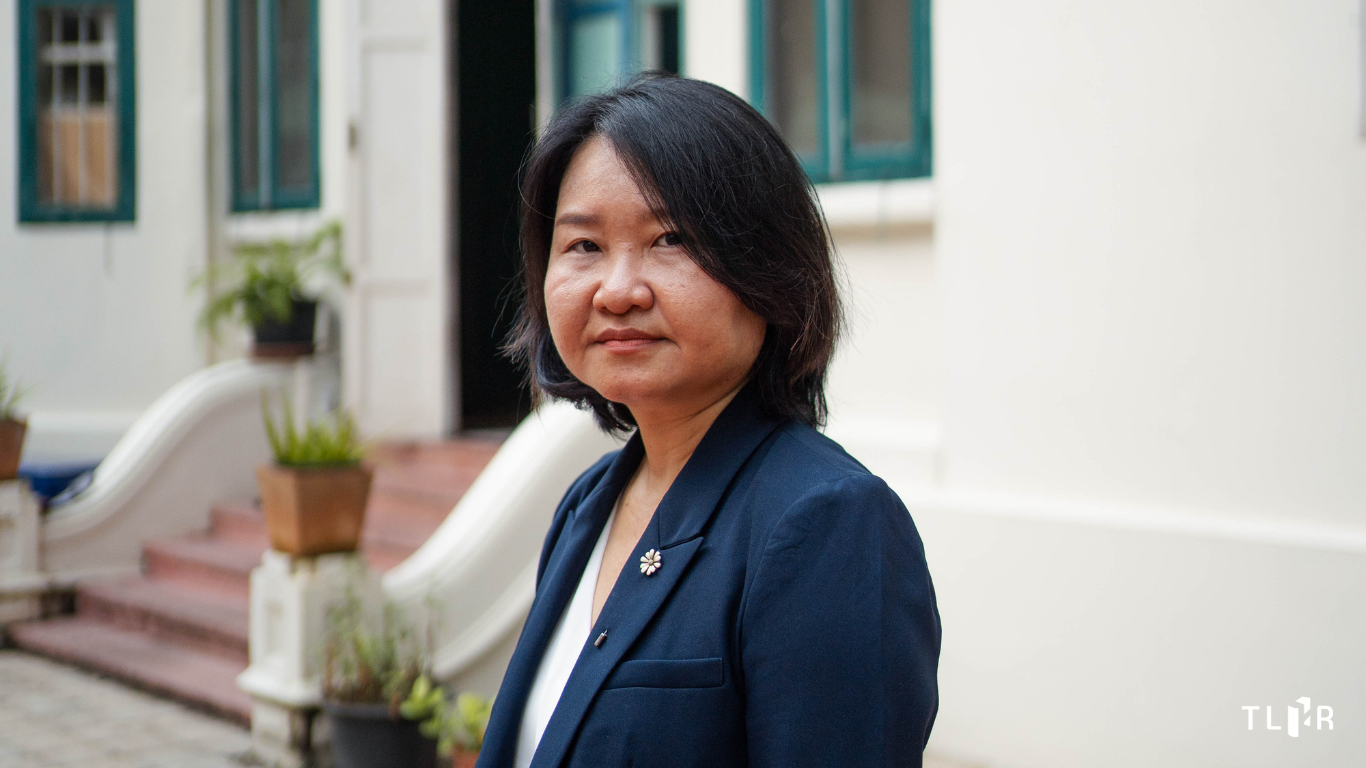
“I feel that challenging the court when we see that it’s acting improperly is one of the duties of a human rights lawyer. Everyone is equal in the justice system. When we have a discussion, it must be based on reason and evidence. The court should not use its power arbitrarily against anyone in the courtroom simply because they are in a higher position. Everyone has equal dignity. The court is just a mediator with the authority to ensure the trial proceeds fairly. It doesn’t have power over others. Everyone has a role in ensuring that justice is served,” Lawyer Muay stated.
Despite having fought with the court many times, Lawyer Muay still affirms that most of the judges she has encountered are not bad. Other lawyers have faced far harsher situations than she has. As she has grown older, her approach has also changed. She now weighs things more carefully. If a discussion can be had amicably, she prefers that path first.
“I’ve softened my tone as I’ve gotten older, but I still uphold the same principles. If a reasonable conversation doesn’t work, it’s the lawyer’s duty to handle situations where the court abuses its power or shows clear bias that makes it evident that the defendant will not receive justice,” Lawyer Muay explained.
She also elaborated, “Using the law to silence people who come out to make demands of the state is a last-ditch effort to preserve old beliefs or traditions, and is the easiest way for the state to dispense of perceived problems or dissenters. The law then becomes a tool to imprison those who have different views so they can’t speak up or make demands again. It comes at a high cost when the justice system is used as a tool of the state.”
Lawyer Muay believes that the Thai justice system can still be a source of hope. If no case could offer hope, the justice system would have already collapsed. However, in general cases, the court still maintains justice for the overall public. The Section 112 cases are the exception, which appear to offer the least hope in the Thai justice system.
“Justice is not just about the outcome, it must be present throughout the process as well, from the police to the prosecutor, and the court. If, during the trial process, the defendant and the accused cannot access their basic legal rights, even if the court ultimately dismisses the case, the outcome cannot be called just. In Thailand, the efficiency of the justice system at the police and prosecutor level is almost nonexistent, especially in political cases, and particularly with Section 112 cases. It feels utterly hopeless,” Lawyer Muay said.
Success for her, as a lawyer who defends human rights, is about being able to sustain a long career. She was supported by the culture and people in the human rights community who foster growth and development. Her work result is as important as the effort she puts into it. Most of the political cases she handled were successful. This is the result of thorough preparation by the legal team and clear communication with defendants to help them understand the approach to fighting the case. “Planning a case requires responsibility and professionalism. Responsibility leads to trust. Whether it is a political case or an ordinary case, it must be done to the best of our ability.” Another success for her is that human rights law volunteers continue to work in various sectors of society. “While there may have been gaps at times, we still work to the best of our abilities for a better society.”
When asked why she chose to continue as a lawyer at TLHR’s network, despite knowing the political situation in Thailand, Lawyer Muay reflected: “If I am a human rights lawyer and I don’t take on cases like this, then I don’t know what cases I would do. Especially when friends like Arnon, who do their best, end up inside [prison]. It feels like I need to do more. I think these cases are part of the fight to reclaim certain spaces for society to move in a better direction that I hope for. It is part of the values I stand by.”
She feels that she has failed to nurture enough young people to carry on the work in human rights law as much as she should have.
There are limitations of being a human rights lawyer. Lawyer Muay sees it as “few people, little money, and a lot of work,” which can be difficult and challenging for the younger generation who wish to enter this field.
Lawyer Muay looks to the future of human rights work in Thailand and believes that although there is now a civilian government resulting from elections, it will still take some time to adjust the direction of human rights issues. Since 2020, we have seen that the younger generation clearly has their own political will. They no longer feel that politics is something distant from them. Overall, the understanding of human rights issues has also improved. In the future, when debates arise, Lawyer Muay hopes the country will continue to develop because the new generation is brave enough to speak out and has a better understanding of human rights issues in many areas.
.
.
Finally, if she could share a lesson from her 10+ years of experience in human rights law with younger lawyers or those interested in this field, Lawyer Muay would say, “When handling political cases, if you’re a new lawyer and you lose a political case early on, don’t feel disheartened or hopeless. Because we all know that most political cases are hard to win. The chance of winning a Section 112 case is very slim. So I want to tell people working in this field to do their best. Even if you know you’ll lose, give it your all. Don’t hold back. The result will come as it will, but do your best in making the case. Don’t become disheartened and lose hope, like you don’t want to do it anymore.”
As for being a woman and working as a human rights lawyer, Lawyer Muay says it’s not difficult. She has never felt discriminated against. Working in this field has given her the opportunity to prove herself fully, without restrictions. When working with the courts or police, being a woman wasn’t difficult, but when she first started working, it was hard because of her young age.
“Whether you’re a woman or a man, when you’re new, you’re likely to face the same challenges because you don’t have much experience. But if you understand the legal issues and can argue your points logically, the court will listen.”
Lawyer Muay concludes by saying that working as a human rights lawyer is something she intentionally designed her life around. She simply lives according to the plan she set out for herself, so passion in her work is not the main factor in her drive. The important thing is that she feels the work she’s doing has significant value, and she is always ready to face the difficult challenges that come her way.
“Our friends are still in prison, that’s one of the reasons why I continue to do this work.”
As for the kind of person Lawyer Muay thinks should become a human rights lawyer, she says, “In truth, anyone can do it. If you’re interested in human rights issues and you question those issues, and you still feel like ‘Hmm’ about the matters in society, then you’re someone who could pursue this field.”
.
ข่าวหรือบทความที่เกี่ยวข้อง
Yaowalak Anuphan: Human rights work is a never-ending task
Story and Photos Veerapong Soontornchattrawat . Note: This interview series is part of the book “Feathers on the Scales”, which features ten interviews that explore the lives and experiences of human rights lawyers advocating for civil and political rights in Thailand. The book was published by Thai Lawyers for Human Rights (TLHR) in February 2025 […]

admin010
25/09/2568
Thaworn Piyawongrungruang: “Political Cases: at the very least the work of lawyers lessens the hardship of the activists.”
Story by Noppon Archamas . Note: This interview series is part of the book “Feathers on the Scales”, which features ten interviews that explore the lives and experiences of human rights lawyers advocating for civil and political rights in Thailand. The book was published by Thai Lawyers for Human Rights (TLHR) in February 2025 and was later […]
admin010
03/10/2568
Krisadang Nutcharus: Life of a Human Rights Lawyer ‘Standing Firm, Never Surrendering’
Story by Weerawat Somnuek . Note: This interview series is part of the book “Feathers on the Scales”, which features ten interviews that explore the lives and experiences of human rights lawyers advocating for civil and political rights in Thailand. The book was published by Thai Lawyers for Human Rights (TLHR) in February 2025 and was later […]
admin010
09/10/2568
Public Statement Condemning Bomb Attacks in Southern Thailand, Demanding Fair Trial Rights and Transparent Investigation
Public Statement Condemning Bomb Attacks in Southern Thailand, Demanding Fair Trial Rights and Transparent Investigation During 11-14 August 2016, 17 explosions took place in seven provinces in Southern Thailand causing a number of lives and damages. Since 13 August 2016, the Thai authorities have responded by invoking Section 44 of the Constitution of the […]
