
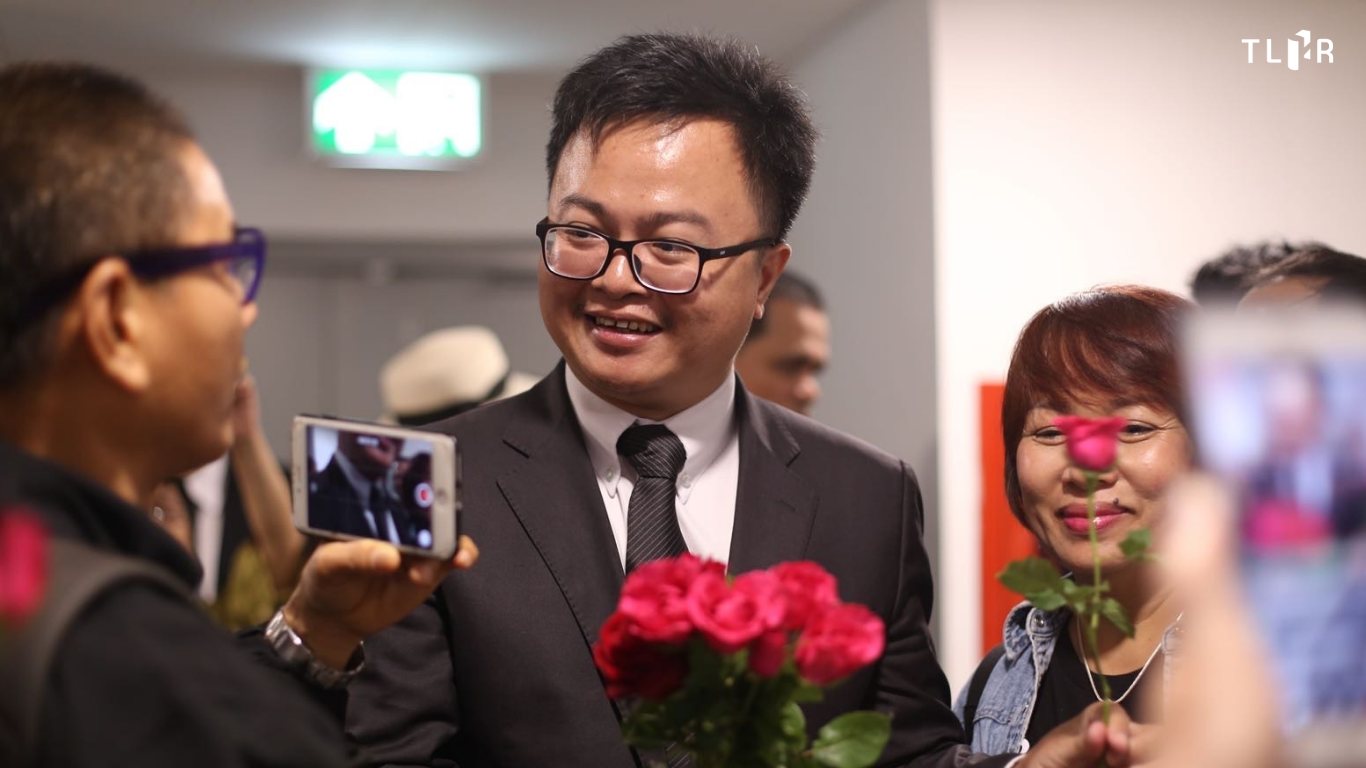
Story and photos by Nathaphob Sungkate
.
Note: This interview series is part of the book “Feathers on the Scales”, which features ten interviews that explore the lives and experiences of human rights lawyers advocating for civil and political rights in Thailand. The book was published by Thai Lawyers for Human Rights (TLHR) in February 2025 and was later translated into English.
——————————
.
“For the rest of my life, beyond the hope of reuniting with my family, I wish to devote myself to being a lawyer.”
.
This interview was originally written on October 14, 2024, based on various pieces of information found online. Two days later, we asked dozens of questions to Arnon with the help of visiting lawyers, who then compiled Arnon Nampa’s answers into this interview.
Lawyer Arnon Nampa was sentenced to prison under Section 112 (the lèse-majesté law) and as of 26 September 2023, he has been serving a combined sentence of over 16 years, with additional sentences continuing to be imposed.
Arnon was born into a farmer family in Roi Et Province. He graduated with a bachelor’s degree in law from Ramkhamhaeng University and gained recognition as a lawyer who defended Ampon Tangnoppakul, also known as Ah Kong (meaning ‘grandpa’), in a Section 112 case. A year after the 2014 coup, he co-founded the “Resistant Citizen” group (in Thai: กลุ่มพลเมืองโต้กลับ) and formed the “THwantElection” group in 2017 (in Thai: กลุ่มคนอยากเลือกตั้ง).
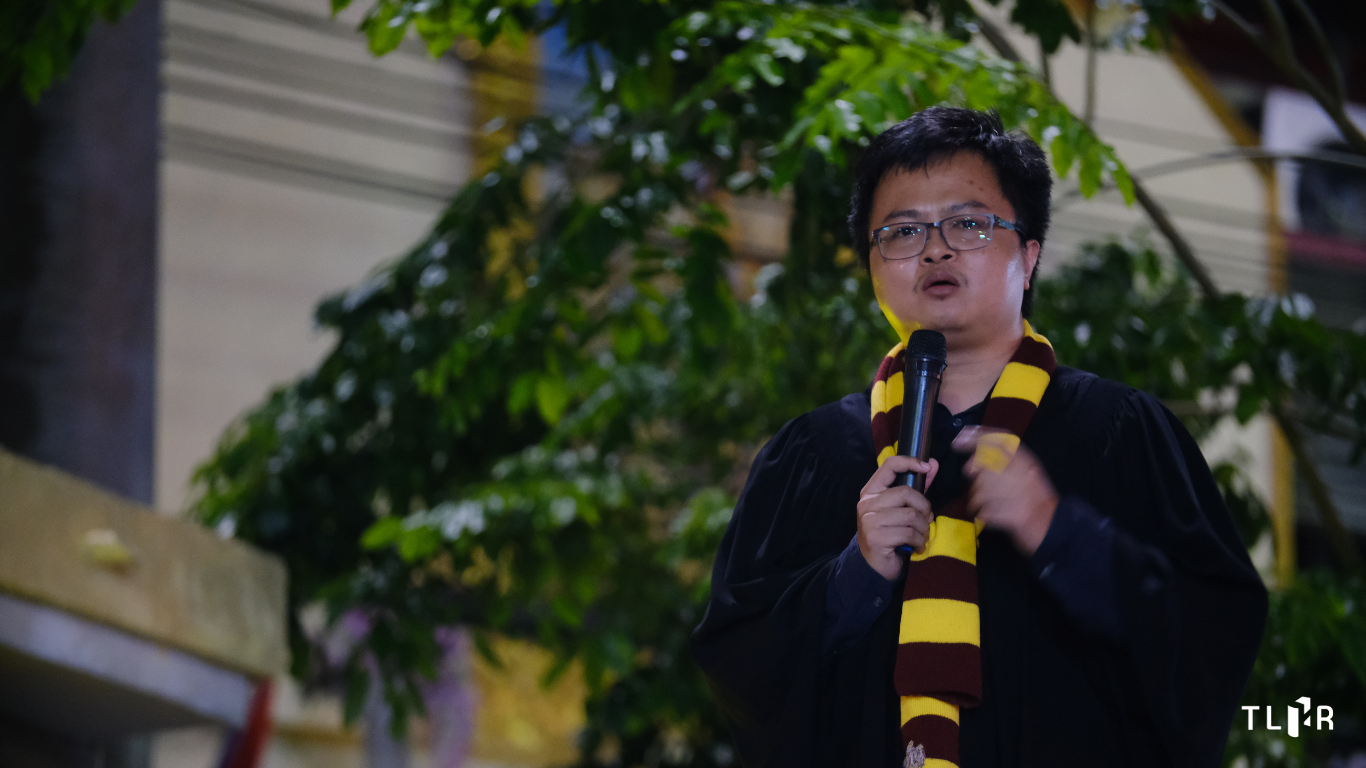
He began speaking on the topic of monarchy reform at a protest at the Democracy Monument on August 3, 2020, dressed in a Harry Potter costume, He later receiving the 2021 Gwangju Prize for Human Rights. But no magic spell could shield him from the consequences of speaking the truth.
With short, gray hair and one hand holding his son “Karl”, Arnon appeared in Courtroom 905 of the Criminal Court, where supporters filled the room to show their solidarity.
.
.
“I’m fine, as well as can be,” Arnon greeted the people observing the trial with a warm smile. His expression turned serious when he took the witness stand as a defendant on 10 September 2024, during the prosecution’s witness examination of the #RatsadornSarn (People’s Letter) case, an indictment over Arnon’s public letter to the king criticizing the expansion of royal power.
“The letter I wrote did not ask for a change in the regime.”
Arnon spoke loudly and firmly, reaffirming his intentions before the judges and the plaintiffs who filed their lawsuits against him. There was no sign of fear in his eyes. However, he remained an ordinary person, just as vulnerable as anyone else.
“Standing to cross-examine the witness, the sight of Karl and his mother waving goodbye from outside of the courtroom, made a father’s heart ache even more.”
These words, written in a letter dated September 11, 2024, reveal the sensitivity of a human being and the vulnerability of a father.
If you follow Arnon’s message through letters written from prison, besides telling stories about his daily life, every letter is dedicated to Pran and Karl, his two children, as he once said that he does not want them to forget their father.
“At first, I thought the greatest pain would be if one day my children no longer remembered me,” Arnon told his visiting lawyer. “But what hurts even more is that they remember me, yet we cannot be together. It’s even more painful. When a warm hug is cut short, the bond we build only makes each farewell more meaningful.”
.
.
Before Arnon’s name was remembered
Arnon studied at Roi Et Wittayalai School, where he served as student council president in 2002. The boy had two people who inspired him: Thawin Udon, a Member of the Parliament for Roi Et Province from 1937 to 1949, and Chamlong Daoruang, a former Deputy Minister of Commerce and three-times member of the Parliament of Maha Sarakham Province.
After graduating from high school, he was admitted to the Faculty of Sociology and Anthropology at Thammasat University. However, he soon realized that it wasn’t the right place. The following year, he transferred to the Faculty of Law at Ramkhamhaeng University. In his free time, he would observe court proceedings at the Criminal Court.
“I liked the atmosphere, I enjoyed watching the court cases from that moment on. After graduating, I interned at an office specializing in human rights and have been working on human rights cases ever since,” said Lawyer Arnon, reflecting on his past in the legal office. But today, he himself sits in prison.
After graduating, Arnon began working in human rights in 2006. On September 19, the day the military coup began, he was providing legal counsel to migrant workers who had suffered abuse from their employers. As he worked late into the evening, he received a call from a friend telling him that a coup had taken place.
“I was trained to handle cases for people by senior human rights lawyers who have paved the way from generation to generation,” Arnon wrote on his Facebook page on November 21, 2014.
“I have never feared fighting within the justice system because I believe in principles. We do what is right and we act with integrity in our profession. When facing pressure, I remind myself that we fight with reason. If they cannot counter our arguments, the worst they can do is imprison us.”
By 2008, Arnon was working at Meesit Law and Accounting Co., Ltd. and then co-founded the Ratsadonprasong Law Office to provide legal assistance to people affected by the political events of 2010. He also served as a lawyer within The People’s Information Center: The April-May 2010 Crackdowns (PIC) and the Human Rights Lawyers Association.
“Studying law and using it to serve those who have been denied justice is the greatest honor for me. It may sound pretentious, but it has always been that way.”
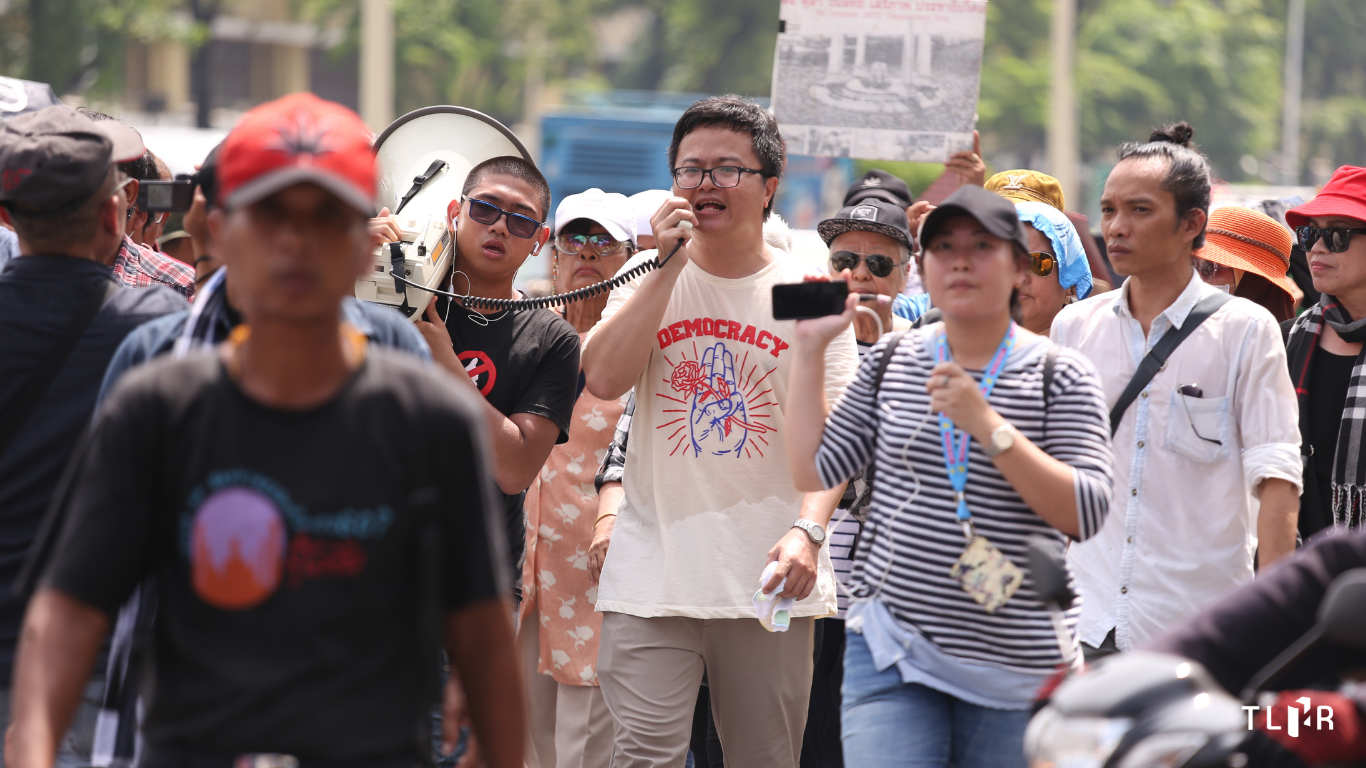
After the 2014 coup, Arnon took on a more active role as an activist. He co-founded the Resistant Citizen group in 2015, focusing on symbolic activities to highlight human rights violations under the National Council for Peace and Order (NCPO) era. Later, he joined the movement under the name of the THwantElection group, demanding that the NCPO hold an election as soon as possible.
“Sometimes it takes recklessness, not just courage,” Arnon explained on his role beyond that of a lawyer. “I once protested by taking off my shirt in court to demonstrate that the court wouldn’t summon key witnesses to the point that the lawyer had to protest by taking off his shirt.”
Arnon wrote in his letter dated 2 October, 2024 that fearing the court is not what gives true respect to it; rather, fighting to the fullest extent is the real way to honor the legal profession.
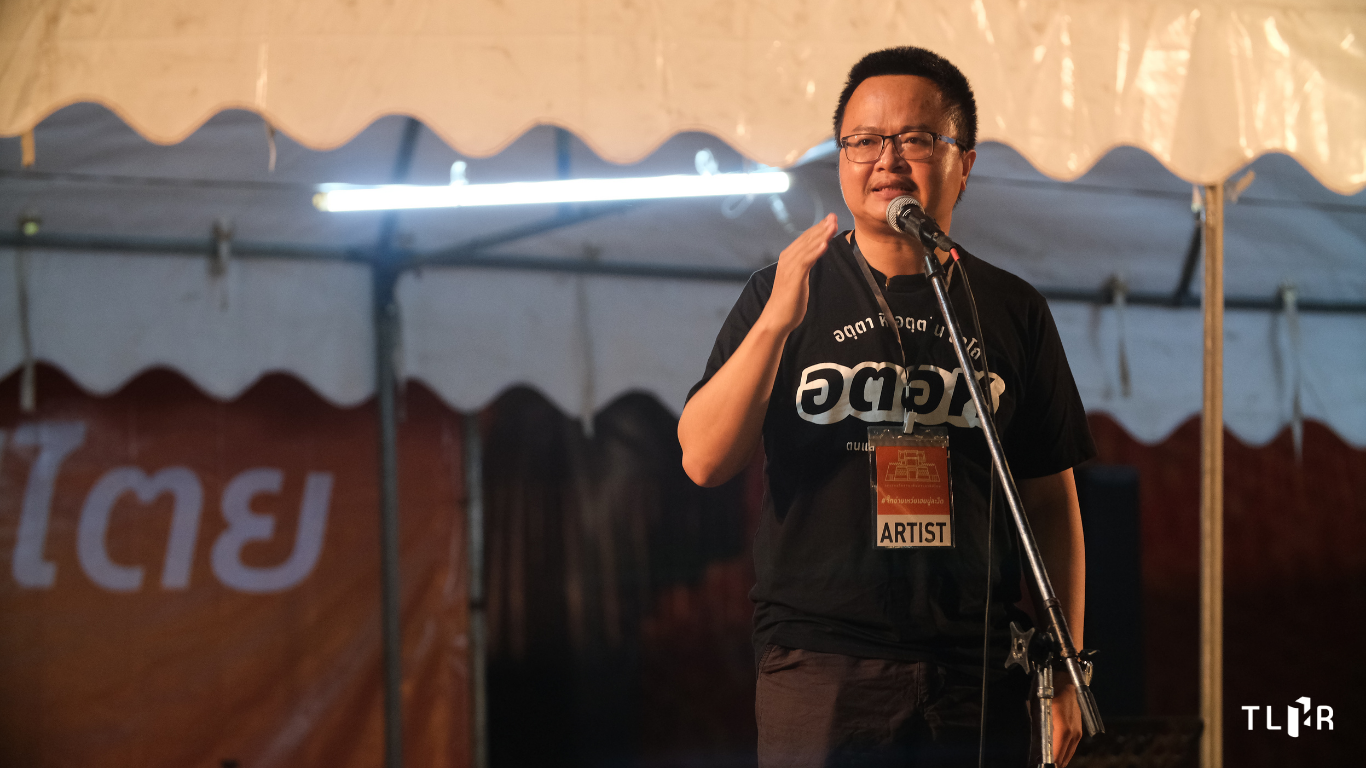
Arnon’s name is widely recognized as one of the leaders of the Khana Ratsadon 2020 (meaning “Group of Ordinary People in the Year 2020”) and the first who publicly raised the issue of demanding reform of the monarchy. At the same time, he has continued his role as a lawyer for political defendants. Even though he is now a political prisoner himself, that has not put an end to his work as a lawyer.
“For the rest of my life, beyond the hope of reuniting with my family, I wish to devote myself to being a lawyer.” Arnon declared while still living behind bars.
.
.
From Human Rights Lawyer to Political Prisoner
Arnon’s prison life begins early in the morning, drinking coffee, reading books, and praying at 5:30 AM. Most of his daily routine involves attending court, both as a lawyer and as a defendant. Most of the cases he handles are ones he was already familiar with before his imprisonment. In some cases, he was even present at the events from which charges stemmed, so it wasn’t difficult for him to understand the context.
“It doesn’t feel like being imprisoned. The guards even tease me when I go to court, saying I’m off to work, because I’m still working on cases, still fighting.”
However, Arnon does not deny that he experiences stress. His favorite stress-relieving activities used to be drinking beer, grilling food, and singing with friends. But in prison, he finds relief through exercising, conversations with fellow political prisoners, watching series and movies, and most importantly, reading and writing letters to his children.
“Being here is painful, but it’s worth it. Even if I go back, I would still do it. Prison life makes us see humanity through our eyes, but don’t come in here. It’s tough.”
Arnon has known from the beginning that political cases are uncertain, but he chose the path of being a lawyer and an activist because he believes that the decisions he makes will create ripples in the future, and he believes that the people who supported democracy would still be by his side and fight alongside him.
“Hope is never gone. It may flicker, but we must not let it extinguish. I must not turn my back and do anything else except being a lawyer. I must record as many stories of injustice as possible.”
On days when Arnon doesn’t have court, he must return to his cell by 3 PM. Arnon enjoys reading literature, and at the moment, he is enjoying reading Gu Long’s novels, while also reflecting on the times he used to enjoy beer, grill meat, and chat about court cases with friends. He never forgets to express his concern for those on the outside and to encourage other human rights lawyers who continue their work.
.
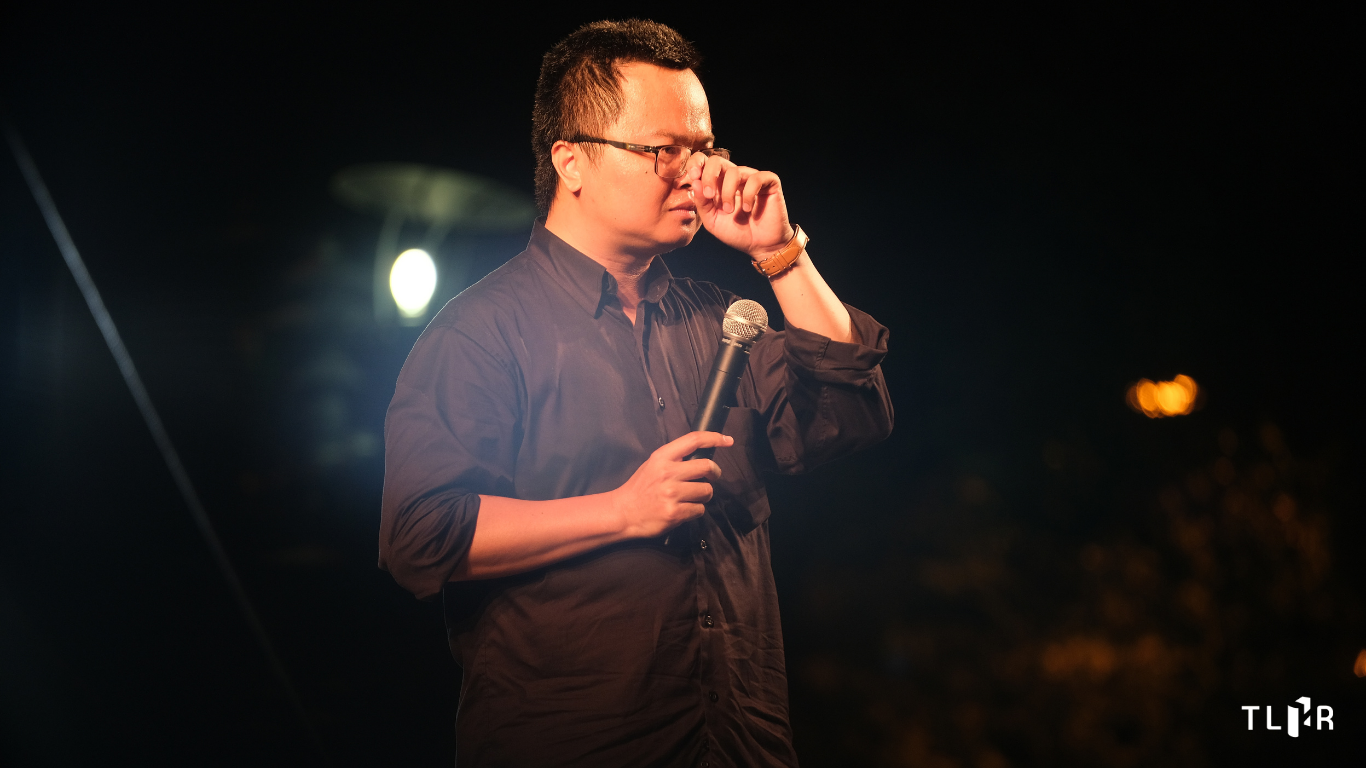
.
The Lawyer for Human Rights remains standing defiantly
“Litigation skills take time and experience to develop. But once acquired, it becomes difficult to erase. Winning with reason yet losing the case is a reality in a flawed society. All we can do is record the story ourselves. The future will judge what happened.”
Arnon expressed these words in a letter dated 11 September 2024. He also believes that sustaining a career as a human rights lawyer requires balancing ideology and financial stability, meaning that one must use the legal profession to pursue their ideals while also making a living and supporting the family. He cited examples of some senior lawyers who worked on human rights alongside their business careers.
“The legal profession is a career that I chose from the beginning, both as a business and a way of life. In high school, I participated in a law competition and discovered my skills in this field. When I began litigating cases for people, I realized that I was good at it, that’s why I have remained a lawyer to this day.”
Beyond his role as a lawyer, he is also a father of two, a friend and senior dearly loved and missed by colleagues at Thai Lawyers for Human Rights, and a democracy activist with a following of older supporters who always come to support him whenever he has to appear in court.
He is also a poet.
Arnon said that being a lawyer and a poet are related in the way they both use language to communicate.
“The heart of being a poet is having a deeper emotional state than most people. When you feel more, you can express it through poetry.”
This means that being a lawyer for Arnon requires feeling deeply for the lives of others and respecting the humanity of others, as he said. Because of this, people continue to encourage and remember the human rights lawyer named Arnon Nampa.
It looked like rain was coming on the afternoon of 10 September 2024. The plaintiff’s witness examination was intense, continuing from the morning into the afternoon. Several times, Arnon cornered the witnesses, and his expression seemed to relax after the examination was finished. In the end, friends stopped by to visit him.
Until the door of courtroom 905 closed, Arnon walked towards the elevator with his legs chained, surrounded by supporters.
“Let’s meet again. Good luck, Arnon,” someone said, just before the door, which led to a restricted area for prisoners, closed.
.
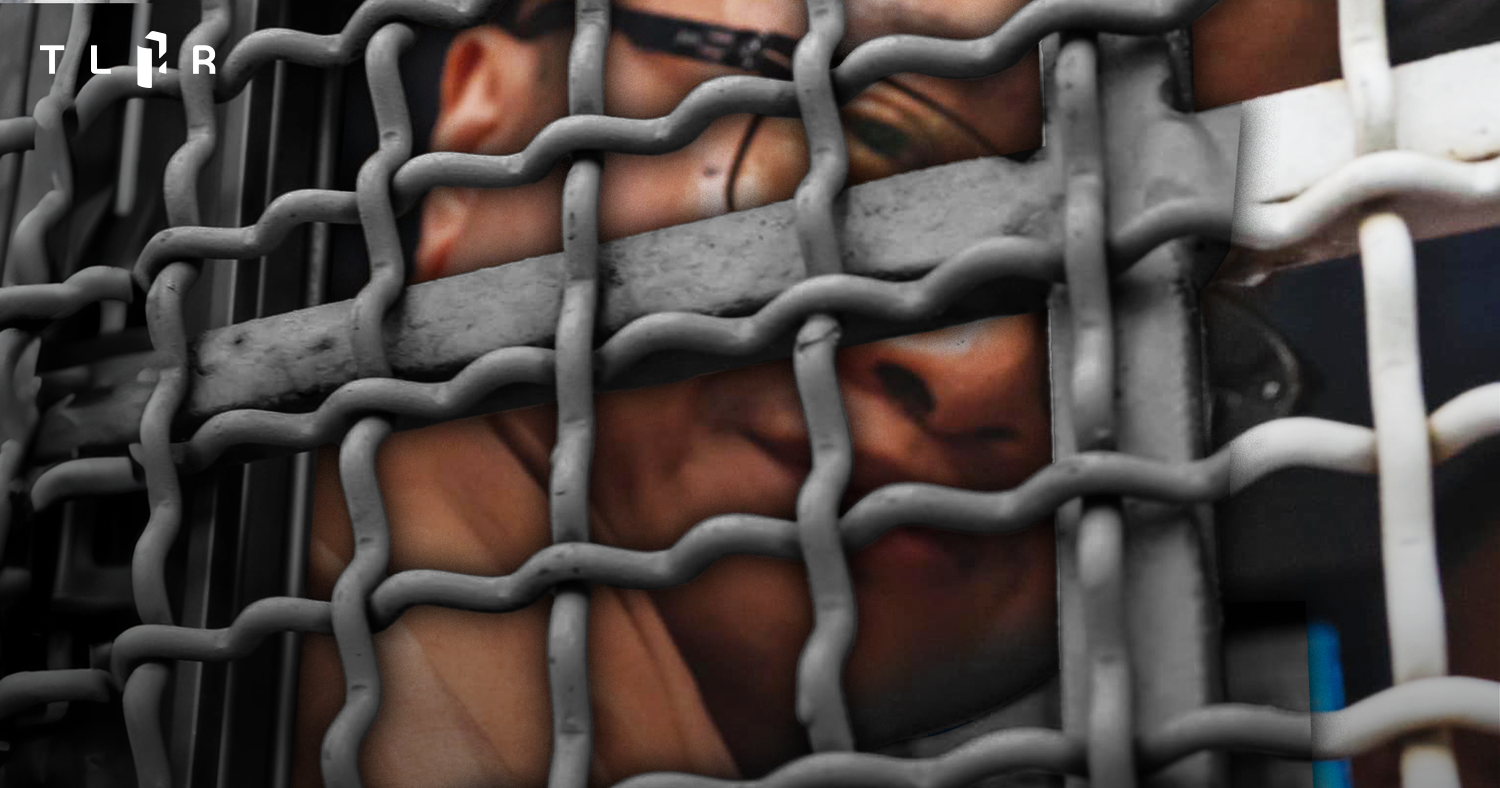
.
The poem to a fellow lawyer by Arnon Nampa, 28 September 2011.
A lawyer is not a “government’s servant”
But a servant of the people walking the streets,
Bringing justice to the masses,
Not stealing wealth to build grand estates.
A lawyer is not a “politician’s servant,”
Wearing grand robes with arrogance drawn,
A deceiver who misleads the world with noise,
Then accepts awards, selling their soul.
A lawyer is the “people’s servant”,
Not a fraud who bows and bends,
Abandoning dignity, pledging to defend.
To an aristocracy that never ends.
If you seek only a title,
Take orders, then pretend ignorance,
Approve the slaughter of people’s will,
You are but a dog, not a lawyer of right!
—————————————–
.
End Note:
Information in this interview is gathered from the status updates and letters on Facebook by lawyer Arnon Nampa, along with data from the interview conducted by the author, who provided questions for Lawyer Poonsuk Poonsukcharoen to ask during the visit to Lawyer Arnon at the prison.
.
ข่าวหรือบทความที่เกี่ยวข้อง
The 27-hour Arrest of “Arnon” and “Panupong” from the Free Youth Protest Before Bail Granted
On 7 and 8 Aug 2020, the political situation continued to be intense as authorities arrested Mr. Arnon Nampa and Mr. Panupong Chadnok or “Mike,” two political activists who gave a speech at a rally organized by Free Youth on 18th July 2020 (see Thai version of the summary of the protest). Amidst the online […]

TLHR
12/08/2563
The cases continue: Arnon was brought from Chiang Mai to Bangkok to acknowledge another allegation against him
Last night (26 Oct 2020), Arnon Nampa, a human rights lawyer, was bailed out after submitting the second bail motion to the Chiangmai Provincial Court (the case derived from him giving a speech at the gathering held in Chiang Mai on 9 Aug 2020; he was arrested according to the arrest warrant at the dawn […]

admin010
27/10/2563
Yaowalak Anuphan: Human rights work is a never-ending task
Story and Photos Veerapong Soontornchattrawat . Note: This interview series is part of the book “Feathers on the Scales”, which features ten interviews that explore the lives and experiences of human rights lawyers advocating for civil and political rights in Thailand. The book was published by Thai Lawyers for Human Rights (TLHR) in February 2025 […]
admin010
25/09/2568
Thaworn Piyawongrungruang: “Political Cases: at the very least the work of lawyers lessens the hardship of the activists.”
Story by Noppon Archamas . Note: This interview series is part of the book “Feathers on the Scales”, which features ten interviews that explore the lives and experiences of human rights lawyers advocating for civil and political rights in Thailand. The book was published by Thai Lawyers for Human Rights (TLHR) in February 2025 and was later […]