
Story By Weerawat Somnuek
.
Note: This interview series is part of the book “Feathers on the Scales”, which features ten interviews that explore the lives and experiences of human rights lawyers advocating for civil and political rights in Thailand. The book was published by Thai Lawyers for Human Rights (TLHR) in February 2025 and was later translated into English.
——————————
.
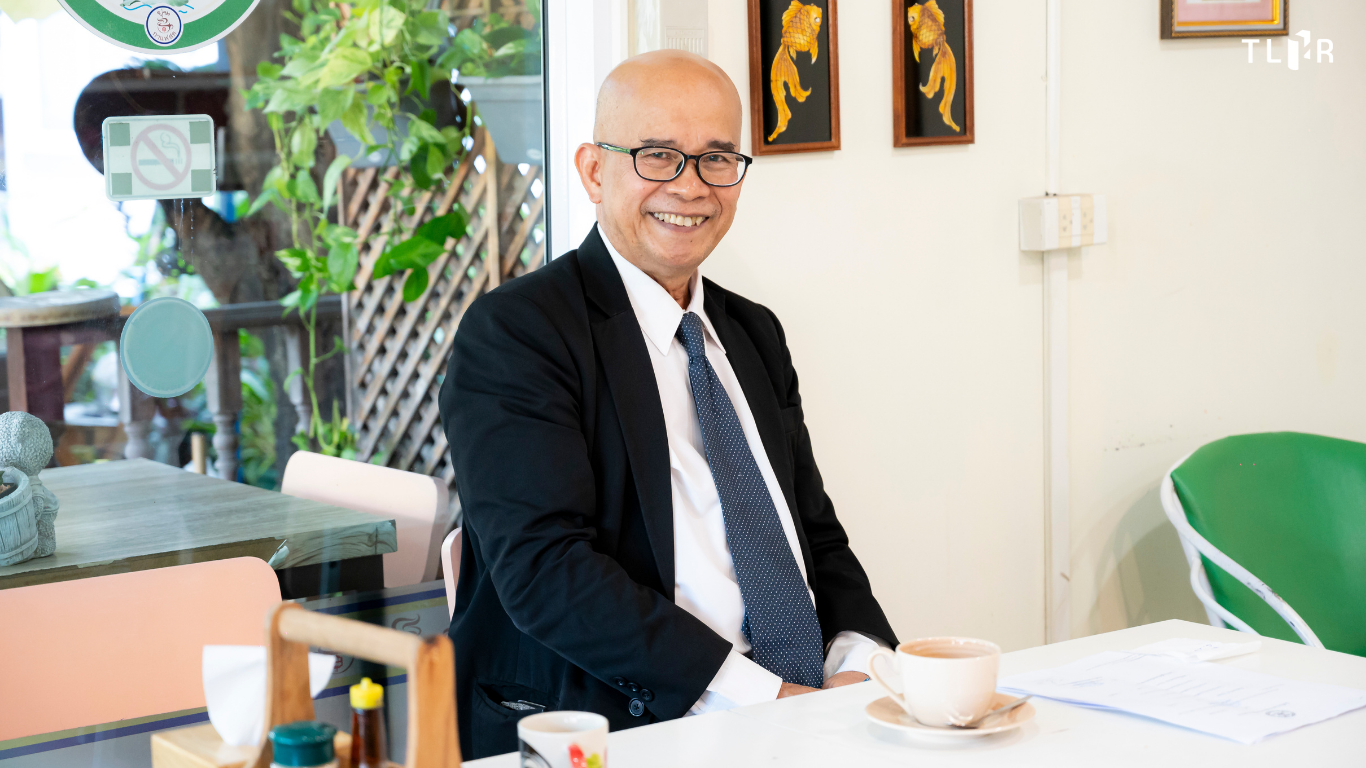
“I am very proud to have stood up for the disadvantaged. Even if I were to die, I would have no regrets.”
.
The Roots of Progressive Ideas
The early life of Wattana Chantasilp began in Wapi Pathum District, Maha Sarakham Province. His interest in politics developed at a young age, dating back to the events in October 1973 and continuing to the 1975 elections. A biography of four former Northeastern ministers who were assassinated due to political unrest in the 1940s served as one of his inspirations to explore the history of fighting.
Because Wattana was born into a family of teachers, he changed schools frequently, which took him to many places and shaped his path. His dream was to attend the same schools as the four former ministers from the biography. He transferred schools twice: for Grade 11, he attended Sakolrajwittayanukul School, the same school as Tiang Sirikhan. For Grade 12, he moved to Benchama Maharat School in Ubon Ratchathani Province, where Thong-in Phuriphat once studied.
During that period, political activism amongst students was flourishing. Newspapers like Prachachart and Maharaj became sources of knowledge. Wattana’s personality was argumentative with a rebellious streak, and he recounts that even though his academic performance in Ubon Ratchathani was not satisfactory, he was still determined to attend Thammasat University, believing it to be a university of fighters.
After completing Grade 12 in 1981, he was able to choose six faculty preferences for further education. Though he initially considered law, he had the opportunity to read economics texts, particularly Karl Marx’s theory, which led him to change course to economics. He selected the Faculty of Economics at Thammasat University as his first choice. The Faculty of Law at Thammasat University was his second choice. He was admitted to the Faculty of Economics.
“I went to study, but I found out that I didn’t like it, so I was lost. In my second year, I secretly took the entrance exam for the Faculty of Political Science at Chulalongkorn University. I participated in the welcoming event for the freshmen, but didn’t officially register. I eventually returned to economics, but I was not focused, so my grades were poor.”
Finally, he took the entrance exam twice more and was admitted to two other universities. Though he left Thammasat University, his knowledge from the Faculty of Economics at Thammasat University provided him with an understanding of economic trends. When he later worked as an assistant to a member of the House of Representatives, he could understand the annual expenditure budget documents. He knew the country’s source of money and how it was budgeted and allocated to ministries and departments. He could explain the national budget, direct and indirect tax structures, and oil prices. It involved understanding the world, both the worldview and outlook on life.
Wattana participated in activism and left university around 1985. Later, Witoon Nambutr, his senior from the Faculty of Law at Thammasat University who was running for a seat in the Provincial Administration Organization (PAO) in Ubon Ratchathani Province, invited Wattana to help with the election campaign. In the past, during elections Wattana had enjoyed participating in political parties’ activities, campaigning, putting up posters, and secretly taking the microphone to give campaign speeches. Over time, he mastered public speaking skills and eventually settled in Ubon Ratchathani. From then on, besides Witoon Nambutr, there was Suthat Ngoenmeun, from whom he learned about politics. Both later became members of the House of Representatives.
“I was like a gofer, but I got to drink wine with politicians, so I felt emboldened. There was no need to go to university. With that being said, I still considered myself a socialist or leftist.”
During his years with the Democrat Party, the party held him in high confidence. The party launched a local office for him to serve the public and handle charitable events, effectively acting as a representative of the members of the House of Representatives. However, he still had the urge to complete a degree and become a lawyer. In 1999, he re-entered the education system at Sukhothai Thammathirat Open University.
“Due to my experience and learning management, it didn’t take me long to graduate. I barely finished all the books, but I could guess the answers and I got my lawyer’s license.”
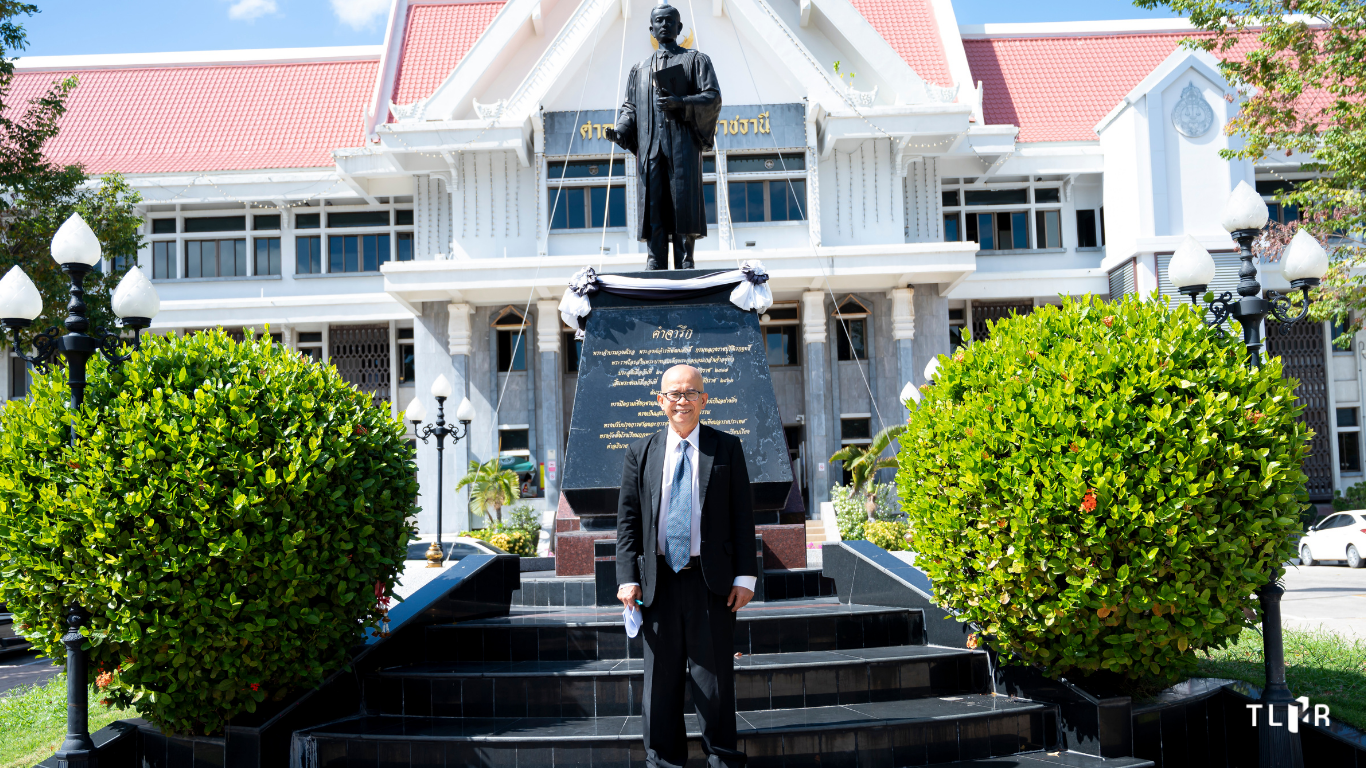
For Wattana, transitioning from political work to legal practice felt natural. When he began working as a full-time lawyer, he gradually withdrew from activities with the Democrat Party. In 2010, during the Red Shirt protests, the city hall was set on fire along with the rubber tires, leading to legal cases. A politician in Ubon Ratchathani invited him to be a defense lawyer for the Red Shirts. From that day forward, Wattana became a lawyer for political cases.
“I know that they were fighting for a better life, for justice, and that they had always been at a disadvantage,” Wattana said, referring to his clients, the group that Thai people know as the ‘Red Shirts.’
.
.
Political cases, Respected courts, and the Honor of Lawyers
Wattana’s tip for lawyers with limited experience handling high-profile cases, especially political cases with the death penalty, is to remain calm and unafraid. The interpretation of legal provisions is with the court.
“We must focus on facts, especially identifying the issues. Based on my experience, in murder cases, it’s obvious whether the court will convict or not. Cases under Section 112 (lèse-majesté) are even easier to foresee the outcome because the verdict is often predetermined. It’s very difficult to win, no matter how hard you fight, because they have already made the decision.”
Wattana believes that court attitudes are crucial when it comes to political cases. These cases are rarely fought on legal reasoning but rather on attitudes and beliefs, especially when the other party holds greater power. “Defendants in such cases must accept the situation. But there are tactics — for instance, having others involved, whether to observe or to draw public attention.”
Despite not having much experience in trial compared to other senior lawyers, Wattana considers himself a successful rural lawyer, both in terms of cases and income. He doesn’t expect to become wealthy, but isn’t poor either.
“I am very proud to have stood up for the disadvantaged because the underprivileged and the poor often have no one willing to be involved with them. So, I am proud of myself. That’s my life goal. If I handle political cases, my life as a lawyer is complete. Whether it is the case of burning the city hall or the Section 112 cases, even if I were to die as a result of taking on these cases, I would have no regrets.”
Apart from his role as a lawyer, Wattana’s political activism is his main pursuit, especially his advocacy for amending unjust laws.
“Section 112 is the worst law — the most exploitative and the most oppressive. Don’t argue that ‘[The monarchy] is not doing anything, so why are you dissenting?’ The law must be amended. This is humanity’s mission.”
On top of amending some legal provisions, the most important issue for Wattana is to inspect the institutions responsible for adjudication. The attitude of judges is their own, but must be open to scrutiny because it is those attitudes that sentence people to imprisonment and fines. Court’s orders come with consequences, and should be subject to scrutiny. Judgments must be available for public review and criticism. Wattana also believes that the accusation of contempt of court should be terminated.
“The court is also a public servant and a public burden in terms of their salaries and benefits. They can make whatever judgments they want, but people must be allowed to criticize.”
.
.
Keep Smiling, Whatever Happens, Let It Happen
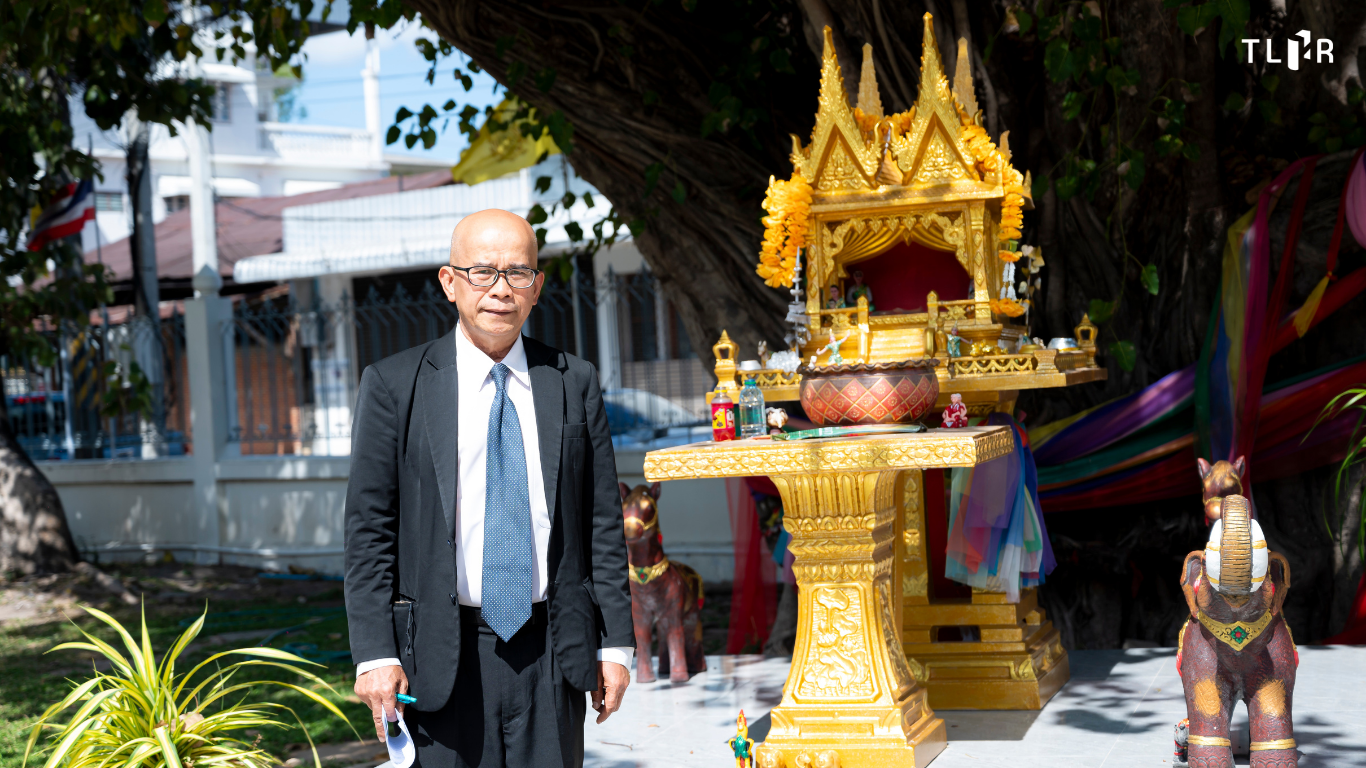
At the age of 62, he still has court hearings approximately three days a week, but he goes to court every day to check on case progress and revise appeal statements. The court, in a way, has become his office.
“Many trainees were coming to train with me, but they didn’t last long because they thought I talked too much about politics (laughs). But I tried to guide them. If there were no cases, we went to observe other courtrooms. It’s a shortcut. Capable judges often have a lot of experience through many cases. The more one sees, the more experience one has.”
Wattana’s training technique is that if new aspiring lawyers want to excel, they should come to court. Whatever area they are interested in, they can look at the court docket and join the trial to listen and learn. Sometimes, the aspiring lawyers must be patient because there might be only some moments where they can recognize and learn from the lawyers’ tactics of questioning. Still, they must stay for the entire period.
It’s difficult to learn from political cases because witnesses are barely outsmarted. Most of them are well-informed, especially those on the prosecution’s side. Wattana’s strategy is to ask the witnesses detailed questions and allow the court to determine whether the prosecution’s evidence is questionable. Having more experience simplifies the lawyer’s work.
“Experience can tell us how each case will proceed, and our legal knowledge becomes more vast with age. Of course, if the defendant is sentenced to prison, there is some sadness, but it’s more so disquiet because if we defend someone, we want them to be acquitted.”
Another belief from his legal career is, “The longer you’re in it, the more you believe that evidence can be fabricated. Innocent individuals can be imprisoned. It emphasizes the idea that imprisonment under the law can be biased, especially in cases involving influential individuals and politics, where evidence can be made up, and those in power believe that fabricated evidence.”
Wattana regarded that the “Thai legal system is hybrid. It adopts the written law system from Germany but also borrows the precedent system of common law from England. This hybrid system is very ambiguous. In trials, courts claim to adhere to the text, but judges can establish legal precedents, causing issues.”
“Personally, I would prefer a jury trial. Whatever mistakes will occur, so be it. At least there is scrutiny, and at least having more citizens involved in the judiciary system creates a counterbalance within the system.”
Regarding the biases of personnel in the judicial system, Lawyer Wattana commented that “It is undeniable that the judges really have biases because of their own beliefs and their own loyalty. If one does not conform to those beliefs, there can be harsh consequences. Legally, a mere thought alone is not a crime; therefore, imprisoning individuals for thoughts is wrong. Jailing people for an insult is an excessive response.”
Wattana emphasizes that “Scrutiny is necessary. Without it, judges will become emboldened, handing down unjust verdicts and assuming the accused will submit an appeal. Also, it’s crucial that human rights cases are not handled sloppily. It must be crystal clear that if one is to be punished, the verdict is justified, so that others can be careful.”
Another lesson for lawyers in this field is that Wattana believes humans have a mold that shapes them into different individuals. For people who will become lawyers in this field, “it means they will defend those who are oppressed, those who are exploited.”
Political issues are beyond natural laws. For instance, killing someone is a violation of natural law and should indeed be wrong. But criticizing a leader is not a matter of natural law. It’s a matter of rules and technical legal terms.
Human rights lawyers must have a belief that if something is unjust and they want to help, they must be prepared. Lawyers must excel at arguing and being courageous, and they must accept the consequences of such actions. For example, “Arnon Nampa is incredibly brave. I am not as bold as Arnon, but I am rooting for him. I have my own kind of strengths. Courage is individual. I believe more human rights lawyers will continue to come forward, and they will continually have to prove themselves. The lesson is to keep smiling. Whatever happens, let it happen. Or if they are as brave as Arnon, be so. It will surely leave an impact.”
.
I Will Litigate Until I Can’t
When asked about the legal figure Wattana admires as an ideal, “Pridi Banomyong” comes to mind. From his readings and studies, the founder of Thammasat University embodied the spirit of a teacher, was courageous, and willing to take risks. He didn’t seek wealth. He did not surrender either.
Regarding his appeal to the circle of legal professionals, Wattana wishes lawyers would place greater emphasis on public interest. Many lawyers are only focused on personal gain, similar to other professions. Lawyers are independent professionals. For Wattana, it seems that lawyers rarely have close friends because they alternate being plaintiffs and defendants, making it hard to form a bond. Most lawyers also form their own cliques, such as cliques of those who are English-proficient working in law firms, those making online videos, and those who exploit others.
Key competencies for lawyers who seek financial success are computer literacy, language proficiency, and AI expertise. But those who want to fight for justice must put their heart into it. Intelligence can be developed over time.
Ultimately, as mentioned earlier, to be a human rights lawyer, one must begin with the right mindset. Second, learning and experience are also important. One must also have strategies for our side to fight well.
At 62, Wattana has not considered retirement. If he is still capable at 80, he will continue to fight. He doesn’t believe in retirement. He believes that if one can still do it, they should. Being a lawyer is a lifelong profession, as long as you don’t become senile.
“Personally, I will never retire. I will litigate until I can’t.”
.
ข่าวหรือบทความที่เกี่ยวข้อง

Yaowalak Anuphan: Human rights work is a never-ending task
Story and Photos Veerapong Soontornchattrawat . Note: This interview series is part of the book “Feathers on the Scales”, which features ten interviews that explore the lives and experiences of human rights lawyers advocating for civil and political rights in Thailand. The book was published by Thai Lawyers for Human Rights (TLHR) in February 2025 […]

admin010
25/09/2568
Thaworn Piyawongrungruang: “Political Cases: at the very least the work of lawyers lessens the hardship of the activists.”
Story by Noppon Archamas . Note: This interview series is part of the book “Feathers on the Scales”, which features ten interviews that explore the lives and experiences of human rights lawyers advocating for civil and political rights in Thailand. The book was published by Thai Lawyers for Human Rights (TLHR) in February 2025 and was later […]
admin010
03/10/2568
Krisadang Nutcharus: Life of a Human Rights Lawyer ‘Standing Firm, Never Surrendering’
Story by Weerawat Somnuek . Note: This interview series is part of the book “Feathers on the Scales”, which features ten interviews that explore the lives and experiences of human rights lawyers advocating for civil and political rights in Thailand. The book was published by Thai Lawyers for Human Rights (TLHR) in February 2025 and was later […]
admin010
09/10/2568
Muay Junjira – The Fighting Lawyer: When the Court Lacks Justice, We Have the Right to Challenge It.
Story By Wanna Tamthong . Note: This interview series is part of the book “Feathers on the Scales”, which features ten interviews that explore the lives and experiences of human rights lawyers advocating for civil and political rights in Thailand. The book was published by Thai Lawyers for Human Rights (TLHR) in February 2025 and was later […]