
Story by Wanna Tamthong
.
Note: This interview series is part of the book “Feathers on the Scales”, which features ten interviews that explore the lives and experiences of human rights lawyers advocating for civil and political rights in Thailand. The book was published by Thai Lawyers for Human Rights (TLHR) in February 2025 and was later translated into English.
——————————
.
“Lately, I haven’t found much satisfaction in wearing the lawyer’s gown to argue a case. What keeps me going is the TLHR’s team, the younger members who continue to drive me. They’re my inspiration to continue. I feel good about this teamwork; we’re not alone.”
.
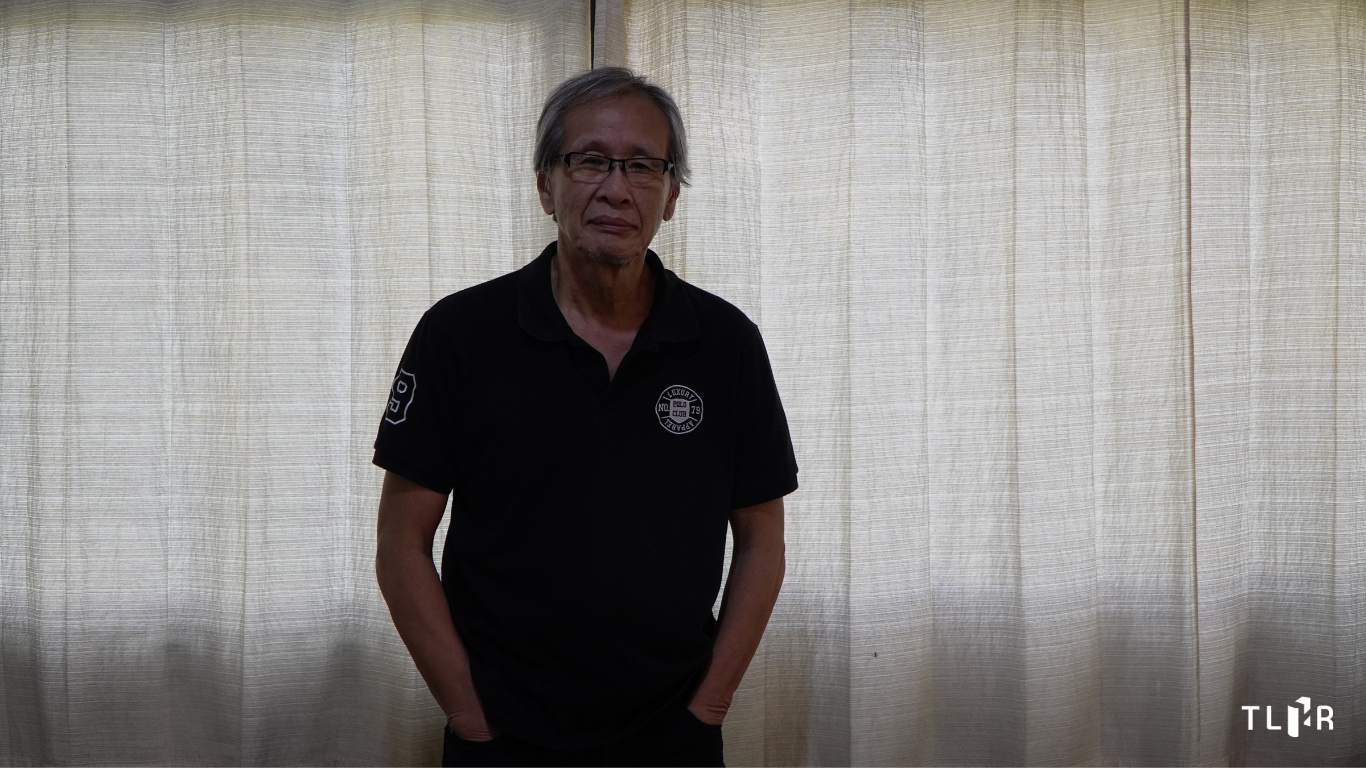
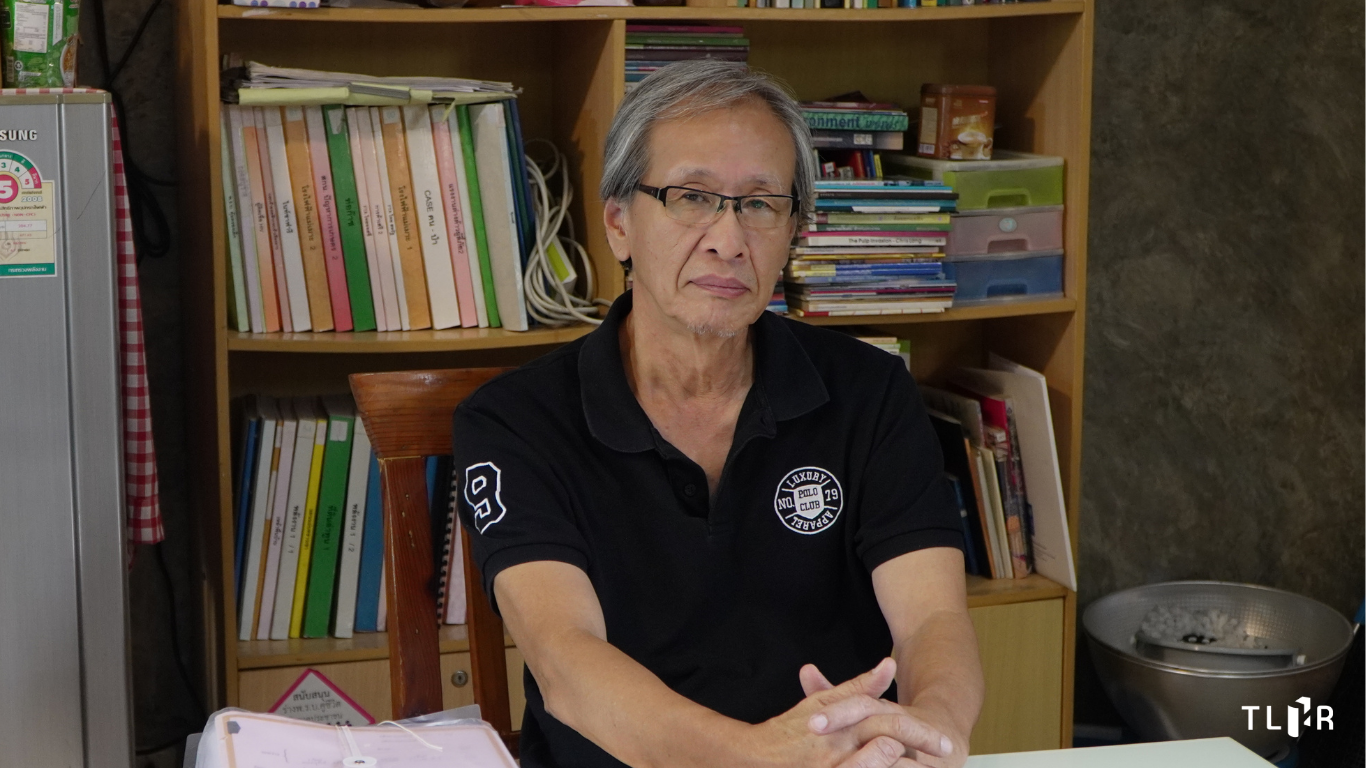
Wattana is a senior lawyer who still looks strong, even though he’s over sixty. He’s well-known among students and activists who face legal charges in Chiang Mai Province. His determined gaze combined with his polite and kind demeanor makes Lawyer Wattana an approachable elder figure.
Lawyer Wattana is a Bangkok native who grew up in a family of legal professionals. His father was a judge. He chose to study law at Ramkhamhaeng University. After graduating, he worked as a lawyer handling financial cases, traveling throughout the country. He worked like this for nearly 10 years until he began to feel saturated with repetitive work and tired of the time-consuming travel in Bangkok. So, he resigned and moved to Chiang Mai Province in 1990 to start a law firm with two other friends.
A major turning point that led Lawyer Wattana to take on political cases came around 2010 due to the political situation at that time. The Red Shirt protest faced a political crackdown from the government. Amidst the discontent over the military’s use of force in central Bangkok, there were incidents in Chiang Mai, including burning fire trucks and tires on Nawarat Bridge and in front of the Governor’s residence.
Only a few people realized what was happening in Chiang Mai during that chaotic period. Lawyer Wattana was one of them. He wasn’t participating in the protests, only watching the news on television, which downplayed the situation as insignificant. In reality, the situation on the ground was intense. Red Shirt supporters gathered to protest continuously, eventually leading to Chiang Mai enforcing the Emergency Decree and the Internal Security Act. This resulted in the arrest of civilians. Fellow lawyers he met while working at the court informed him of the plight of local people arrested and detained at the police station. They were facing charges without any legal representation. Lawyer Wattana and his colleagues stepped in to provide legal assistance to these arrested individuals, despite having no prior acquaintance with them or anyone in the Red Shirt movement.
“So many people were arrested that I couldn’t handle it all. I discussed it with senior and junior lawyers. About 20 lawyers in Chiang Mai formed a group called ‘Yuttitham Lanna’ (Lanna Justice) to help the people with these cases. We divided the work among ourselves. The group was necessary because there were cases involving charges of public assembly of more than 10 people. The police were filing charges against groups of 10 people at a time, resulting in dozens of cases. We couldn’t handle the caseload; we needed help,” said Lawyer Wattana.
At that time, Lawyer Wattana accompanied the accused to acknowledge the charges against them. He also helped them to apply for bail. When the cases reached the prosecutor, he petitioned for justice. The volume of cases was so high that the lawyers had to divide responsibilities for both the cases and the bail applications.
“We were working without pay. Back then, no one was paying us. There was no organization like the Thai Lawyers for Human Rights. It was just our independent group, and we weren’t affiliated with any protest leaders or any political faction. It was purely villagers coming to us. We didn’t have any expenses (we didn’t charge any fees).”
In Chiang Mai, there was also a case involving Red Shirt protesters who were charged with “intentional homicide” around 2008, following a death during a clash with Yellow Shirt supporters.
The defendants in this case were initially denied bail, and they already had lawyers representing them. The Court of First Instance sentenced them to 20 years in prison, which the Court of Appeal reduced to 12 years. During this time, Yutthitham Justice became involved, gathering information to assist the lawyers with the Supreme Court appeal and the petition for bail at the Supreme Court level. Subsequently, the Supreme Court granted the defendants bail after over 3 years of imprisonment. In 2016, the Supreme Court reduced the prison sentence to 3 years, finding that the evidence was not sufficient to prove the defendants’ intent to commit homicide. Since some of the defendants had already served nearly their full sentence during the trial, the court ordered their immediate release. Others who had not yet served their full term were imprisoned for the remaining 2-3 months. The case was then concluded.
This case made Lawyer Wattana realize the influence of external social forces on the court’s verdicts. The police’s filing of serious charges against Red Shirt protesters with minimal facts resulted in difficulty proving evidence during the court proceedings.
Despite being labeled a “Red Shirt lawyer,” the first political case Lawyer Wattana handled in court was for a Yellow Shirt supporter in Chiang Mai, involving violations of the Emergency Decree and the Internal Security Act.
“I don’t know how the case landed on my desk. Yellow Shirt supporters were also charged for protesting, but not as many as the Red Shirts. Once their cases were resolved, that was it. When the Red Shirts learned that our group was also handling cases, many of them started coming to us. From then on, it was mostly Red Shirt supporters coming to us.”
“I just did what I did. I helped the commoners. I was not helping any particular faction or the United Front for Democracy Against Dictatorship (UDD). I didn’t know anyone. But I saw the commoners. I accompanied them to the police station and the prosecutor’s office. Some of them were completely unaware of what was happening. They had only come to protest. I told them to acknowledge what they had done. If you did only this much, acknowledge only this much. As for anything beyond that, we’ll argue it in court,” Lawyer Wattana said.
Later, following the coup in 2014, there was another wave of cases involving Red Shirt supporters. Lawyer Wattana and his group continued to provide legal assistance. Some of these cases were tried in military courts, such as the case of a cook from Lamphun Province. She was charged with possession of war weapons. She was arrested and detained in Chiang Mai prison without any legal representation. Lawyer Wattana’s group investigated the facts and found that the cook maintained her innocence, stating she was only hired to cook food. The legal team repeatedly applied for bail, but the court denied their requests, resulting in her detention for approximately 3 months before bail was finally granted. The case was tried in the Chiang Mai military court and dragged on for several years. Finally, the military court acquitted her in 2018.
.
.
From Red Shirt Cases to Cases of the New Generation
After the period of the Red Shirt cases, Lawyer Wattana began working as a network lawyer for Thai Lawyers for Human Rights in late 2014. He handled cases in the northern region. His caseload shifted from protests, war weapons, explosives, and homicide accusations against Red Shirt supporters to cases involving students, activists, and ordinary citizens charged with political offenses after the coup.
Lawyer Wattana recounted that becoming part of the Thai Lawyers for Human Rights’ legal team led to harassment and surveillance from authorities, such as phone calls and deliberate attempts to let him know that he was being photographed. This even extended to being followed to his workplace.
“Living in a provincial area, it’s easy for them to remember faces and who we are. They were showing up at every event. Even at court, they would walk over and photograph my license plate every time. I asked why the surveiller was taking the photos. Sometimes, they even followed me home, coming right to the house. Or when I took students to the prosecutor’s office, a bunch of police would show up at my company, claiming they were just visiting. Eventually, I realized who they were. I encountered them at the police station.”
“The police who came to my house said they were acting on orders. I told them I understood if they had to follow orders, but if they wanted to meet, they could do so at the prosecutor’s office or the police station. There was no need to come here (at the organization). People at the organization were alarmed by the sudden police presence. So, I gradually withdrew from the company, eventually leaving completely,” Lawyer Wattana said.
To minimize disturbance to others, and due to his advancing age, Lawyer Wattana began reducing his private caseload and stepped away from the organization around 2017 or 2018. He acknowledged that it was a significant turning point. “But I don’t regret it. I met like-minded people and worked with them. It was okay; I don’t regret it. But if you ask if I would do it all over again, I’d have to think about it. Life was extremely difficult (laughs). It’s not that I wish I hadn’t done it, but I’d have to be better prepared.”
Lawyer Wattana candidly admitted that being a human rights lawyer within the context of Thai Lawyers for Human Rights is inherently challenging. In one case, he represented villagers in a defamation lawsuit filed by the military over a social media post about a conflict between soldiers and an ethnic community. The court hearing lasted the entire day, and he left the court around 6 PM.
“I didn’t know what happened when I was going to drive home after court, but two of my tires were flat. I managed to drive home on flat tires. The next day, I had someone check them, but they found nothing wrong. The following day, I went back to court, and the same two tires were flat again. Maybe it was because I cross-examined too aggressively. But that’s not a usual form of systematic harassment. I’ve never told anyone about this, but it was a strange coincidence. Ultimately, the court acquitted my clients, so it was over.”
The bizarre flat tire incidents after the court hearings made Lawyer Wattana realize the need for discretion in his work. Arguing a case shouldn’t involve personal attacks or trying to destroy someone in court. “I should have my limits. I should not have gone all out like that. Things can come at you from any direction. Some things are outside the system, beyond what we expect to encounter. I have to be more careful.”
“At the military court, an officer once told me, ‘You’re making a lot of merit doing this work.’ I replied, ‘Then why did you file charges? Don’t you want to make merits too? The best way to make merits is not to file charges in the first place,” Lawyer Wattana recounted with a laugh.
When asked if he has fears, Lawyer Wattana stated that if one operates within the framework of the legal profession and adheres to principles, there’s no need to be afraid. “Without lawyers, the legal process can’t function.” Lawyers have to uphold professional standards, which Lawyer Wattana has always adhered to. Back in 2010-2011, police officers would sometimes come to his house to deliver case files, saying, “My superior asked me to bring this for you to have a look.”
“I was outside of the political game. I worked as a legal professional. The police knew that. Sometimes, the police would call me and say, ‘Lawyer, can you come see me? There’s a case that’s been overlooked.’ And I would take on the case. I didn’t tell anyone about it. I didn’t have any issues with the police during that time.”
“It was only when I started working with Thai Lawyers for Human Rights that I encountered a different situation. The authorities seemed more fearful and under more pressure than they were around 2010. After 2014, the authorities were less likely to engage in open communication. The pressure from their superiors was probably greater. In 2010, it was more about political parties versus individuals, not the people versus the system. It’s good that Thai Lawyers for Human Rights acts as a buffer,” Lawyer Wattana said.
.
.
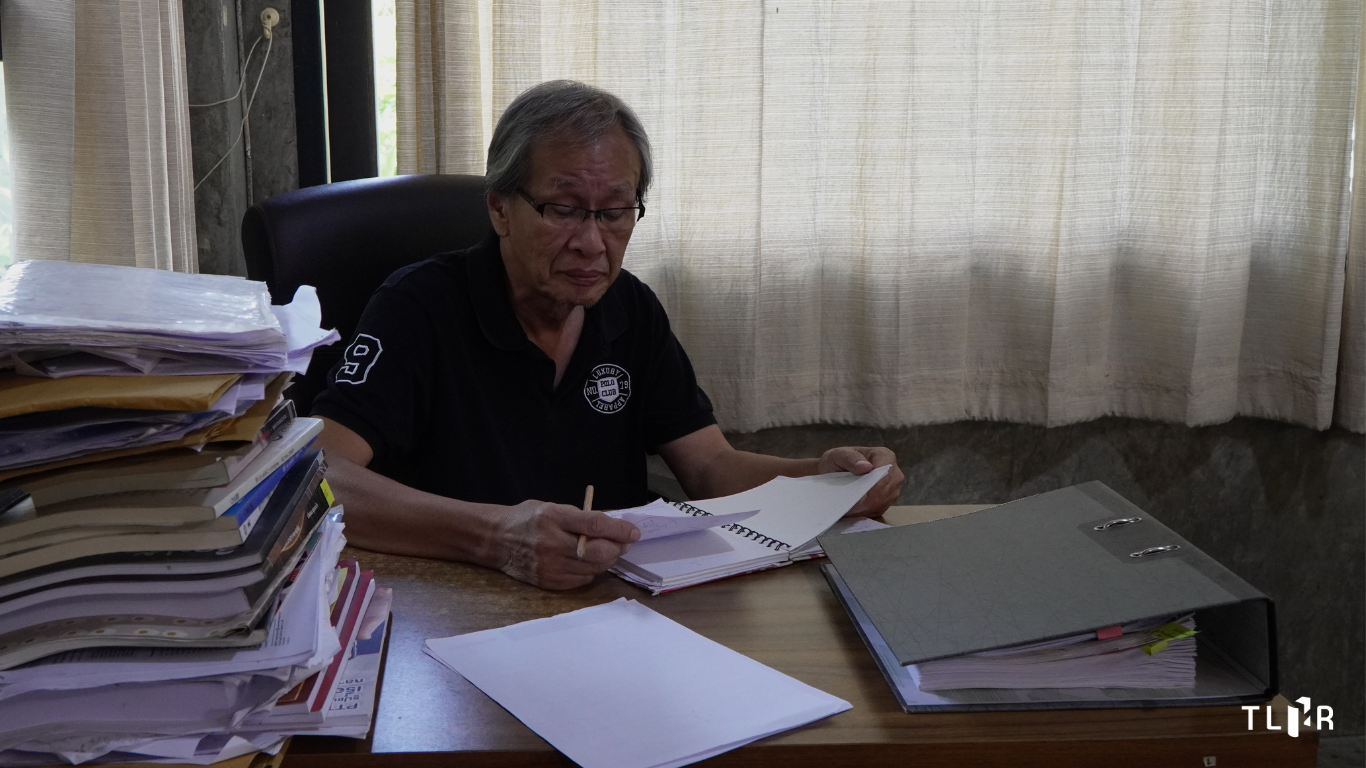
Especially from 2020 onward, following the dissolution of the Future Forward Party, there was a surge in cases involving young people. The lawyers were not prepared for it. Lawyer Wattana likened the influx of cases to a “tsunami.” A single defendant faced multiple charges. Every week that they participate in protests, new charges are filed. It became difficult to keep track of who was charged with what. Cases also spread to several provinces in the north, including provinces that had never previously seen protest-related cases before.
The complexity of handling and tracking these cases presented another set of challenges. As social conflict escalated, the government adopted a clear policy of using these cases as a tool. Consequently, the likelihood of success in court diminished. Officials within the justice system became more stringent in their handling of cases because the cases were perceived as a fight against the system, not just a fight against political parties or demands for a change in government, like in 2010. These factors were reflected in the way cases were filed, adjudicated, and in the discretionary powers exercised by officials. Some cases that shouldn’t have been filed at all were pursued.
“For example, in the case of a student, the initial charge was Section 116 (sedition), requiring bail of hundreds of thousands baht and monthly reporting for an extended period. But when the court finally ruled, the defendant was found guilty of violating the Public Cleanliness Act. It was completely unrelated to the original charge. Their lives were disrupted significantly by the justice system. Some had to drop out of school. This was wrong from the start. Fortunately, no one was imprisoned during trials in Chiang Mai. Almost everyone was granted bail. Young people shouldn’t have to endure such treatment,” Lawyer Wattana said.
Lawyer Wattana believes that human rights cases after 2020 have further eroded public trust in the Thai justice system. The justice system is being interfered with at every level. “I don’t have much confidence but I still have faith.”
In current human rights trials, lawyers cannot simply review the case file and provide clear-cut answers to the defendants about which arguments are strong or weak. This is because many aspects of the proceedings don’t adhere to legal principles, and outcomes are unpredictable. This inability to answer these questions reflects the lack of confidence in the justice system.
“Lawyers also have fear. We fear for our clients’ imprisonment. There’s constant anxiety. In general cases, we can often advise defendants on the likely consequences of pleading guilty. But that’s not the case in these types of cases (human rights cases). If you plead guilty, you might still receive a harsh sentence. We can’t give them a definitive answer.
“Seeing young people, almost like our own children, arrested and taken to prison is something I can’t accept. They’re not criminals. These are cases of conscience. They disagree with the government, and the government punishes them. They’re not criminals. They just want to see a better country. This is something that my generation has overlooked. But these young people don’t overlook it. Seeing them face imprisonment is disheartening. I deeply dislike it.” Lawyer Wattana said.
Perhaps it’s not grand notions of ideology that keeps Lawyer Wattana on this path of a human rights lawyer. He insists that he does it “for himself.” He simply sees what is wrong, and still has the energy to do what he wants. He has never selected the defendants or the accused in the cases. When there’s a case that needs help, he takes it on.
“Over the past 10 years or so that I’ve been immersed in these issues, I haven’t chosen my clients. I’ve chosen my path. Has it affected me? Yes, it has. But I’ve never thought I’ve taken the wrong path. I don’t feel troubled.”
Lawyer Wattana’s human rights work has had many successes. For instance, there are cases where the court dismissed charges, recognizing that the defendants were being prosecuted for simply exercising their rights and freedoms. One example is the case of several students in Lampang Province who were charged under Section 112 (lèse-majesté) for hanging a fabric banner. After multiple hearings, the court dismissed the Section 112 charge, convicting them only of violating the Public Cleanliness Act. However, the prosecutor appealed the decision. The Court of Appeal Region 5 upheld the lower court’s ruling, bringing a conclusion to the case.
“The students hadn’t committed any serious offense, but were charged and forced to endure the hardship of court appearances. It was difficult for them and the lawyers. But the court acquitted them, so that was gratifying.”
.
.
As for what has yet to be achieved, Lawyer Watthana personally points to the issue of the court’s use of discretion. “In political or rights-related cases, we don’t clearly see how much a right has been violated. Was it an overreach of rights? It’s in the court’s discretion. But the court exercises its discretion in an unclear manner—using overly broad criteria and often interpreting things negatively. In many rulings, the decisions stray far from legal principles. When it comes to policy-related cases, the court tends to hold back in exercising its full discretion. Sometimes, when the verdict is delivered, we’re left questioning—is this really enough to justify putting someone in jail?”
However, working within an organization like Thai Lawyers for Human Rights provides opportunities to expand the reach of human rights advocacy. But changing laws at the national level remains a challenging endeavor.
“If you ask me what I want to change as a human rights lawyer, it’s the mindset of law enforcement officials. Can you advance in your career without having to please someone? Can you do your job and be recognized for your performance? It shouldn’t be that everything depends on impressing your superiors. If that’s the system, then it’s fundamentally flawed from the very beginning.”
As for the challenges of being a human rights lawyer, Lawyer Wattana states, “The challenges have always been there (laughs).
“I actually told TLHR back in 2021 that I was done. I was exhausted, and my health wasn’t good. But I’ve kept going. Someone once asked me, ‘Aren’t you afraid? Why do you take on these kinds of cases?’ I asked them in return, ‘Then who will do it?’ They nodded; they understood. Every time a case ends, it’s exhausting, and I think I am done. But then another case comes along, and I keep going. I don’t know when I’ll stop. Maybe I won’t stop intentionally, but I’ll stop when I physically can’t continue.”
“Lately, I haven’t found much satisfaction in wearing the lawyer’s gown to argue a case. What keeps me going is the TLHR’s team, the younger members who continue to drive me. They’re my inspiration to continue. I feel good about this teamwork; we’re not alone. In the past, when I worked alone, I felt very isolated,” Lawyer Wattana said.
Finally, Lawyer Wattana’s message to young lawyers interested in pursuing a career in any form of human rights law is to be prepared. Don’t enter this field unprepared, because you might not have the opportunity to go back to what you were doing before. Being prepared means being stable. Don’t expect to gain anything from this. You must prepare your heart and yourself.
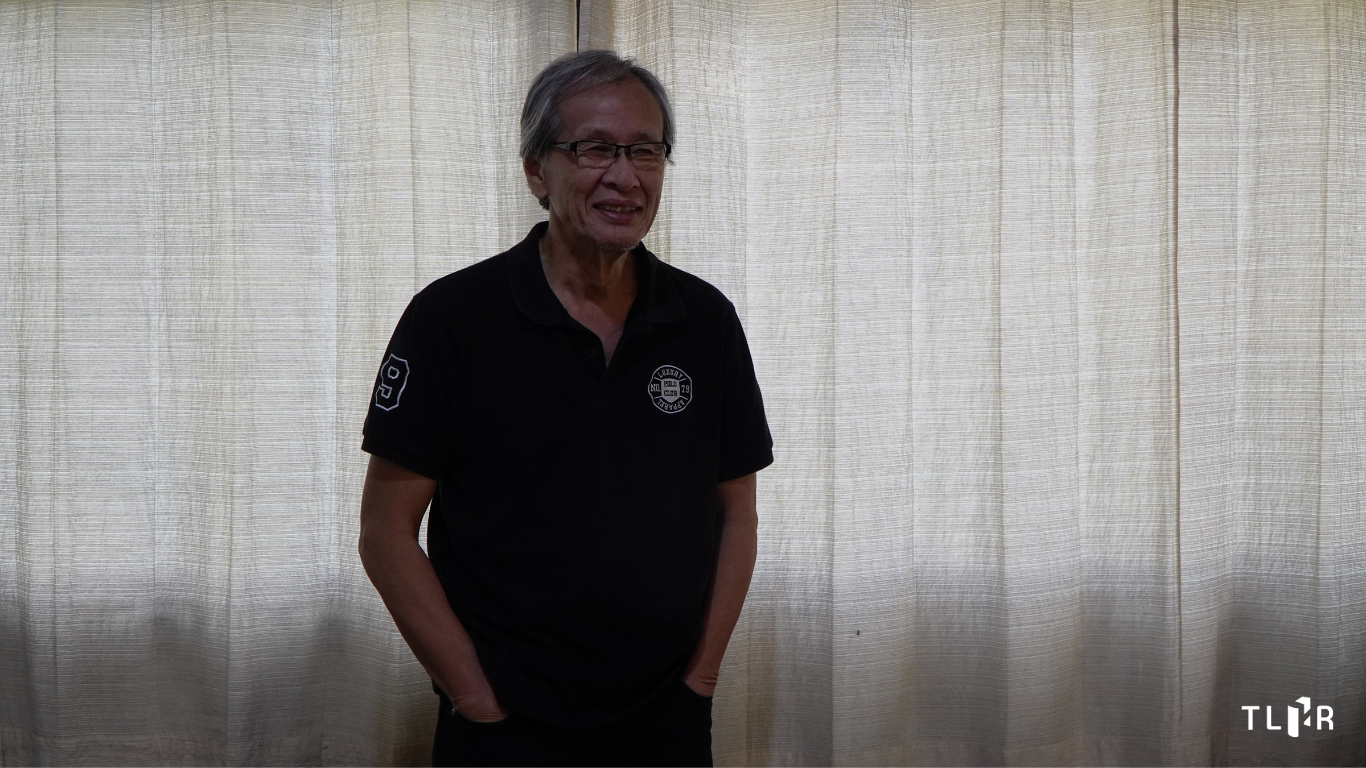
“No one becomes rich doing this. I’ve sold off a lot of my possessions already,” the senior lawyer said with a laugh as youthful as a young lawyer.
.
ข่าวหรือบทความที่เกี่ยวข้อง
Yaowalak Anuphan: Human rights work is a never-ending task
Story and Photos Veerapong Soontornchattrawat . Note: This interview series is part of the book “Feathers on the Scales”, which features ten interviews that explore the lives and experiences of human rights lawyers advocating for civil and political rights in Thailand. The book was published by Thai Lawyers for Human Rights (TLHR) in February 2025 […]

admin010
25/09/2568
Thaworn Piyawongrungruang: “Political Cases: at the very least the work of lawyers lessens the hardship of the activists.”
Story by Noppon Archamas . Note: This interview series is part of the book “Feathers on the Scales”, which features ten interviews that explore the lives and experiences of human rights lawyers advocating for civil and political rights in Thailand. The book was published by Thai Lawyers for Human Rights (TLHR) in February 2025 and was later […]
admin010
03/10/2568
Krisadang Nutcharus: Life of a Human Rights Lawyer ‘Standing Firm, Never Surrendering’
Story by Weerawat Somnuek . Note: This interview series is part of the book “Feathers on the Scales”, which features ten interviews that explore the lives and experiences of human rights lawyers advocating for civil and political rights in Thailand. The book was published by Thai Lawyers for Human Rights (TLHR) in February 2025 and was later […]
admin010
09/10/2568
Muay Junjira – The Fighting Lawyer: When the Court Lacks Justice, We Have the Right to Challenge It.
Story By Wanna Tamthong . Note: This interview series is part of the book “Feathers on the Scales”, which features ten interviews that explore the lives and experiences of human rights lawyers advocating for civil and political rights in Thailand. The book was published by Thai Lawyers for Human Rights (TLHR) in February 2025 and was later […]