
Story and pictures by Nathaphob Sungkate
.
Note: This interview series is part of the book “Feathers on the Scales”, which features ten interviews that explore the lives and experiences of human rights lawyers advocating for civil and political rights in Thailand. The book was published by Thai Lawyers for Human Rights (TLHR) in February 2025 and was later translated into English.
——————————
.
“We [women lawyers] don’t have to be tough and aggressive like men, but can be lawyers in our own way, showing that we stand firm on principles.”
.
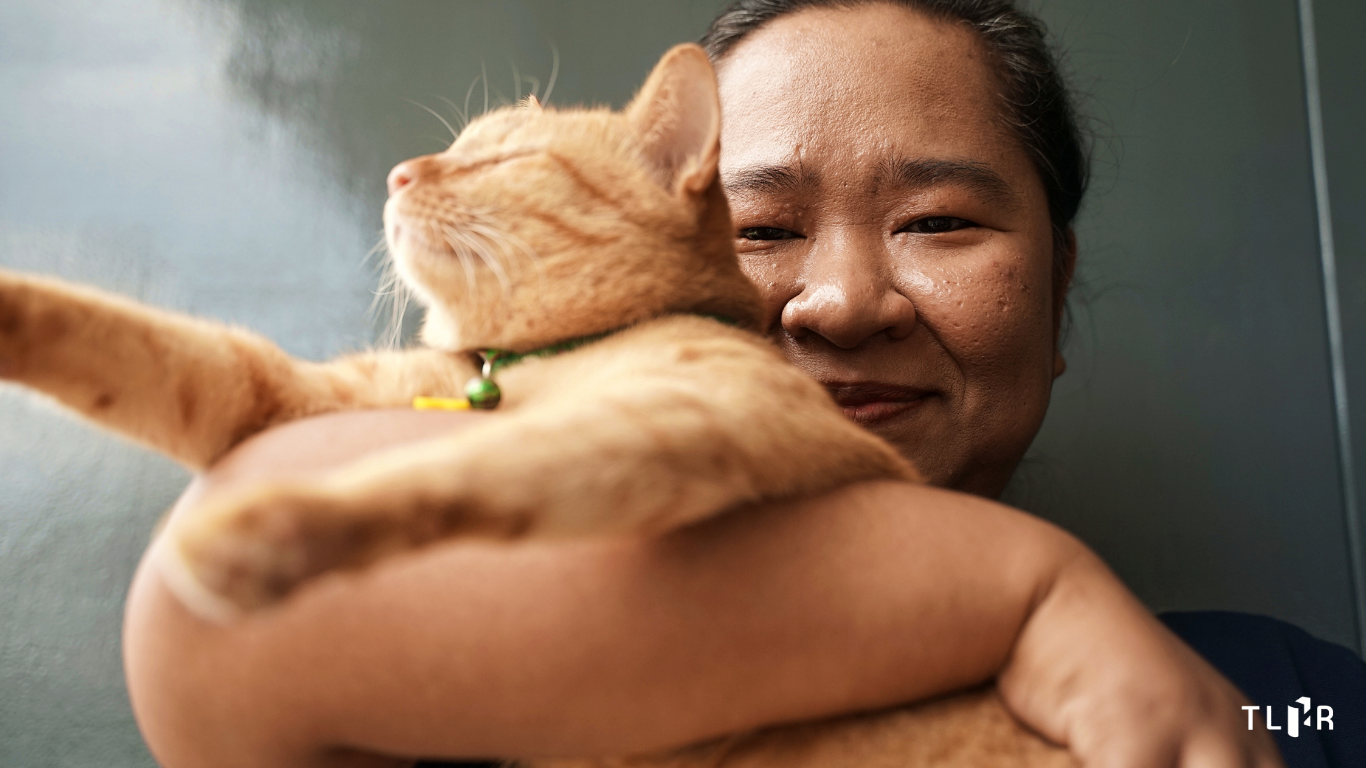
From the outside, Khumklao Songsomboon doesn’t seem like someone who would enjoy K-pop or be a K-pop fan. But when she smiles while holding ‘Chai Thong’, the orange cat residing at the office of Thai Lawyers for Human Rights, it becomes clear that people are never just one-dimensional.
“If there’s a concert, I go to reward myself and take myself into another world,” Lawyer Khumklao said, referring to this ‘other world’, a world that is vividly different from the world of K-pop fans.
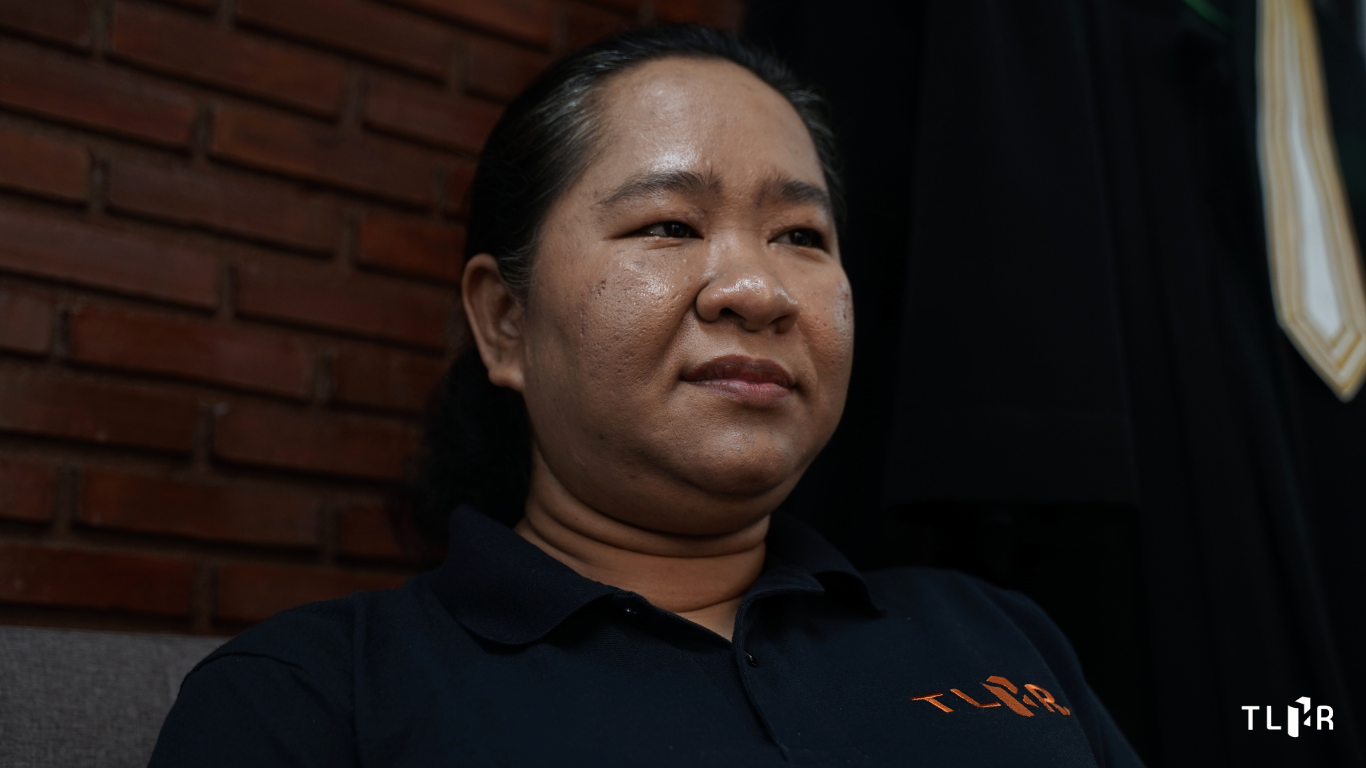
She was born and raised in Nonthaburi in a family where her mother was the head of the household and a role model in life. Human rights advocacy wasn’t her dream job. She chose to study law because she had a good memory and believed that a legal career would provide financial stability for her family.
The turning point came when she spent five years involved with the Women’s Union in Nakhon Pathom Province. During this time, she practiced her skills in labor litigation, followed strikes, and eventually had the opportunity to work as a Law Reform Commissioner at the age of 29.
But the 2014 coup shifted the path of this woman lawyer’s career from handling labor cases to defending people and political activists who exercised their freedom of expression.
It has now been 10 years since she became part of Thai Lawyers for Human Rights. The lawyer continues to work on the beliefs she has always held.
“Being a lawyer requires understanding people’s lives,” said Lawyer Khumklao.
.
.
From Bang Bua Thong to Om Noi, the Beginning of a Career as a Human Rights Lawyer.
Khumklao has a total of 7 siblings. Her father served in the military and passed away when she was in Grade 10. Her mother became the pillar of the family, supporting them through her business. As the youngest child, she was always cared for by her older siblings. She considered her life to be simple, as she didn’t have the same level of ambition as other classmates. She took the entrance exam and chose the Faculty of Law at Thammasat University as her first choice, but when she didn’t get in, she chose to study law at Ramkhamhaeng University.
“At that time, I didn’t have the intention or determination to work for society. I studied with the resources I had, thinking from the perspective of an ordinary person, without a vision of driving society,” said Lawyer Khumklao.
But fate led her to the human rights field after graduation. While preparing for the professional lawyer’s licensing exam, she spent time volunteering as part of the second generation of human rights lawyers at the Thai Volunteer Service Foundation. She chose to work on labor issues for the Women’s Union in Nakhon Pathom Province.
“I understand the pressure of being a recent graduate, especially as a lawyer where credibility is essential. If I could go back and advise my younger self that day, I would say to be patient, find topics you’re passionate about, dive deep into them, and make them a part of who you are.”
Lawyer Khumklao chose the labor law field because she saw it as something close to her. Living and listening to the struggles of female workers, as well as attending meetings with them in a small rented room that was turned into a meeting room for negotiating demands with employers, allowed her to gain a deeper understanding of society.
It was one year that shaped the next ten and kept her in the field of human rights.
“The first year with the labor union stripped away my ego as a lawyer. As a law graduate I thought that my skills could help others, but once I was in the field, I had to put aside knowledge from the classroom and start from scratch to understand the real struggles of people.”
The first lesson in her legal career taught her that being a human rights lawyer requires more than just knowing the law;it demands understanding people and learning about their struggles. Otherwise, she would be just a lawyer clinging to legal books, without truly understanding people’s lives.
“A lawyer needs to start by asking questions to the client: what happened, how do you feel about it, how has it affected you emotionally?”
After completing the human rights volunteer program, Lawyer Khumklao decided to continue working as a legal advisor for the labor union group for another 4 years. Her work involved monitoring the activities of labor unions in Nakhon Pathom and Samut Sakhon provinces, providing legal training for workers, and assisting laid-off workers. In 2011, she was contacted by the Law Reform Commission to help with labor law matters.
.
From Labor Cases to Political Trials
Five years of working in labor rights protection have made Lawyer Khumklao a more determined person. She gathered the experience gained from working on labor rights cases to become a part of the Law Reform Commission, representing the labor unions. Her role was to present public proposals on draft laws, offering comments to the legislative branch, such as drafts on social security, compensation laws, and labor relations bills.
However, the 2014 coup led to the dissolution of the Law Reform Commission. It was at this time that a senior colleague who worked on women’s and political rights invited her to join the volunteer lawyer team at the Thai Lawyers for Human Rights.
The first case she took on was the case of a taxi driver who was arrested after protesting the coup. This was followed by the case of a journalist who held up a sign opposing the coup and was unjustly dismissed by the company.
“Shifting from labor cases to political cases is quite different,” Lawyer Khumklao compared the different types of cases, explaining that “Labor is about livelihood, but political cases are about advocating for these rights to move forward. Therefore, it is not about working in an independent manner, but more like partners working together.”
However, no matter the kind of case being handled, being a lawyer is not about offering charity or assistance, but about actively pushing forward human rights issues to ensure they persist or progress.
She began working as a full-time lawyer for Thai Lawyers for Human Rights in 2015, during the period when the enforcement of Section 112 was increasingly used against individuals with mental illnesses. One of the cases that remains in her memory is of a defendant who was mentally ill and went to court to demand the return of money from a group of politicians, claiming that the money came from the monarchy. Although the case was eventually dismissed, the defendant had to endure a lengthy legal process for nearly a decade.
“What made me decide to continue on political cases was the desire to know how these issues would progress and whether the law could really be used against people to this extent. For me, the law doesn’t emerge from a void. It is created by people and exists as a consensus to allow society to coexist without violating each other’s rights.”
From 2015 to 2018, most of the cases Lawyer Khumklao handled were related to Section 112 and Section 116 cases, which were enforced intensively by the military junta. However, a major turning point for both her and Thai Lawyers for Human Rights came on 18 July 2020, after the Free Youth protest, a large-scale demonstration that brought an overwhelming number of cases, surpassing a thousand.
.
.
At the Heart of the Storm with the Thai Lawyers for Human Rights
Previously, the number of cases handled by the TLHR per year was around 20-30. However, after 18 July 2020, hundreds of political cases began pouring in. Currently, TLHR is overseeing more than a thousand cases.
“For juvenile cases alone, I had to oversee around 300 individuals, covering approximately 200 cases, with me personally handling no fewer than 30 cases.”
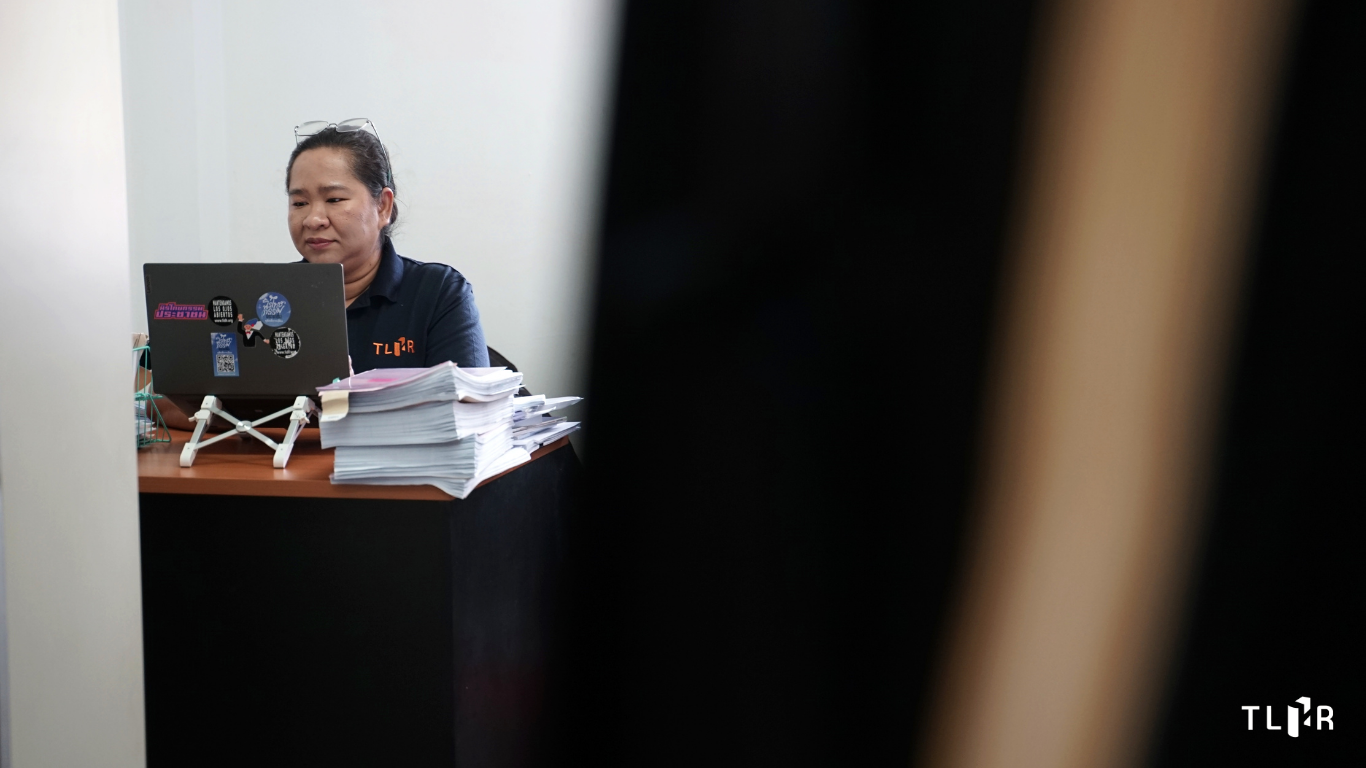
During that time, the TLHR assigned shifts, each lasting seven days. During the day, Lawyer Khumklao would prepare documents for cases in the appeal process, while at night, she had to be ready to serve as a lawyer for the political protesters who were being arrested daily. Additionally, there was also a need to gather a nationwide network of volunteer lawyers to assist with the workload.
However, despite the overwhelming workload since 2020 up until now, Lawyer Khumklao hasn’t forgotten to find time for herself.
“I’m a K-POP fan, and a ‘90s fan who loves to listen to X Japan, TVXQ, and NCT Dream. I go to concerts as a reward and take myself into another world.”
Additionally, she also has her own personal therapists, Chai Thong and Nam Pun, the two resident cats at the TLHR office.
“This kind of work revolves around stress, suffering, and the expectations of those in distress. To some extent, I unavoidably take on their pain as my own.”
For Lawyer Khumklao, being a human rights lawyer requires an emotional connection to the work. Sometimes she feels overwhelmed when handling fundamental matters like bail rights, but is unable to secure a successful outcome.
“It’s okay to feel bad,” she said. “Because if we don’t feel bad about it, we won’t question or criticize it.”
.
.
I can be a good lawyer in my own way.
“What kind of a lawyer is Khumklao?” we [the interviewer] asked. “What is your style when it comes to litigation?”
“There was an old lady who watched me argue in the case of #THwantElection (in Thai: #คนอยากเลือกตั้ง). After the case, she came up to me and said, ‘Lawyer, you spoke too softly. I think you should be stricter.’ I thought it was very sweet of her to speak to me directly, sharing her opinion in her own way.”
Due to Lawyer Khumklao’s soft-spoken personality, some people perceive her as lacking the assertiveness required to argue criminal cases. The challenge lies in people’s attitudes towards women, beginning with the assumption that female lawyers are more sensitive than male lawyers, and that they lack the intensity, assertiveness, and resourcefulness of male lawyers.
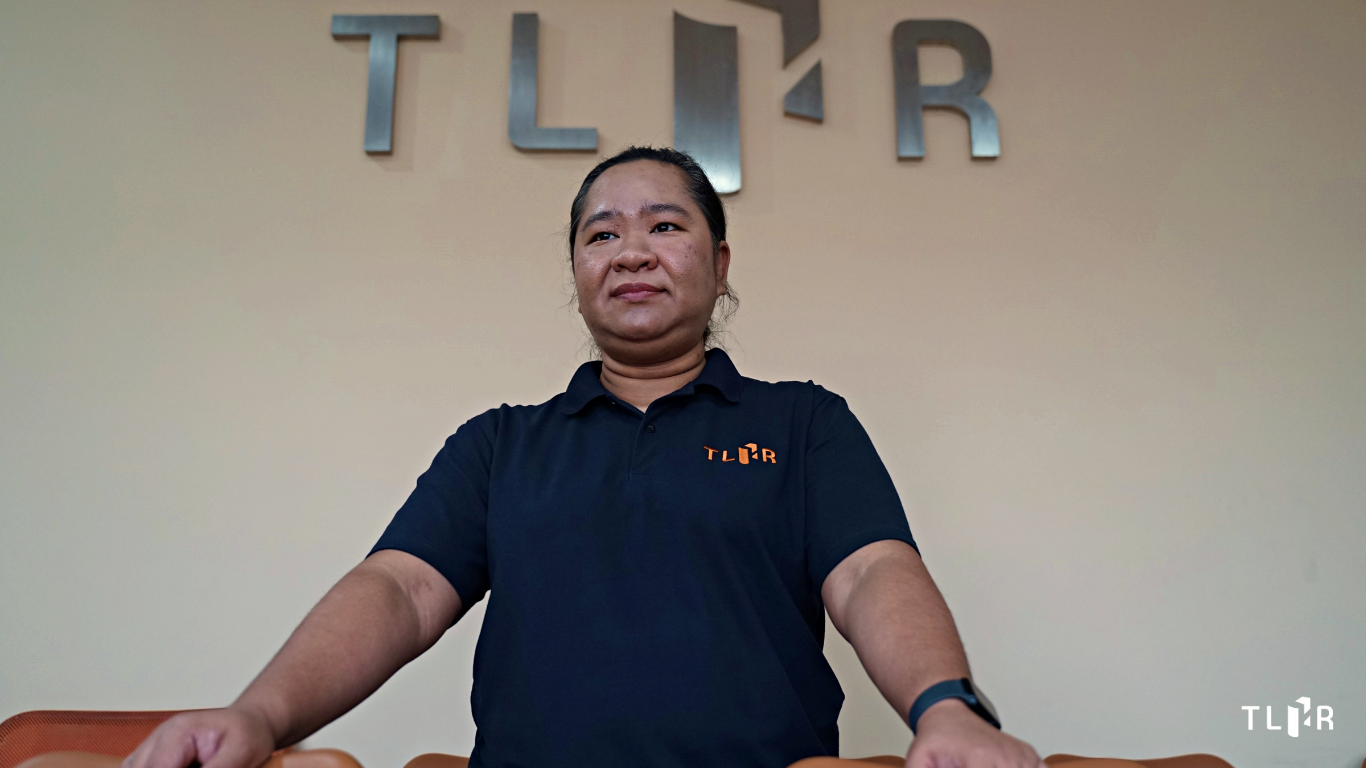
Lawyer Khumklao is someone who prefers working systematically. Most of her time is spent reading case files to examine the facts, questioning witnesses, reviewing legal issues, and researching the information of each witness.
“We [women lawyers] don’t have to be tough and aggressive like men, but can be a lawyer in our own ways, showing that we stand firm on principles, and the results will be no different.”
Lawyer Khumklao believes that to be a good lawyer, one must start by respecting their own rights and the rights of others, emphasizing their own worth, and having the courage to express what they want to achieve as a lawyer.
“Assert the rights. Everyone, regardless of gender, can be a lawyer equally in their own way. Don’t let anyone take away our dreams,” said Lawyer Khumklao.
At the age of 43, this female lawyer hopes that more than 300 cases under Section 112 will be granted amnesty. This is a determination from an ordinary person like her, wishing to pass on this success to the next generation of lawyers, or at least to help her friend, lawyer Arnon Nampa,be released from prison. However, if she doesn’t succeed, she said at the end:
“These are issues that have occurred, and there are groups of people who are affected. If you are part of a society that still feels unjust, use this starting point to try and do something. If you want justice to happen, you can’t just wait for it. You have to take action to make it happen.”
.
ข่าวหรือบทความที่เกี่ยวข้อง
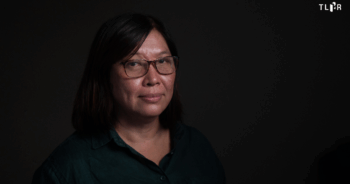
Yaowalak Anuphan: Human rights work is a never-ending task
Story and Photos Veerapong Soontornchattrawat . Note: This interview series is part of the book “Feathers on the Scales”, which features ten interviews that explore the lives and experiences of human rights lawyers advocating for civil and political rights in Thailand. The book was published by Thai Lawyers for Human Rights (TLHR) in February 2025 […]

admin010
25/09/2568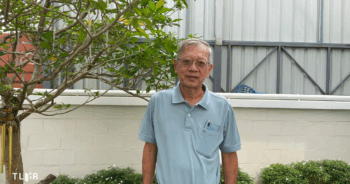
Thaworn Piyawongrungruang: “Political Cases: at the very least the work of lawyers lessens the hardship of the activists.”
Story by Noppon Archamas . Note: This interview series is part of the book “Feathers on the Scales”, which features ten interviews that explore the lives and experiences of human rights lawyers advocating for civil and political rights in Thailand. The book was published by Thai Lawyers for Human Rights (TLHR) in February 2025 and was later […]
admin010
03/10/2568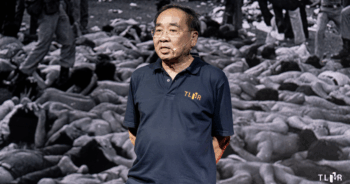
Krisadang Nutcharus: Life of a Human Rights Lawyer ‘Standing Firm, Never Surrendering’
Story by Weerawat Somnuek . Note: This interview series is part of the book “Feathers on the Scales”, which features ten interviews that explore the lives and experiences of human rights lawyers advocating for civil and political rights in Thailand. The book was published by Thai Lawyers for Human Rights (TLHR) in February 2025 and was later […]
admin010
09/10/2568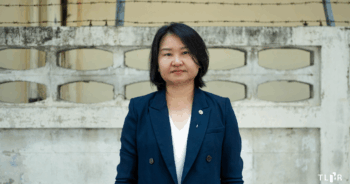
Muay Junjira – The Fighting Lawyer: When the Court Lacks Justice, We Have the Right to Challenge It.
Story By Wanna Tamthong . Note: This interview series is part of the book “Feathers on the Scales”, which features ten interviews that explore the lives and experiences of human rights lawyers advocating for civil and political rights in Thailand. The book was published by Thai Lawyers for Human Rights (TLHR) in February 2025 and was later […]