
Class of 2020 EP.3 The Lives of Three Young Activists after the 2020 Protests
Interviewed/written by Veerapong Soontornchattrawat
.
A 17-year-old youth chose to be on the front line, protecting the people during the protests in 2020. Five years later, he is back on the ‘front line,’ safeguarding his life and family. Although it is painful for him that he and his fellow protesters were prosecuted, he still finds those times deeply meaningful and never avoids the gaze of those listening when recounting his stories.
Note: This series of interviews, ‘Class of 2020,’ was written by the author based on the interviews with three Thai youths who were politically active in 2020. It is presented in the form of a first-person monologue, allowing readers to hear their musings about their lives and contemporary Thai society.
——————————————–
.
I was 16, almost 17, at the time. I had just finished Mathayom 3 (9th grade) but chose not to continue because I knew it wasn’t for me. Classroom knowledge never sank in, perhaps because I was more interested in things outside the curriculum. More importantly, I hated the school system. It was full of class division, rich versus poor, and factionalism. I didn’t want to be a part of that world.
That day, I saw the dispersal of the Silom protest on TV. The image of the police water cannon trucks spraying purple water is still vivid in my memory. It was the starting point that made me want to go out and protect the people. General Prayut’s administration was nothing but a failure; everything was a mess. That’s what made me want to stand on the same side as the protesters. The rallies became a part of my life, and many protesters I didn’t know personally became a part of that period of my life as well.
.
.
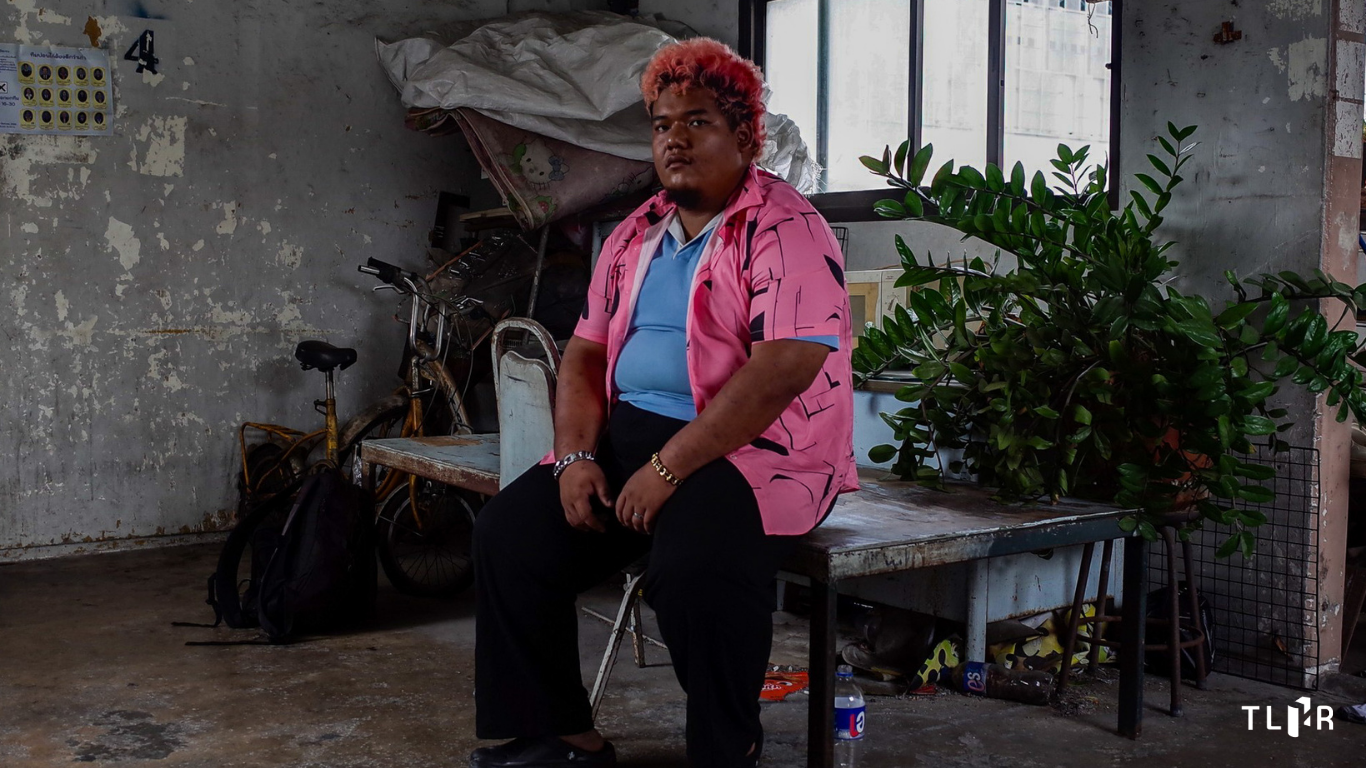
I disliked how the crowd control police (“Or Kor For” – Protection and Crowd Control Division) treated the people. I wanted to be on the front line to protect the protesters. A friend in the WeVo (We Volunteer) group mentioned they were recruiting and screening people for various roles to facilitate the rallies.
I went through the screening and was selected. After that, I carried out my assigned missions. Some people became nurses, some electricians, or sound technicians, but I chose the front line. However, that department only accepted people aged 20 or older, but I slipped through because I looked older than my age (laugh).
The front line had many missions. We had to form a defensive line to prevent fights, clear razor wire, open and close roads, and manage traffic. When a protest was being dispersed, we would be right on the front. Sometimes they would fire tear gas and high-pressure water. I had to carry the injured to the ambulance, deliver clean water and antacids for protesters to apply to their skin to reduce burning, and supply food and logistics.
I had my own shield and armor. We didn’t really have weapons that would draw blood. We focused on defending ourselves and the protesters. We didn’t want anyone to be injured.
Once we realized that fighting would only cause pain on both sides, we chose the peaceful approach as guided by the protest leaders. Initially, we were furious because our friends were being harmed, but ultimately, I agreed with the direction the leaders took, which was non-violence. I then moved from the front line to the back, sometimes working with the nurses or rescue teams, or operating the loudspeakers.
My first case happened because of my own mistake. WeVo was organizing an event, the “Shrimp Grilling Protest,” to help shrimp farmers. I helped scout the area and patrol. The police asked to reclaim the area that day, but I was worried about my motorcycle parked nearby, afraid that it would be stolen. I rushed in to get it. The police grabbed me, shoved me into a detention van, and took me to the Border Patrol Police Region 1 base. That day, I was charged with violating the Sound Control Act and the Emergency Decree.
For the second case, fully-armed Arintaraj (SWAT) officers stormed and charged us at Lat Phrao Intersection. We were ordered to lie down. Some people were kicked. I was struck in the face with a rifle butt and pushed into the detention van. I told them I was a 17-year-old minor, but they didn’t believe me, so I showed them my ID card. They then separated us, made us lie face down, searched us, and confiscated our bags.
That day, the protest guards from other groups broke into the detention van to help the WeVo members. I was so angry, so furious that I punched the car window, which is how I got the scar on my arm. Later, I was notified of charges of Criminal Association (gangsterism). The third case was a charge of Unlawful Assembly, which concluded faster than any other.
.
.
After that, the protests became increasingly sparse until they went completely quiet. I think the different ideological groups started moving in different directions. I don’t like the military system, but others might have different demands. The movement was full of diverse opinions and ended up fighting over ideas.
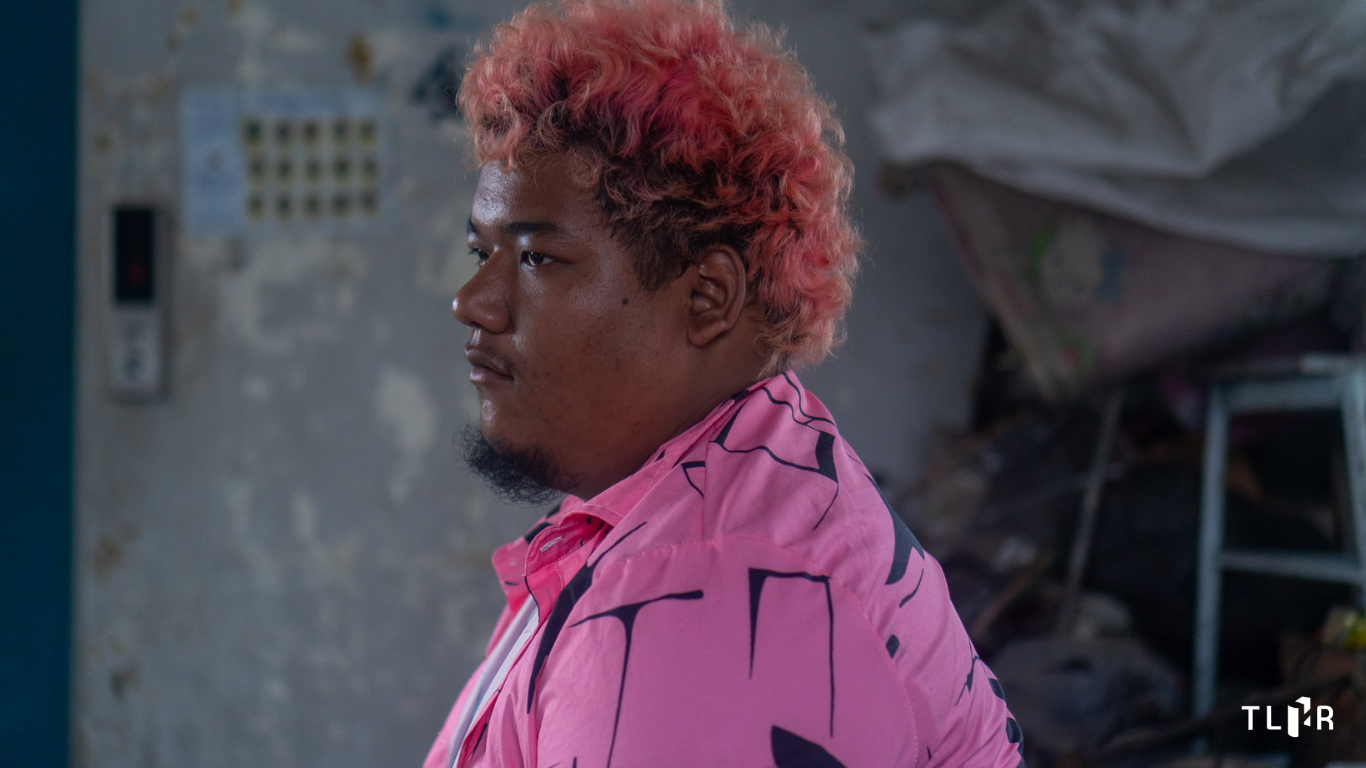
Ever since the protests ended, I have returned to help my parents with the family business, selling made-to-order food and buying recyclable waste. I drive a saleng (motorcycle sidecar) and also work as a delivery driver. Currently, I’m saving up with the goal of buying a car and a house. I’m looking at an Ua-Athorn (low-cost) flat or a house in Khlong Song in Pathum Thani Province. These are my current life goals.
Growing up in this flat has shaped my political perspective. The lives of the people in the different rooms on the different floors reflect the inequality of Thai society. Some people had their land expropriated, which completely changed their lives.
To me, Bangkok is miserable. The alley where I live is a mix of slum and public housing. I’m in the public housing zone, but if you go deeper, it’s the slum zone, and further is Klong Toey (the biggest slum in Bangkok). We are surrounded by high-rises, luxury condos, and beautiful buildings. Soon, The government will expropriate the land in this area to build more luxury condos. In the future, this place will be expropriated too.
The lower class has no rights and no voice. It’s only the upper class that sets the rules: “I want that, I want to build this.” The poor are being driven out of the city, and I’ll probably be one of them, as I have to choose a house on the outskirts.
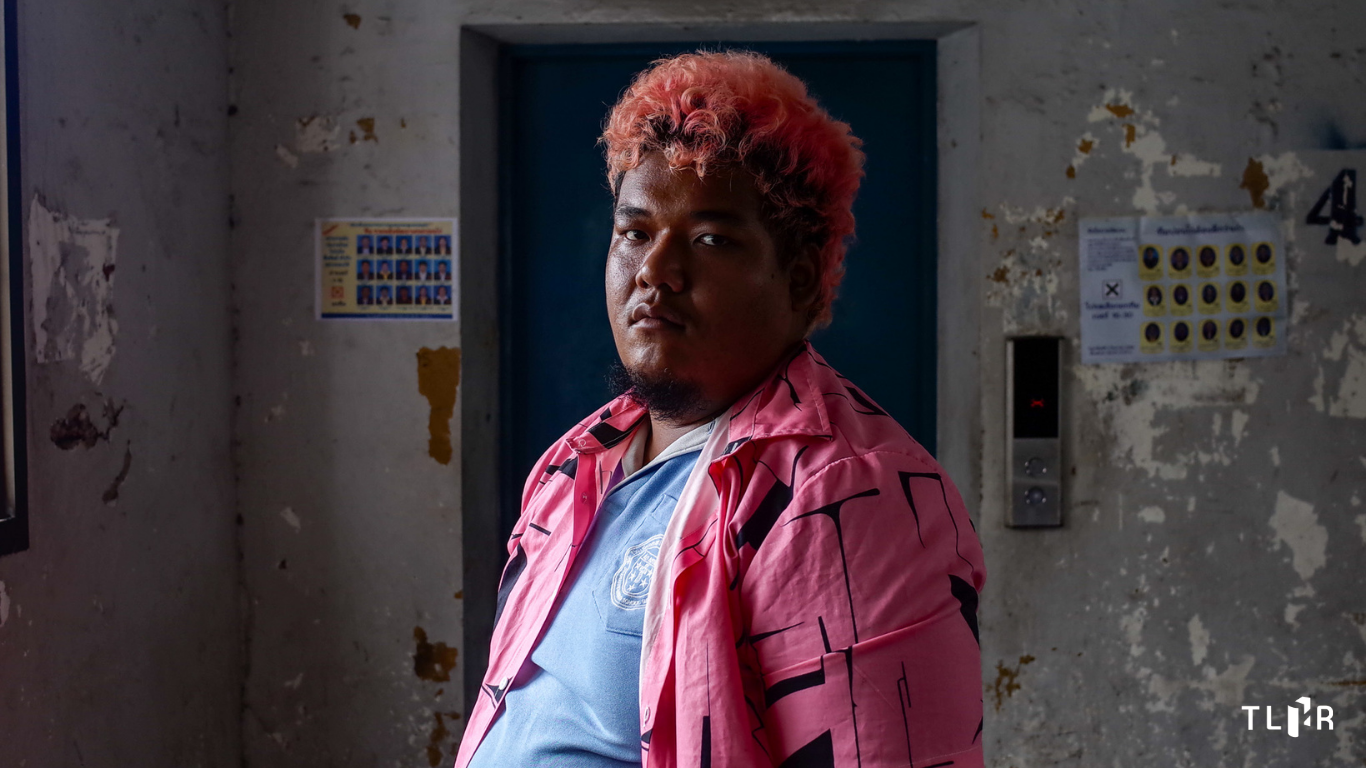
What is our country facing? It feels like a void with all the protest leaders arrested. There is no one to talk to about the problems, no one to challenge or offer alternatives. I supported one political party, but lately, they have been ideologically inconsistent, which makes me feel adrift. The people I trust haven’t been able to achieve anything.
.
.
What has been successful so far? (Pauses to think) That’s a very difficult question to answer, but what has been a failure is that so many people have been charged. We exercised our freedom of expression, yet we were prosecuted.
It’s like no one cares once we are charged. Eventually, the news goes quiet. Not many people demand anything anymore. The number of protesters keeps dwindling, until all we see are only the older folks standing up for the jailed. I constantly follow the situation of our movement. It has been quiet. No one is pushing it forward. If there is a move that aligns with my views, I’m ready to support it again.
Even today, kids still ask me, “So, Uncle Palm (Paradorn’s nickname), what did you do back then?” I tell them I went out to fight against an unjust government, to help the injured, to make the protests run smoothly, and to drive out the people we didn’t want in power. Everything I did was a fight from the heart with my own freedom of thought.
This is the answer I give to the younger generation.
.
| Paradorn Phanmuang participated in the movement with the We Volunteer (WeVo) group during the 2020–2021 protests. He was prosecuted for his involvement in three separate cases, all as a juvenile (at age 17), and all have since concluded. 1. Shrimp Selling Protest Case at the October 14 Memorial on December 31, 2020: The Juvenile and Family Court suspended the sentencing. 2. WeVo Team Arrest Case at Major Ratchayothin on March 6, 2021: The Juvenile and Family Court sentenced him to 6 months in prison and a 10,000 Baht fine, with the prison sentence suspended for 2 years. In contrast, the Criminal Court dismissed the charges in most adult cases. 3. Assembly in front of the Criminal Court Case on May 2, 2021: The defendant entered a special measure agreement in lieu of a verdict. |
.
.
ข่าวหรือบทความที่เกี่ยวข้อง
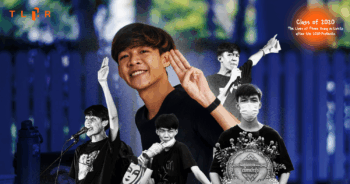
Tanapat Kapheng: Street Graduate
Class of 2020 EP.2 The Lives of Three Young Activists after the 2020 Protests Interviewed/written by Veerapong Soontornchattrawat . His life changed forever after attending his first protest on 19 September 2020. Since then, he has faced over 20 political charges for exercising his freedom of expression. He has just started his first year of […]

admin010
20/10/2568
“Then and Now”: A Short Documentary about the Past and Present of Youth Prosecuted for Political Offenses
The short documentary film “Then and Now” explores the past and present of three youths who faced political charges for their involvement in protests and acts of expression in Thailand during 2020–2021. The film is a collaboration between the Thai Lawyers for Human Rights (TLHR) and independent writer and filmmaker Veerapong Soontornchattrawat. . . FacebookFacebookXXLINELine
admin010
07/10/2568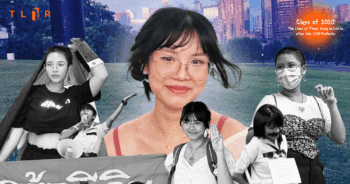
Benjamaporn Nivas: From Vancouver to Bangkok
Class of 2020 EP.1 The Lives of Three Young Activists after the 2020 Protests Interviewed/written by Veerapong Soontornchattrawat . There were no cakes or family wishes on her 18th birthday, only a can of cider—the first alcoholic beverage she could legally purchase. That was the night a young woman decided to leave her home in […]
admin010
15/10/2568
“Pink”, a 13-year-old girl, who is considered a national security threat for wanting to see an equal and just society.
During a mid-afternoon in late April, a young girl in a bright yellow shirt and a black denim skirt was half walking half running in a small alley that was branching away from the bustling street of Lat Phrao. On the outside looking in, people might have thought she was having the time of her […]
