
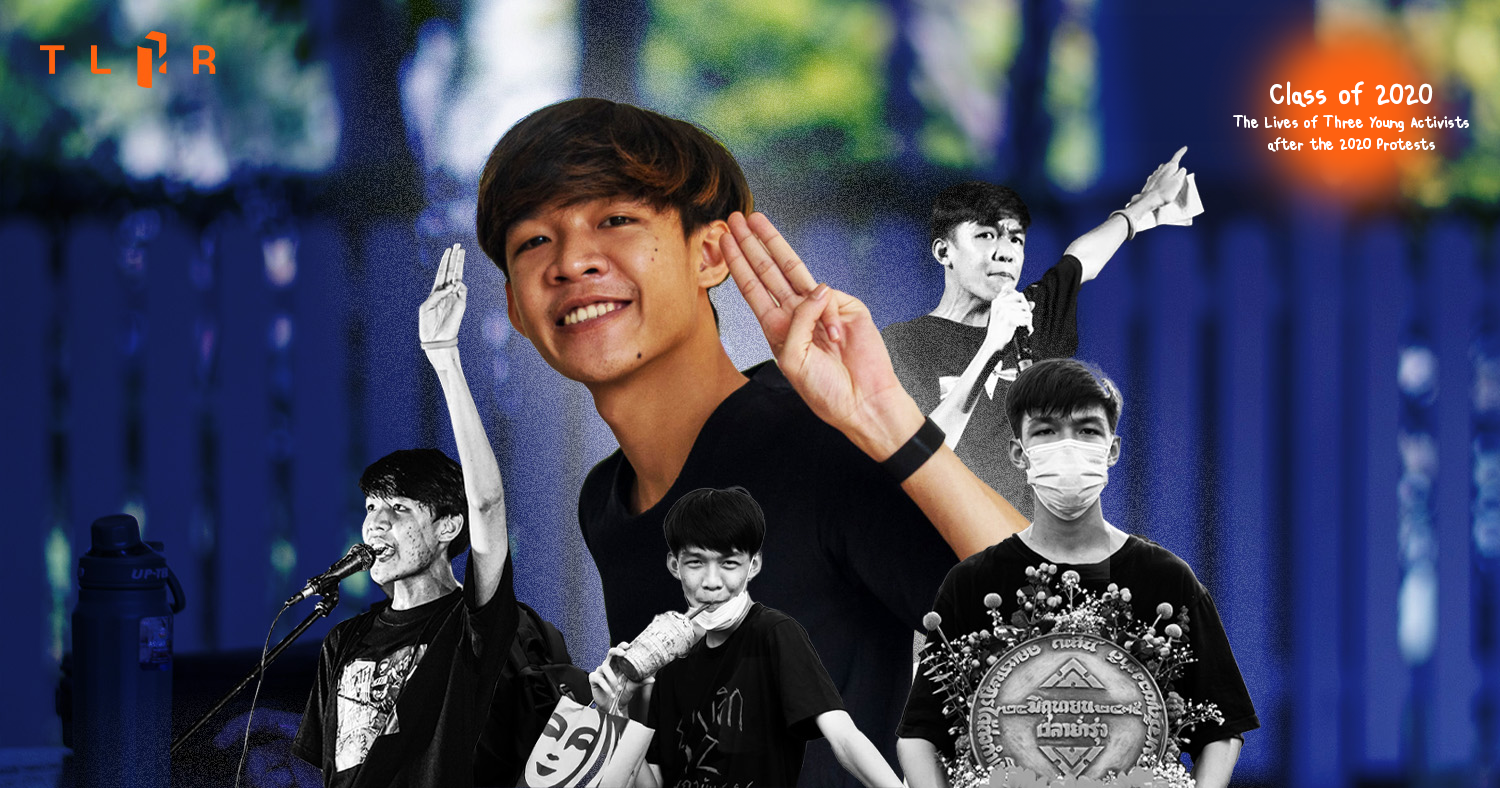
Class of 2020 EP.2 The Lives of Three Young Activists after the 2020 Protests
Interviewed/written by Veerapong Soontornchattrawat
.
His life changed forever after attending his first protest on 19 September 2020. Since then, he has faced over 20 political charges for exercising his freedom of expression. He has just started his first year of university, while also attending court appointments. As a student, he is determined to keep advocating for his friends, the people, and Thai society.
Note: This series of interviews, ‘Class of 2020,’ was written by the author based on the interviews with three Thai youths who were politically active in 2020. It is presented in the form of a first-person monologue, allowing readers to hear their musings about their lives and contemporary Thai society.
——————————————–
.
I feel like that period of my life was like being in Ajin Panjapan’s movie, The Tin Mine. A teenager was kicked out of the education system—not into a mine, but onto the streets—to join the political movement with the Thalufah group.
I started taking an interest in politics when I was in 6th grade. Back then, I wanted to join the Red Shirt protests, but I was too young. Perhaps it was because my family regularly followed politics, but they saw it as a matter for adults. “You’re too young to express an opinion. Wait until you can take responsibility for yourself first.” But I was like a fruit that ripened before its time.
When I started high school, I began engaging in activism within the school, where I noticed small inequalities. For instance, teachers could enter buildings wearing their shoes, but students could not. Teachers could eat in the classroom, but students could not. These small things were the roots of broader inequalities beyond school life. My resistance at that time made me begin to realize my own rights and freedoms.
In 2021, I started to get more seriously involved in political movements. Everyone was coming out to drive General Prayut Chan-o-cha from power, and I was one of the many. Yet, I still couldn’t see what lay ahead. It felt like walking on a road obscured by fog.
At that time, my life felt like learning outside the classroom with my friends from the Thalufah group. We campaigned on issues related to rights and freedom, organizing activities in various places. I don’t regret a single minute of it. It was a worthwhile and meaningful period. I practiced skills I’d later use in university, like working with others and listening to opinions from both the people I want to talk to and those I want to turn away from. It felt like a “sit-in”—taking a class that wasn’t taught at university.
.
.
It was a time when I witnessed the unexpected unfold before my eyes. Many friends in Thalufah were prosecuted, and several were forced to seek asylum. Meanwhile, General Prayut remained in power and the final no-confidence debate was taking place. We gathered in front of Parliament, calling for the people’s vote of confidence. But that day the prosecutor indicted seven or eight of my friends, and the court denied them bail. At that moment, I knew that at the very least we had to stay there, wait for our friends, and do whatever we still could.
After finishing high school, I decided to take a temporary break from studying. It was close to the 2023 election. Throughout 2022, we worked to raise public awareness about the upcoming election. Together with iLAW, we carried out the ‘Election Watch Volunteer’ project, traveling to provinces across every region to unpack the origins of the Constitution and the roles of the various agencies involved. We pushed one another’s potential so that citizens could monitor the election themselves.
Many of my high school friends were interested in politics. After the Move Forward Party received the most votes in the election, almost all of my junior students in the Reserve Officer Training Corps (ROTC) quit. They assumed the winning party would form the government, and the policy that most appealed to young people was voluntary military conscription. ‘Well, I’ll just quit ROTC then,’ they thought. But in the end, what they expected didn’t happen, turning it into yet another dark comedy
At that time, I also had high hopes that many things would change. At the very least, friends in prison should be granted bail to fight their cases. There was a proposal to amend Section 112, with public signatures being collected for submission to Parliament, but I could already see that Thai society wasn’t very aware of this issue. So I thought that I’ll just ask for the most basic rights: that my friends be granted bail, and nothing more. When the Move Forward Party and the Pheu Thai Party won first and second place, I still believed that people would enjoy greater freedom.
Throughout 2024, I returned to preparing for the university entrance exam while also attending court appointments for my Section 112 case and several others.
.
.
Last July, I was one of the speakers at Parliament explaining the People’s Amnesty Bill. By then, everyone already knew the number of representatives’ votes was not enough to push it into effect. That day, I spoke as an ordinary citizen exercising my civil right to free expression, yet facing political prosecution
I told the honorable members of Parliament that five years ago, I was just a high school student from Kanchanaburi who decided to join the first protest of my life on 19 September 2020. After that, my life changed forever. I never imagined that exercising the freedoms guaranteed by the Constitution would become a criminal charge under Section 112 while I was still in 11th grade.
I told them that today I face 24 political cases, three of them under Section 112. I am labeled a security threat, a radical, an outcast kid. But in reality, I am simply a young person exercising my civil rights and hoping to see change.
The Speaker of the House reprimanded me for raising a ‘personal matter’ in Parliament. But that response reflects an attitude that fails to recognize Section 112 as a political case affecting many people. An amnesty that includes Section 112 cases is not about absolving dissenters; it is about restoring the justice process and reviving democracy, so that those of us branded as wrongdoers can live as equal citizens. Because no peace can be achieved if justice continues to take sides.
That day, I said everything I had intended to say. I am just one small voice among the 279 young people who have been politically prosecuted, and more than 20 others who are facing charges under Section 112. My story is only a fragment of the distortion in this society.
For the past four months, I have been living in Pattani as a first-year student in the Faculty of Political Science at Prince of Songkla University, Pattani Campus. Yet in these four months alone, I have already had to travel to court in Bangkok three times. Each time I go, my mother asks, ‘There’s nothing to worry about, right?’ Every court appointment brings anxiety to my family. They fear that one day I may not come home.
For the past four years, my life has been about learning outside the classroom. For the next four years, I am back in the classroom. The word ‘discipline’ has become something I am much more aware of. No matter how talented you are, if you lack discipline, you’re just a talented person no one wants to work with.
I don’t just carry my own dreams but also the dreams of my friends who are still in prison and of those who share the same ideals. That makes me even more responsible for building a stable life for myself so I can continue to push society forward. Change begins with strengthening oneself and gaining more knowledge, so that we can tell people what we envision for the country.
.
.
Being in the classroom is not easy for someone who resists the system. Sometimes we have to endure listening to things we don’t want to hear, to ideas we don’t even want to know. But all of this shows us how firm our principles must be — what we can accept with an open mind, and what we must dare to question about whether it should really continue to exist.
What we did back then was simply what we could do at the time. Now I want to return to learning, because when the day comes that we are mature enough, we can use that knowledge and those ideas to challenge those in power. The last election made me reflect on where I should stand as time goes on, what I can do for the movement, for my friends who are still fighting, and for the new generation. I feel my duty is to grow, and that we must find ways to support one another to make this movement stronger.
One small happiness of student life may be joining activities with friends who share similar political ideals and being a voice for the people. Another thing I want to do alongside this is to speak up for villagers, because as students we have a status that makes society see and listen to us more. Therefore, we should serve the people.
Over the next four years, I want to continue working for society, even if it is no longer in the form of taking the microphone at rallies or blocking roads as before.
.
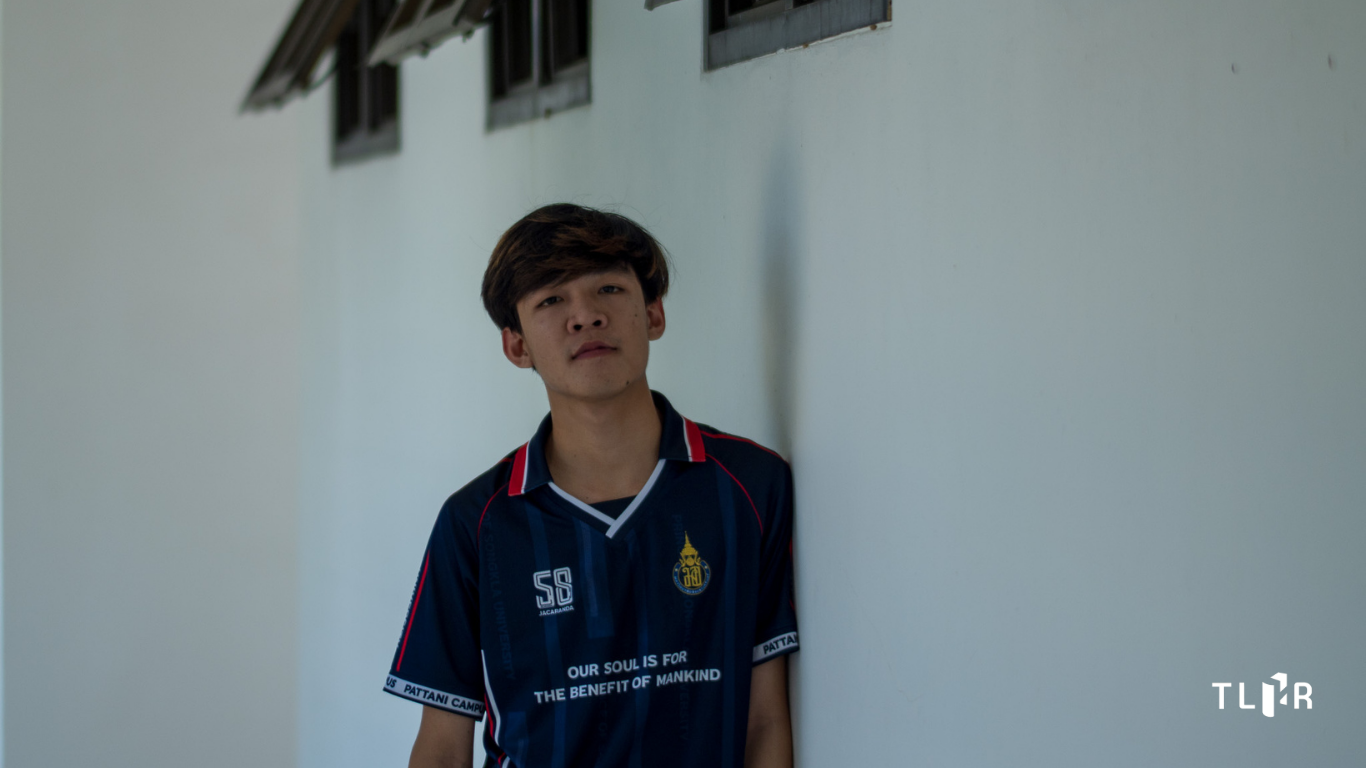
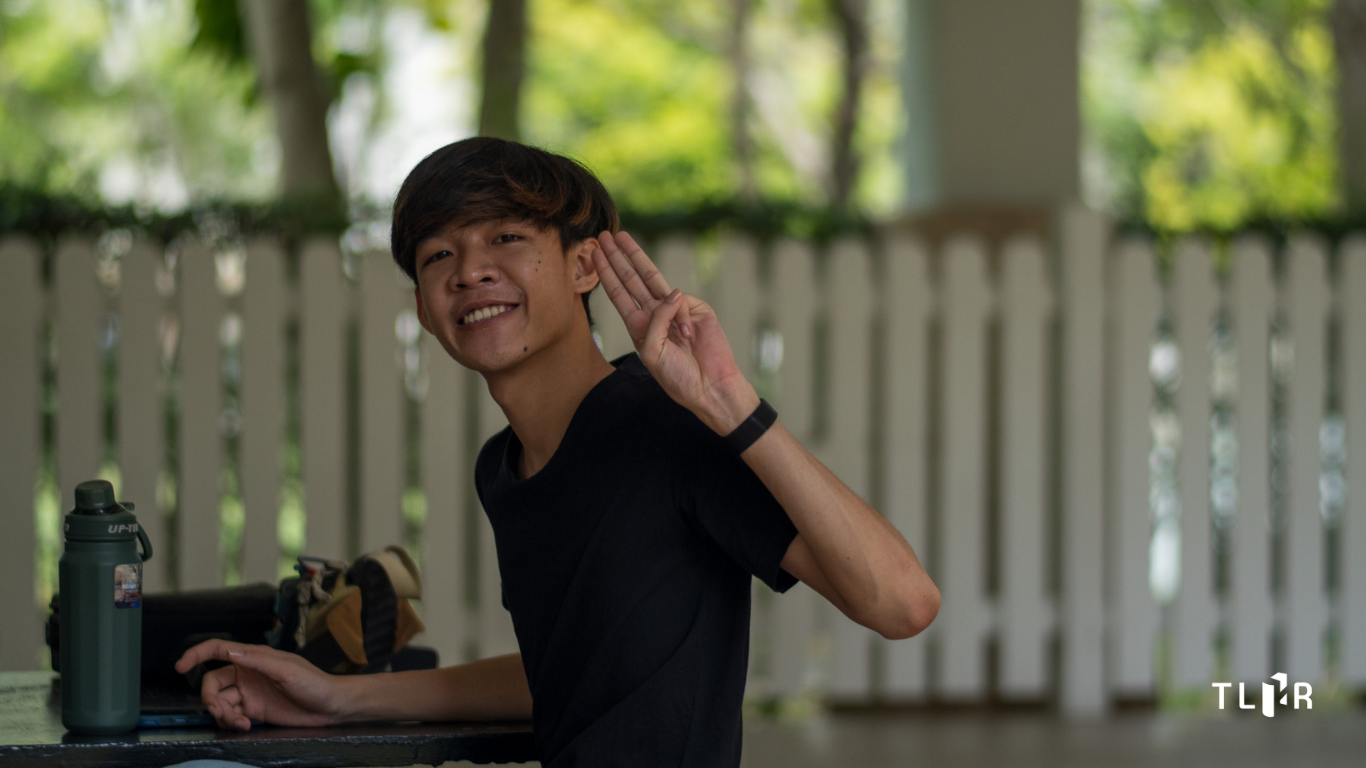
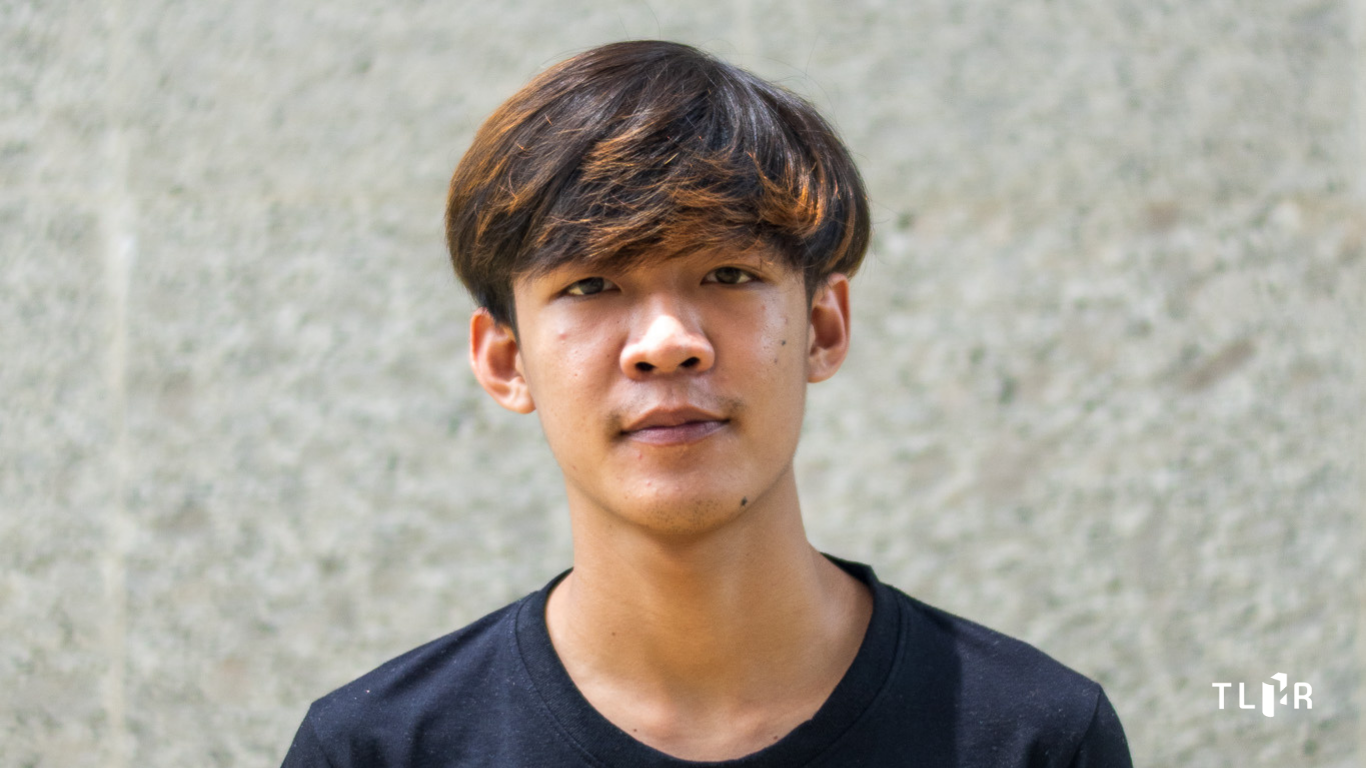
| Tanaphat Kapheng, a member of the Thalufah group, is currently an undergraduate student in the Faculty of Political Science at Prince of Songkla University’s Pattani Campus. He has been politically active since he was a minor and has faced a total of 24 charges related to protests and political expression, 11 of which have already been concluded. Almost all of the cases stem from actions taken after he turned 18, except for one Section 112 (lèse-majesté) charge in Narathiwat that occurred while he was still a minor. Of all the charges, three are under Section 112. Most recently, he was arrested and charged under Section 116 in Trang province after a royalist group filed a complaint over a photo posted on the Thalufah Facebook page showing students holding a parade sign that read “Nation, Religion, People.” |
.
.
ข่าวหรือบทความที่เกี่ยวข้อง
“Then and Now”: A Short Documentary about the Past and Present of Youth Prosecuted for Political Offenses
The short documentary film “Then and Now” explores the past and present of three youths who faced political charges for their involvement in protests and acts of expression in Thailand during 2020–2021. The film is a collaboration between the Thai Lawyers for Human Rights (TLHR) and independent writer and filmmaker Veerapong Soontornchattrawat. . . FacebookFacebookXXLINELine

admin010
07/10/2568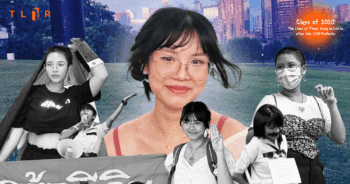
Benjamaporn Nivas: From Vancouver to Bangkok
Class of 2020 EP.1 The Lives of Three Young Activists after the 2020 Protests Interviewed/written by Veerapong Soontornchattrawat . There were no cakes or family wishes on her 18th birthday, only a can of cider—the first alcoholic beverage she could legally purchase. That was the night a young woman decided to leave her home in […]
admin010
15/10/2568
“Pink”, a 13-year-old girl, who is considered a national security threat for wanting to see an equal and just society.
During a mid-afternoon in late April, a young girl in a bright yellow shirt and a black denim skirt was half walking half running in a small alley that was branching away from the bustling street of Lat Phrao. On the outside looking in, people might have thought she was having the time of her […]

admin26
16/08/2565
“Eia” A 12-year-old child who is a favorite among protestors and faces up to four years in prison
Series: YOUNG มีหวัง Seventeen years – the age of “Thanakon,” the first youth charged with violation of Article 116 of the Criminal Code and “Sainam,” the first youth charged with violation of Article 112 (lèse-majesté) of the Criminal Code. Sixteen years – the age of “Nat,” the youth who experienced the longest period of detention […]